
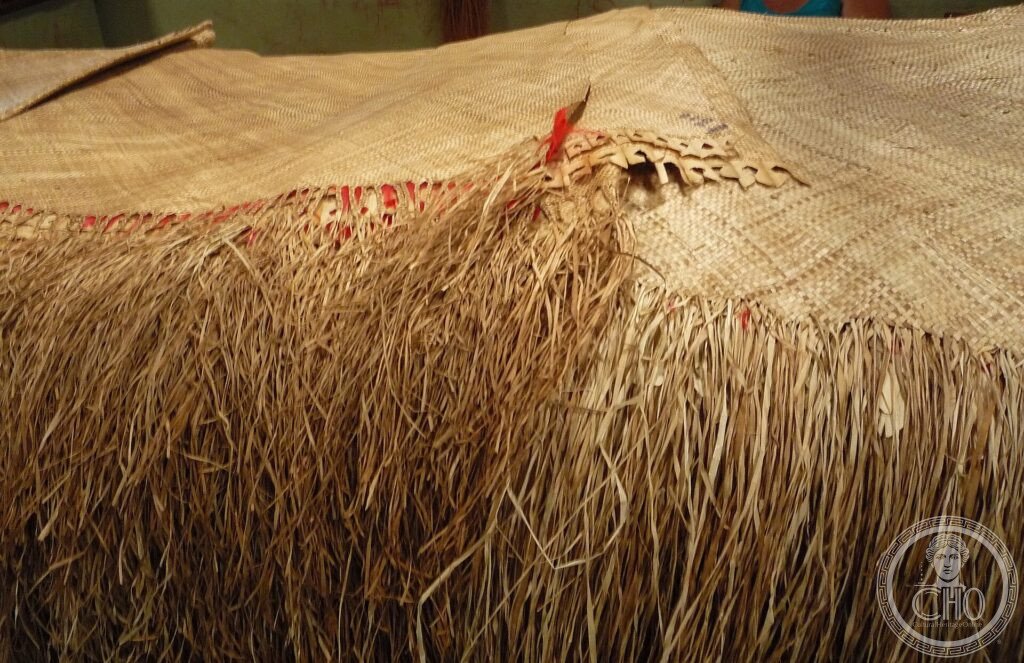
In Samoa, women weave ʻie tōga—finely crafted mats that carry generations of family history and cultural meaning. These treasured textiles, never used as floor coverings but exchanged at weddings, funerals, and chiefly ceremonies, embody skill, identity, and continuity.
At a glance
ʻIe tōga are exceptional hand-woven mats prized for the fineness of their weave, the softness of their material, and their lustrous finish. Created exclusively by women, these textiles serve no practical purpose—their value is purely ceremonial and cultural. An unwoven fringe and a strip of red feathers distinguish each piece. Some ʻie tōga are so significant they have been given individual names and passed down through families for many years.
Origins & history
The tradition of ʻie tōga weaving is woven into the fabric of Samoan identity and has long been integral to women’s roles and status within their communities. The practice is inseparable from major life transitions and family obligations—matai chief title bestowals, weddings, and funerals all require the exchange of fine mats as gifts that bind families and honor relationships. Over time, the most exceptional pieces acquired their own names, marking them as heirlooms of singular importance.
The practice
Creating a single ʻie tōga demands months or even years of meticulous hand-weaving. Women work the fine fibers with extraordinary precision, building up the characteristic softness and shine that distinguishes a masterwork. Each mat features an unwoven fringe and a decorative strip of red feathers. The completion of a particularly fine mat is often marked by a public celebration and presentation, where women parade and display their finished work for the community to witness and honor.
Cultural significance
ʻIe tōga are far more than textiles—they are repositories of family history, markers of women’s skill and identity, and essential instruments of social obligation and respect. Through their exchange at ceremonies, they strengthen family bonds and validate major social transitions. The time invested in their creation reflects the weaver’s commitment and love; their acceptance marks acceptance into the community’s web of reciprocal duty and kinship.
Key facts
- Country: Samoa
- Anchor community: Apia, Samoa (−13.8342, −171.7464)
- UNESCO Intangible Cultural Heritage reference: 01499
- Bearers: Samoan women and their families
- Primary occasions: Matai title bestowals, weddings, funerals
- Production timeline: Months to years per mat
Where to experience it
Apia and communities throughout Samoa remain the heartland of ʻie tōga weaving. Women continue the practice in homes and family settings, especially during preparations for major ceremonies. Public celebrations marking the completion of exceptional mats offer opportunities to witness the finished work and learn about the cultural significance these pieces carry.
Sources & resources
- ʻIe tōga — Wikipedia
- ʻIe Samoa Fine Mat and Its Cultural Value — UNESCO Intangible Cultural Heritage
- Cultural Heritage Online
Find it on the map
See this place and what’s around it →📷 Become a Cultural Heritage Online photographer
Share your photos of places: they stay published under your name as the author. The more they're seen, the more you get noticed — and soon a contest will reward the most appreciated photos.
Log in or sign up free to add a photo