
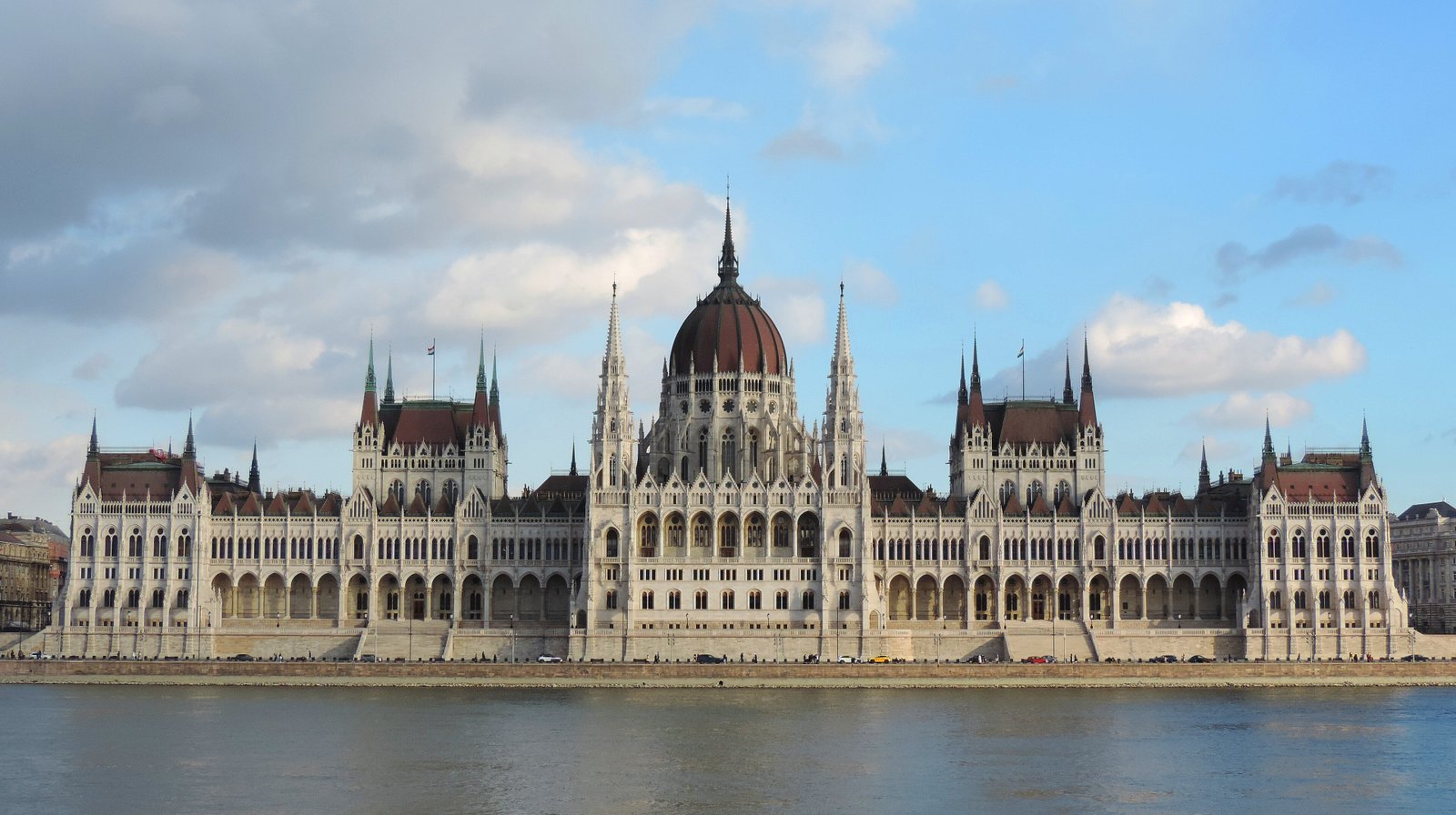
The seat of Hungary’s National Assembly rises from Kossuth Square as a masterpiece of neo-Gothic ambition. Designed by Imre Steindl and completed in 1902, it remains the nation’s largest building—a symbol of democratic aspiration on the Danube’s eastern bank.
At a glance
Hungary’s parliament occupies a commanding position in Pest, dominating the riverfront with its soaring towers and intricate stonework. The building serves as both the working seat of the National Assembly and one of Budapest’s most recognizable monuments, drawing visitors from across the world.
History
Hungarian architect Imre Steindl designed the Parliament Building in the neo-Gothic style, a choice that reflected the aesthetic preferences of late 19th-century European capitals. Construction concluded in 1902, establishing it immediately as Hungary’s largest building—a distinction it has retained ever since. The architectural vocabulary drew inspiration from Vienna’s City Hall, while renaissance elements, including the building’s prominent cupola, were influenced by Vienna’s Maria vom Siege church.
What you see
The building’s neo-Gothic exterior displays pointed arches, elaborate stonework, and vertical emphasis characteristic of the style. Its most striking feature is the central cupola, a renaissance element that crowns the composition and can be seen from across Budapest. The structure demonstrates how European capitals at the turn of the 20th century drew on historical styles to express national identity and institutional permanence.
Cultural significance
The Parliament Building stands as a monument to Hungarian national aspirations and democratic governance. Its design represents a moment when Central European nations were asserting their cultural identities through ambitious civic architecture. The building remains central to Hungary’s self-image and continues to anchor the urban landscape of Budapest.
Key facts
- Country: Hungary
- City: Budapest District V
- Coordinates: 47.50694444, 19.04555556
- Architect: Imre Steindl
- Completed: 1902
- Style: Neo-Gothic
- Location: Kossuth Square, eastern bank of the Danube
Practical information & getting there
The building is located on Kossuth Square in central Budapest, easily accessible by public transport. You can view the exterior from the square or along the Danube embankment at any time. For current visiting hours and guided tour availability, check official sources.
Sources & resources
Find it on the map
See this place and what’s around it →📷 Become a Cultural Heritage Online photographer
Share your photos of places: they stay published under your name as the author. The more they're seen, the more you get noticed — and soon a contest will reward the most appreciated photos.
Log in or sign up free to add a photoIs this page about you?
This page is read by travellers and heritage enthusiasts who find it on Google. Tell us how you are connected to this place and we will take it from there.