
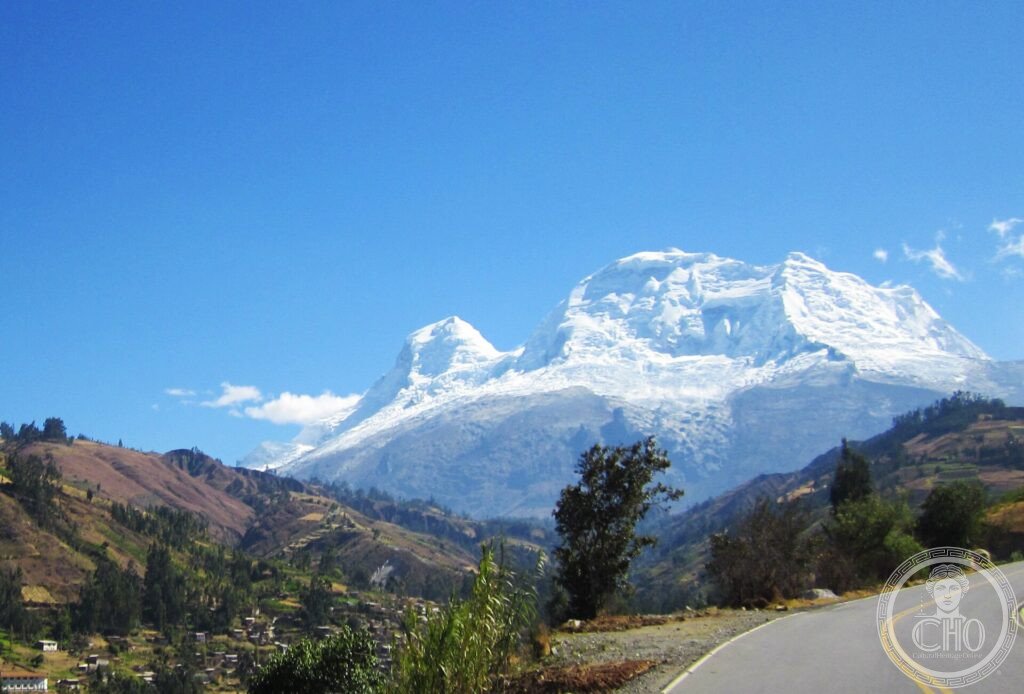
Nelle Ande peruviane si innalza la Cordillera Blanca, la catena di montagne tropicali più alta del mondo, dominata dal Nevado Huascarán con i suoi 6.768 metri. Ghiacciai, lagune turchesi e profonde valli compongono un parco di bellezza alpina, abitato da condor e dalla rara puya gigante.
At a glance
Huascarán National Park, in the Ancash region of Peru, protects most of the Cordillera Blanca, the highest tropical mountain range in the world, crowned by Nevado Huascarán at 6,768 m. A landscape of glaciated peaks, turquoise glacial lakes, deep valleys and high puna grassland, it shelters the Andean condor, the spectacled bear and the giant Puya raimondii, a plant that flowers only once in its long life. It was inscribed by UNESCO in 1985.
Key facts
- UNESCO: World Heritage since 1985 (Huascarán National Park)
- Cordillera Blanca: the highest tropical mountain range on Earth
- Nevado Huascarán: Peru’s highest peak at 6,768 m
- Glacial lakes: turquoise lagoons fed by the glaciers
- Puya raimondii: a giant plant that flowers once in its lifetime
- Wildlife: Andean condor, spectacled bear, vicuña
History
The Cordillera Blanca, with its dozens of peaks above 6,000 m, has shaped life in the Ancash highlands since ancient times; its meltwater feeds the rivers of the valley below. The mountains are beautiful but dangerous: in 1970 an earthquake triggered a catastrophic avalanche from Huascarán that buried the town of Yungay, one of the deadliest such disasters in history.
The park was created in 1975 to protect the range’s glaciers, lakes, plants and animals, and inscribed by UNESCO in 1985. It is now a major destination for trekkers and climbers, while its shrinking glaciers stand among the most visible signs of a warming climate in the tropics.
What you see
Roads and trails from the valley town of Huaraz lead up to glacial lakes such as the brilliant Laguna 69 and Llanganuco, to viewpoints of Huascarán and other great peaks, and along classic treks like the Santa Cruz. High grasslands hold stands of the giant Puya raimondii and herds of vicuña, with condors overhead.
The vision of the snow peaks above turquoise lakes and green valleys is the splendour of the Cordillera Blanca.
Practical information
- Park: day trips, treks and climbs from Huaraz
- Best time: the dry season (May–September)
- Time needed: a day to multi-day treks
- Note: high altitude; acclimatise in Huaraz first
Getting there
Huascarán National Park is in the Ancash region of central Peru, around the city of Huaraz, about 400 km north of Lima by road. GPS: 9.12° S, 77.55° W.
Nearby
- Huaraz — the mountain city and trekking base
- Laguna 69 — a famous turquoise glacial lake
- Chavín de Huántar — the ancient UNESCO temple site nearby
Sources
- UNESCO World Heritage Centre — “Huascarán National Park” (ref. 333)
- SERNANP (Peru) — official body
- Encyclopaedia Britannica — Huascarán
Find it on the map
See this place and what’s around it →📷 Become a Cultural Heritage Online photographer
Share your photos of places: they stay published under your name as the author. The more they're seen, the more you get noticed — and soon a contest will reward the most appreciated photos.
Log in or sign up free to add a photo