
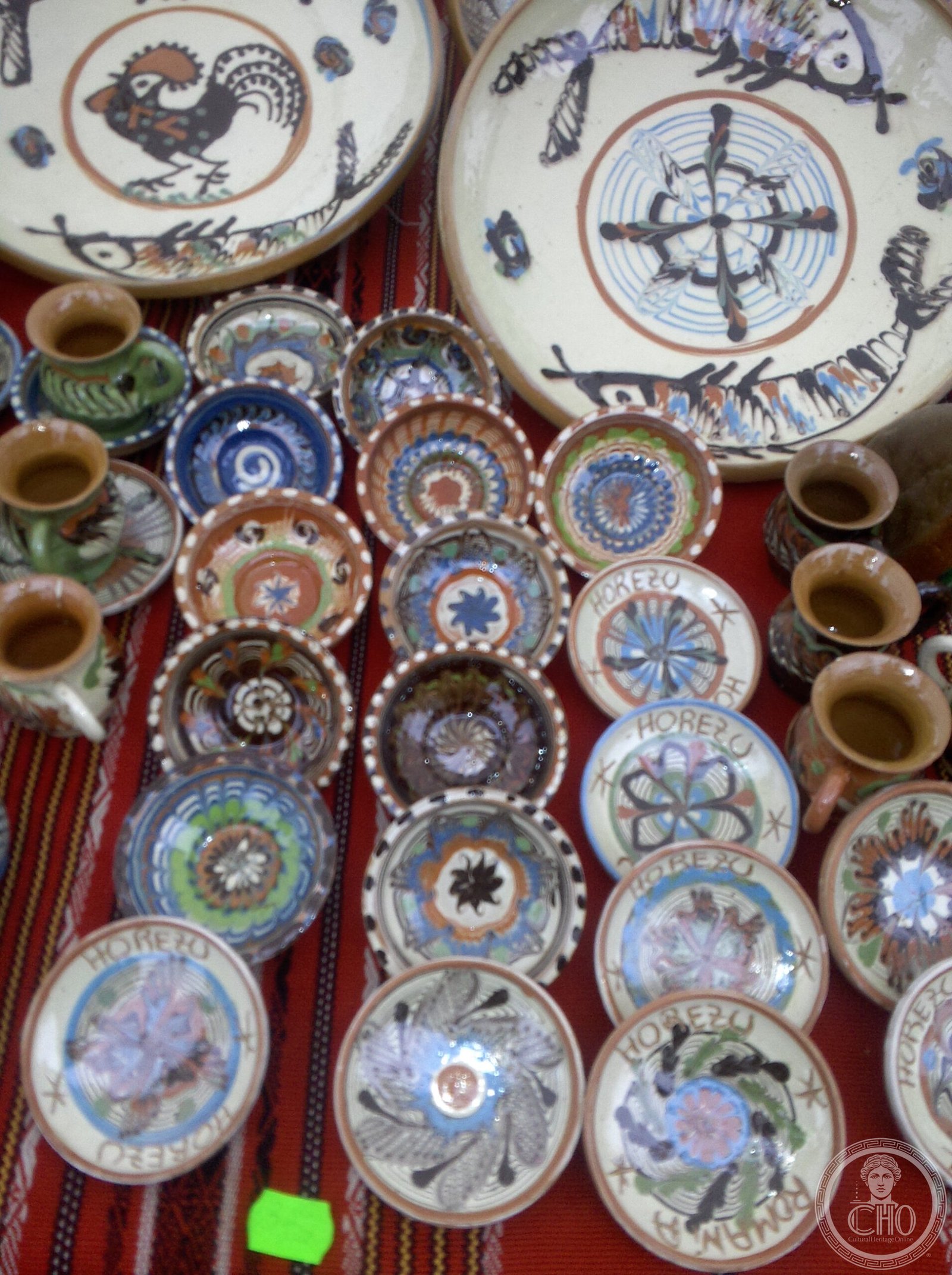
In the Carpathian foothills of Oltenia, potters continue an ancient craft passed through generations, shaping red clay by hand and decorating vessels with bright traditional motifs using techniques unchanged for centuries.
At a glance
Horezu ceramics represents a fully gendered division of labor refined over many generations. Men extract and prepare the clay through kneading, trampling and mixing; potters then shape it using a distinctive finger technique demanding concentration, strength and agility. Women apply decoration before firing, combining color and traditional motifs in ways that give each piece its individual character. The result is pottery in vivid browns, reds, greens, blues and the distinctive pale shade known as “Horezu ivory.”
Origins and history
Pottery production has defined Horezu for centuries, rooted in the region’s clay deposits and the skills of families like the Ogrezeanu, Vicsoreanu, Iorga, Frigura, Mischiu and Popa. This craft remained the primary income source for multiple generations of potters in the town. Knowledge transferred through family lines, embedding ancestral techniques into each new potter’s hands and eyes. The tradition remains concentrated on Olari Street, Horezu’s historic ceramic quarter.
The tradition today
Potters continue working by hand using traditional tools: a mixer for clay preparation, a pottery wheel and comb for shaping, a hollowed-out bull’s horn and fine wire-tipped stick for decoration, and a wood-burning stove for firing. Each potter maintains his or her own shaping technique while respecting the established sequence of production. Transmission now occurs through family apprenticeship, formal workshops with master craftspeople, and regular pottery festivals and exhibitions that draw visitors and students to learn the craft.
Cultural significance
Horezu ceramics embodies centuries of accumulated knowledge and refined skill—a living archive of technique, aesthetics and community identity. The UNESCO inscription recognizes this craftsmanship as a singular historical Romanian ceramic center where tradition has never been interrupted. Beyond its material beauty, the practice represents a complete social structure: the integration of gender roles, family enterprise, master-apprentice relationships, and the economic resilience of a community built on skilled hands.
Key facts
- Country: Romania
- Anchor community: Horezu, Vâlcea County, Oltenia
- UNESCO Intangible Cultural Heritage: Craftsmanship of Horezu ceramics, inscribed December 2012 (Representative List)
- Historic center: Olari Street, Horezu
- Production methods: Hand-shaped on pottery wheel; decorated with traditional motifs before wood-fired kiln firing
- Distinctive features: Bright color palette including “Horezu ivory”; gendered division of labor in production
Where to experience it
You can visit working potters’ studios and workshops along Olari Street in Horezu town. Many artisans welcome visitors to observe clay preparation, shaping and decoration. Local pottery festivals and exhibitions provide opportunities to meet makers, purchase pieces and learn directly from masters. The nearby Horezu Monastery offers historical context for the region’s artistic traditions.
Sources & resources
- Horezu ceramics (Wikipedia)
- Cultural Heritage Online
Find it on the map
See this place and what’s around it →📷 Become a Cultural Heritage Online photographer
Share your photos of places: they stay published under your name as the author. The more they're seen, the more you get noticed — and soon a contest will reward the most appreciated photos.
Log in or sign up free to add a photo