
During Semana Santa, Guatemalan communities process through streets in acts of collective faith, bearing religious floats and sacred imagery in a tradition organized by lay brotherhoods.
In UNESCO’s words
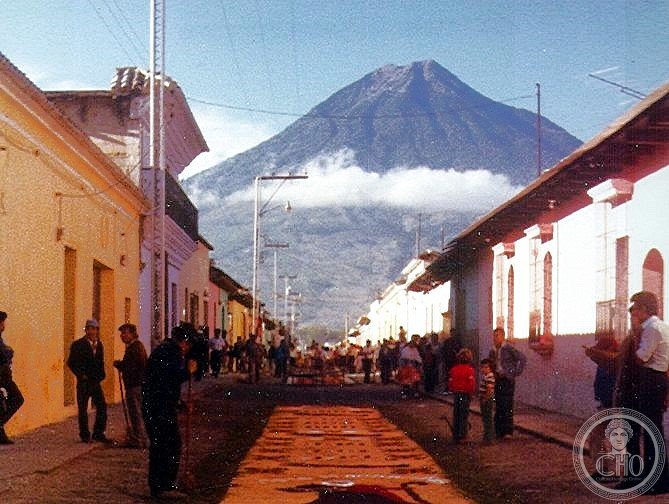
Holy Week in Guatemala is one of the country’s most notable events, entailing processions, vigils, funeral marches, seasonal gastronomy and the creation of carpets, orchards and altars. On this occasion, the fronts of houses and buildings are also decorated, adding to the festive atmosphere. Holy Week is a religious and cultural celebration that commemorates the passion, death and resurrection of Christ. It encompasses a series of activities and common elements that vary from one region to the next. The practices and traditions associated with Holy Week have been transmitted to younger generations for centuries, through active participation in the event and preparations, as well as through public media. Parishioners, neighbours, tourists, artisans, musicians and authorities participate in the preparations and celebrations, giving the event its universal and cohesive character. The event promotes tolerance and inclusion due to the participation of people from different social groups and fosters mutual respect and appreciation among the individuals and institutions involved. A representation of the cultural diversity of the country, for centuries it has represented an identification with pain and a cult of death that was familiar to Guatemala’s original inhabitants, a characteristic that remains to this day and that, despite an apparent contradiction, symbolizes hope and union.
Official description, UNESCO Intangible Cultural Heritage List — Holy Week in Guatemala
At a glance
Holy Week in Guatemala is a religious and cultural celebration commemorating the passion, death and resurrection of Christ. It encompasses processions, vigils, funeral marches, seasonal gastronomy and the creation of carpets, orchards and altars. Houses and buildings are decorated, and the event involves parishioners, neighbours, tourists, artisans, musicians and authorities who participate together in preparations and celebrations.
Origins & history
Practices and traditions associated with Holy Week have been transmitted to younger generations for centuries through active participation in the event and its preparations, as well as through public media. For centuries, the celebration has represented an identification with pain and a cult of death that was familiar to Guatemala's original inhabitants—a characteristic that remains today and symbolizes hope and union.
The practice
Holy Week involves a series of activities and common elements that vary from one region to the next. Participants engage in processions, vigils and funeral marches. The creation of carpets, orchards and altars takes place alongside these observances. Parishioners, neighbours, artisans, musicians and authorities participate in both preparations and celebrations, contributing their skills and involvement to the event.
Cultural significance
Holy Week promotes tolerance and inclusion through the participation of people from different social groups, fostering mutual respect and appreciation among individuals and institutions involved. The event gives the celebration its universal and cohesive character and represents the cultural diversity of the country. It remains significant to communities as an expression of shared faith and identity.
Key facts
- Country: Guatemala
- Inscribed: 2022
- UNESCO list: Representative List of the Intangible Cultural Heritage of Humanity
- UNESCO reference: 01854
- UNESCO vocabulary: Catholicism; Procession; Religious practice
- Map: not shown — UNESCO’s official description of this element names no locality, and a living tradition is practised across a community, not at one address.
- Related World Heritage site: Antigua Guatemala (a different UNESCO designation, not the place of the tradition)
Where to experience it
Holy Week processions take place throughout Guatemala during Semana Santa, when hermandades organize public marches through city streets and communities across the country. Visitors encounter elaborate decorations on house and building fronts, temporary carpets and altars created by residents, and seasonal gastronomy prepared for the occasion. Parishioners, neighbours, artisans and musicians actively participate in preparations and celebrations, creating an atmosphere of shared religious and cultural observance. The event welcomes tourists alongside locals from different social groups, fostering tolerance and inclusion while honouring centuries-old traditions passed down through active participation and community involvement.
Sources & resources
- UNESCO — official element page: Holy Week in Guatemala
- UNESCO — open data record: Intangible Heritage List, reference 01854
- UNESCO — official photograph: Procession of the Virgin Mary and her companions, Saint John and Saint Mary Magdalene. First decades of the 20th century — Felipe Amado Aguilar Marroquín, 2009
- Reference — Wikipedia (secondary): Holy Week processions in Guatemala — consulted as a secondary reference, not as confirmation
- Cultural Heritage Online: Our archive and city guides
