

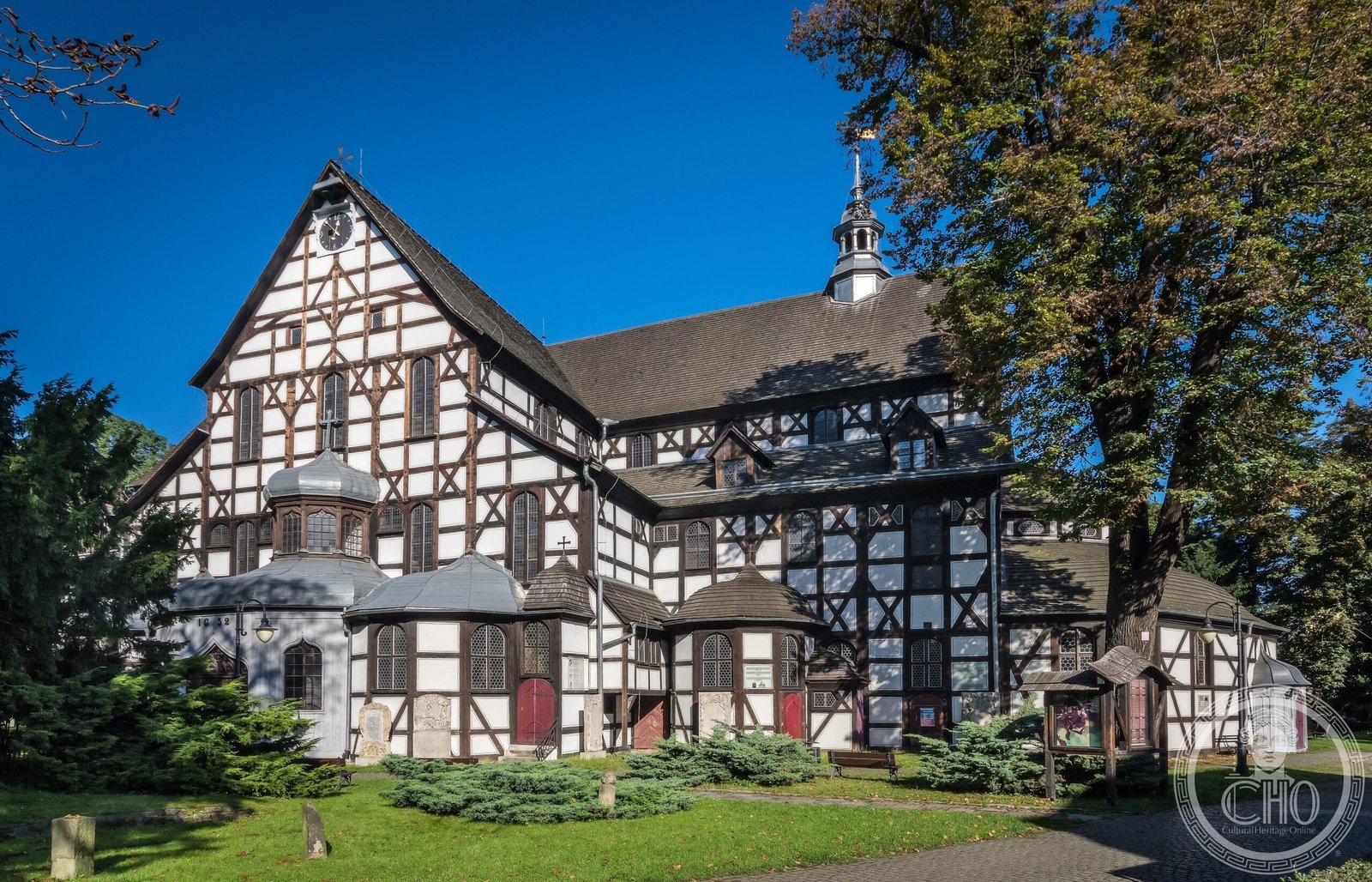
Europe’s largest wooden Baroque church, built under the peace terms that ended the Thirty Years’ War.
At a glance
This remarkable timber structure stands as a monument to religious tolerance and post-war reconstruction. Built under the provisions of the Treaty of Westphalia, it represents both architectural ambition and the hard-won rights granted to Protestant communities in Catholic Silesia.
History
The church was constructed following the Treaty of Westphalia in 1648, which concluded the Thirty Years’ War. The treaty granted Protestant communities in the region limited rights to build places of worship, though under strict conditions. This wooden temple became one of the most significant outcomes of that religious compromise, serving the Evangelical-Augsburg community in Świdnica.
What you see
The building showcases Baroque craftsmanship entirely in timber—a technical feat that allowed construction within territorial constraints. The wooden structure demonstrates sophisticated joinery and decorative detail characteristic of Central European Baroque design. Its scale and execution make it an exceptional example of what could be achieved with wood as the primary structural material.
Cultural significance
This church embodies a pivotal moment in European religious and political history. It stands as physical proof of the Treaty of Westphalia’s impact on religious coexistence and marks the beginning of modern international relations. The structure reflects both the ingenuity required to work within imposed limitations and the determination of Protestant communities to maintain their faith.
Key facts
- Country: Poland
- Location: Świdnica
- Coordinates: 50.8461, 16.4914
- Architectural style: Baroque
- Primary material: Wood
- Built: 17th century, following the Treaty of Westphalia (1648)
- Religious affiliation: Evangelical-Augsburg Church
- UNESCO World Heritage List: Since 2001
Practical information & getting there
The church is located in Świdnica, a town in Lower Silesia, Poland. It remains an active place of worship and a significant cultural heritage site. Visitors should check current access times and any restrictions related to services. The town is accessible by regional transport connections.
Sources & resources
Find it on the map
See this place and what’s around it →📷 Become a Cultural Heritage Online photographer
Share your photos of places: they stay published under your name as the author. The more they're seen, the more you get noticed — and soon a contest will reward the most appreciated photos.
Log in or sign up free to add a photoIs this page about you?
This page is read by travellers and heritage enthusiasts who find it on Google. Tell us how you are connected to this place and we will take it from there.