
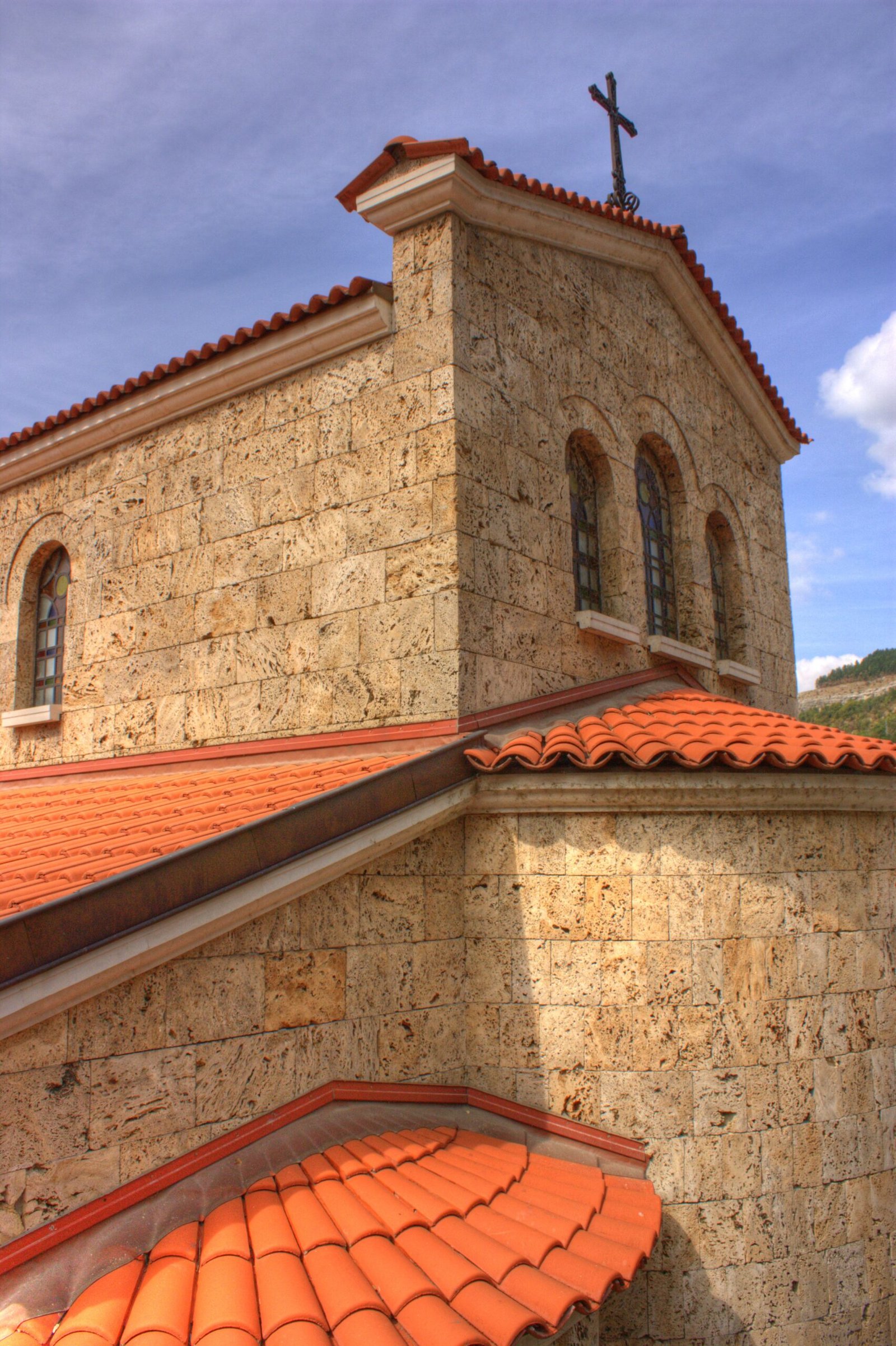
A medieval Orthodox basilica in Bulgaria’s former imperial capital, housing rare inscribed columns from the First Bulgarian Empire and decorated with original mural paintings.
At a glance
Built in 1230 during the Second Bulgarian Empire, this six-columned basilica stands in Veliko Tarnovo, once the seat of Bulgarian power. The church preserves monumental stone columns from earlier rulers, making it an archive of imperial history as much as a place of worship.
History
The church was constructed in 1230 in Veliko Tarnovo, the former capital of the Second Bulgarian Empire. Its interior was likely covered with mural paintings at the time of construction. A western addition was built later, its outer walls retaining traditional arches and coloured ceramic plates.
Tsar Ivan Asen II placed three monumental inscribed columns inside the church as tributes to his ancestors. The Column of Khan Krum, inscribed “Fortress of Rodostro,” came from Rodosto and was positioned upside down. Khan Omurtag’s Column, written in Greek, commemorates the building of a glorious palace on the Danube and serves as a legacy for future generations to remember Omurtag’s deeds. Asen’s Column completes this triad of imperial monuments.
What you see
An elongated six-columned basilica with three semicircular apses. A narrow narthex runs along the western side. The interior walls bear mural paintings from circa 1230, their pigments and subjects still legible after nearly eight centuries.
The later western addition displays the decorative vocabulary of medieval Bulgarian church architecture: arcaded designs and small ceramic plates set directly into the masonry, creating subtle geometric patterns. The presence of frescoes on the church’s exterior walls remains undetermined.
Cultural significance
The church functions as an open-air epigraphic museum, preserving some of the Second Bulgarian Empire’s most significant historical records. The inscribed columns of Khan Krum and Khan Omurtag—both in Greek—document early medieval rulership and monumental building. Ivan Asen II’s decision to house them here asserted continuity between the First and Second Bulgarian Empires, linking his reign to an earlier golden age of power.
Key facts
- Country: Bulgaria
- City: Veliko Tarnovo
- Date constructed: 1230
- Coordinates: 43.08444444, 25.65
- Building type: Six-columned basilica, Eastern Orthodox
- Contains: Columns of Khan Krum, Khan Omurtag, and Tsar Asen II
Practical information & getting there
The church is located in central Veliko Tarnovo, Bulgaria’s former capital and now a UNESCO World Heritage Site on the Yantra River. Details on visitor hours and access should be confirmed locally or with the Veliko Tarnovo tourist information centre.
Sources & resources
Find it on the map
See this place and what’s around it →📷 Become a Cultural Heritage Online photographer
Share your photos of places: they stay published under your name as the author. The more they're seen, the more you get noticed — and soon a contest will reward the most appreciated photos.
Log in or sign up free to add a photoIs this page about you?
This page is read by travellers and heritage enthusiasts who find it on Google. Tell us how you are connected to this place and we will take it from there.