
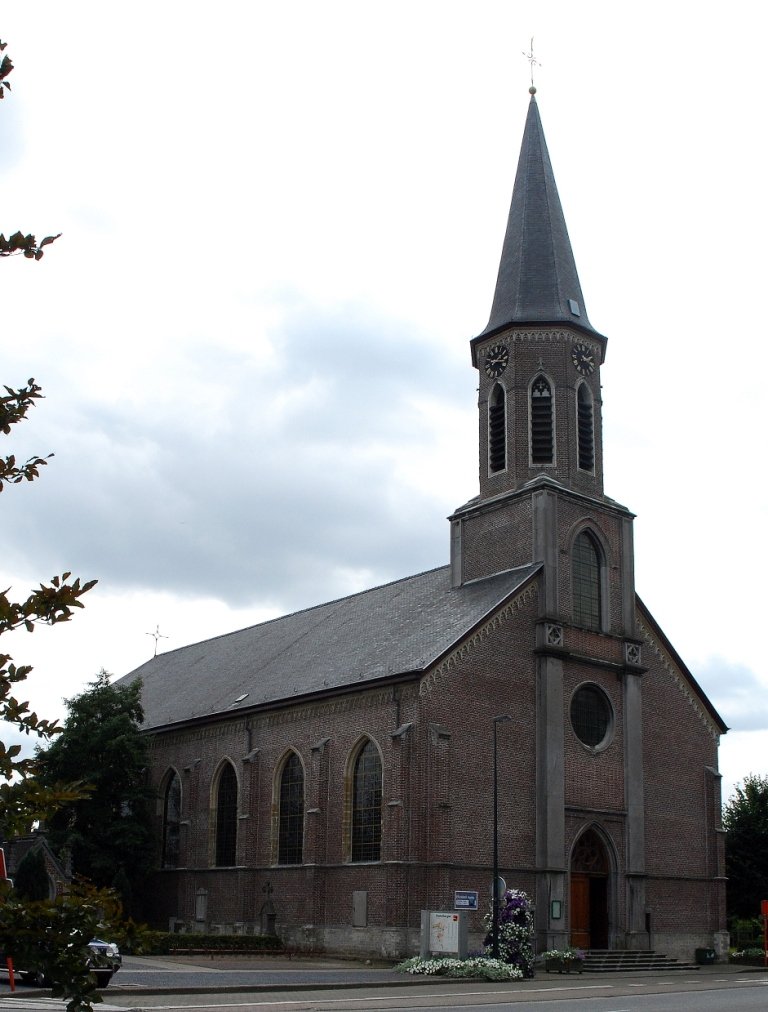
A Belgian Neo-Gothic church built in 1844, housing treasures from its seventeenth-century predecessor and furnished with fine nineteenth-century ecclesiastical woodwork and sculpture.
At a glance
The Holy Cross Church (Heilig Kruiskerk) stands in the sub-municipality of Heusden as a striking example of early Gothic Revival architecture. Dedicated to the Exaltation of the Holy Cross, it was constructed on the site of an earlier church, probably dating from the seventeenth century. The building integrates both historical survivals and contemporary craftsmanship, creating a layered portrait of Belgian religious art and taste.
History
The church was built in 1844, replacing an earlier structure that likely dated to the seventeenth century. Two significant paintings by Antoon van den Heuvel—the Adoration of the Magi (1652) and Christ Stripped of His Clothes (1664)—were preserved from the old church and remain in place. Two portico altars of white and black marble also survive from the predecessor building.
What you see
The exterior exemplifies early Gothic Revival design. Inside, the church preserves an oak main altar by Jan Baptist Hauman of Ghent, enriched with sculptures by Pieter De Vigne. Neo-Gothic stalls and wall panelling, also in oak, date to the nineteenth century.
A striking Neo-Gothic polychrome stone epitaph (1865) commemorates Robert Helias d’Huddeghem; its Resurrection sculpture was created by Leonard Blanchaert after a design by Jean-Baptiste Bethune. An oil painting inspired by Van Dyck, by Domien Vanden Bossche of Geraardsbergen, also hangs within.
The organ, housed in a case designed by Auguste Van Assche in 1873, received monument protection in 1980.
Cultural significance
The church exemplifies how nineteenth-century Belgian ecclesiastical practice honoured earlier works while embracing contemporary Neo-Gothic idiom. The combination of seventeenth-century paintings, marble furnishings, and Romantic-era sculpture and design demonstrates the layered devotional and artistic culture of Destelbergen.
Key facts
- Country: Belgium
- City: Destelbergen
- Dedication: Exaltation of the Holy Cross
- Built: 1844
- Coordinates: 51.0281, 3.7993
- Organ case: designed by Auguste Van Assche, 1873; protected as monument, 1980
Practical information & getting there
Further details on opening hours, services, and access are best confirmed locally or through the Destelbergen municipal office.
Sources & resources
Find it on the map
See this place and what’s around it →📷 Become a Cultural Heritage Online photographer
Share your photos of places: they stay published under your name as the author. The more they're seen, the more you get noticed — and soon a contest will reward the most appreciated photos.
Log in or sign up free to add a photoIs this page about you?
This page is read by travellers and heritage enthusiasts who find it on Google. Tell us how you are connected to this place and we will take it from there.