
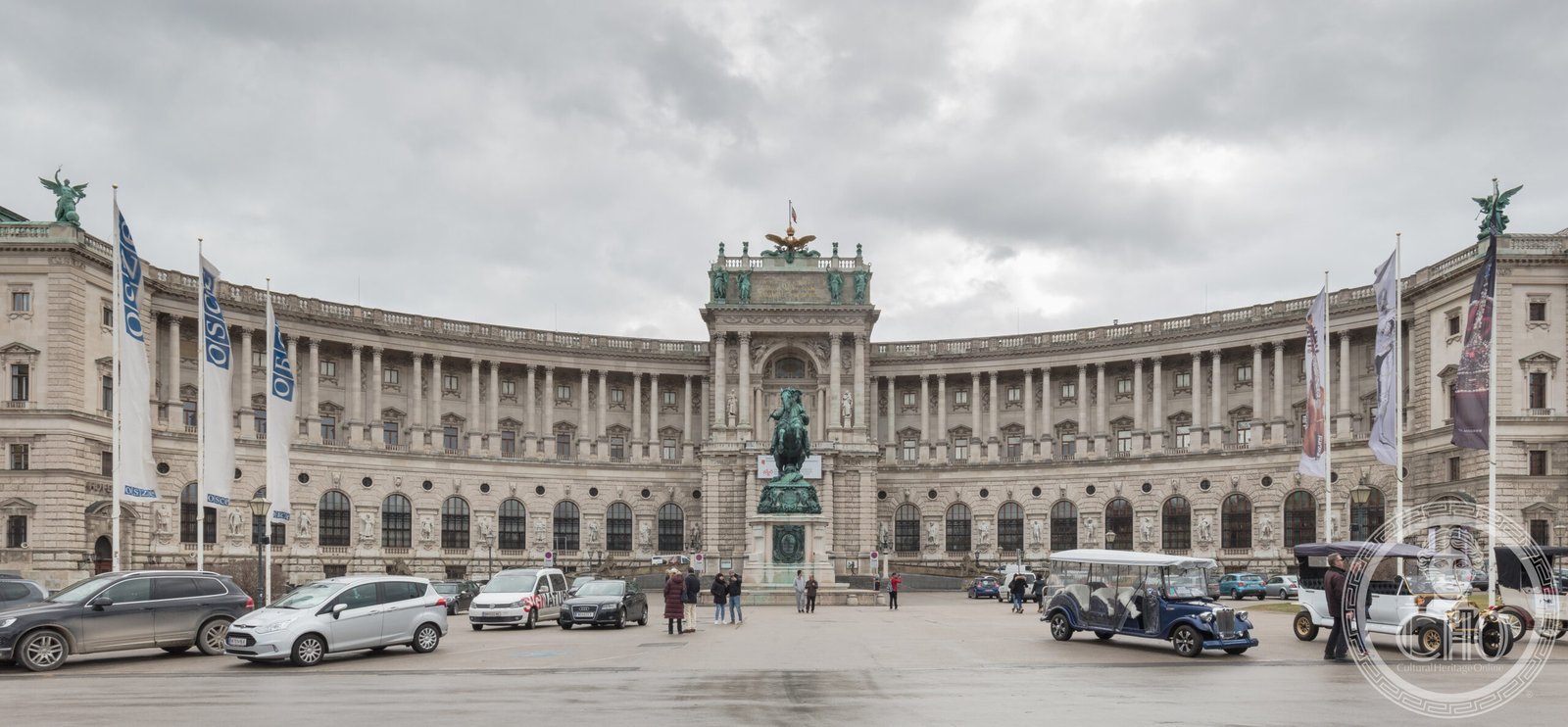
The monumental seat of Habsburg emperors for six centuries, this sprawling palace complex showcases baroque splendor, imperial apartments, and the celebrated Sissi Museum housing the imperial silverware collection.
At a glance
The Hofburg stands as Vienna’s grand repository of imperial power and Habsburg legacy. Its interconnected buildings evolved organically across six centuries, incorporating successive architectural layers while preserving earlier structures. Today it serves as the official residence of Austria’s federal president.
History
Construction began in 1279, establishing the foundations of what would become Europe’s most enduring seat of dynastic authority. From 1438 to 1583 and again from 1612 to 1806, the palace housed the monarchs of the Holy Roman Empire and the Germanic nation. Following the empire’s dissolution, it remained the official residence of Austria’s emperors until the nation became a republic in 1918. The complex was expanded repeatedly without a master plan, with architects strategically integrating new wings around existing structures rather than demolishing them.
What you see
The palace’s architectural character is predominantly baroque, reflecting centuries of embellishment and refinement. The complex reveals its layered history through its irregular floor plan—a visual chronicle of successive imperial preferences and practical necessities. Visitors encounter elaborately decorated imperial apartments, ornate reception halls, and the specialized spaces housing the silverware collection. The Sissi Museum celebrates the life and legacy of Empress Elisabeth, with intimate chambers and personal artifacts offering insight into 19th-century court life.
Cultural significance
The Hofburg represents more than architectural grandeur; it embodies the political continuity of the Habsburg dynasty and the cultural identity of Central Europe. The palace’s organic growth mirrors the complexity of imperial governance itself. Its preservation—including earlier medieval and Renaissance elements—demonstrates how power structures adapt while maintaining connection to their origins.
Key facts
- Address: Michaelerkuppel, 1010 Vienna, Austria
- Coordinates: 48.20782638712092, 16.36590600013733
- Website: https://www.hofburg-wien.at/
- Phone: +43 1 5337570
- Original construction: 1279
Practical information
The palace operates as a museum and official residence. Opening hours and admission details are available through the official website. Visitors should note that certain areas remain in official use and may have restricted access.
Getting there
The Hofburg is centrally located in Vienna’s 1st district. You can reach Michaelerkuppel via Vienna’s public transport network, or access the complex on foot from St. Stephen’s Cathedral and other central landmarks.
Sources & resources
- Official website: https://www.hofburg-wien.at/
- Cultural Heritage Online: https://culturalheritageonline.com
Find it on the map
See this place and what’s around it →📷 Become a Cultural Heritage Online photographer
Share your photos of places: they stay published under your name as the author. The more they're seen, the more you get noticed — and soon a contest will reward the most appreciated photos.
Log in or sign up free to add a photoIs this page about you?
This page is read by travellers and heritage enthusiasts who find it on Google. Tell us how you are connected to this place and we will take it from there.