
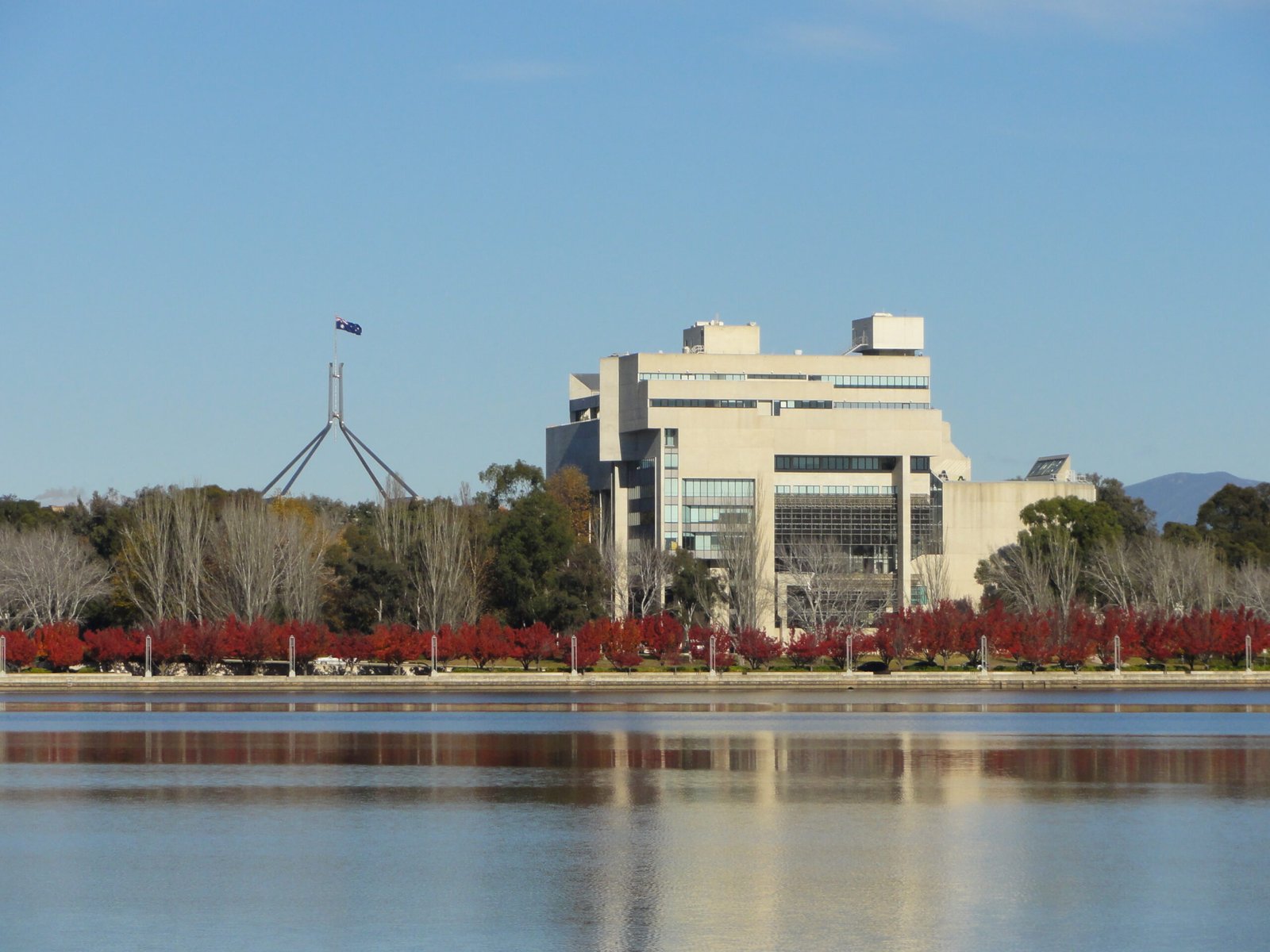
A modernist landmark on the shore of Lake Burley Griffin, Christopher Kringas’s final design stands as the permanent home of Australia’s highest court since 1980.
At a glance
This purpose-built court building anchors Canberra’s Parliamentary Triangle with architectural authority. Its form and materials reflect the aspirations of the Australian nation’s judicial institutions. The structure has earned international recognition for its design excellence.
History
Christopher Kringas, a director of the architectural firm Edwards Madigan Torzillo and Briggs, designed the building between 1972 and 1974. Construction proceeded from 1975 until completion in 1980. Queen Elizabeth II opened the building on 26 May 1980, and the first court sitting took place the following month.
Kringas did not live to see the opening; he died in 1975 at age 39. The public hall contains a plaque commemorating his contribution to Australian architecture.
What you see
The building occupies a prominent site on Lake Burley Griffin’s shoreline within the Parliamentary Triangle. Its design achieves international architectural distinction, recognised by the Union of International Architects. The structure integrates landscape, water, and civic purpose with modernist clarity.
Cultural significance
Since 1980, the majority of the High Court’s sittings have been held here. The building exemplifies Australia’s commitment to housing its judicial authority in a purpose-designed, architecturally accomplished setting. Its awards include the Australian Institute of Architects Canberra Medallion (1980) and the Enduring Architecture Award (2007), underscoring its lasting cultural and design value.
Key facts
- Coordinates: −35.2989, 149.1356
- Commonwealth Heritage Listed (2004)
- Designed by Christopher Kringas (1936–1975)
- Opened 26 May 1980 by Queen Elizabeth II
- Recognised by Union of International Architects
Practical information & getting there
The High Court building sits on the southern shore of Lake Burley Griffin in Canberra’s Parliamentary Triangle. The site is accessible to the public during business hours. For visiting hours and court sittings, consult the official High Court website or the Australian government’s cultural heritage resources.
Sources & resources
Find it on the map
See this place and what’s around it →📷 Become a Cultural Heritage Online photographer
Share your photos of places: they stay published under your name as the author. The more they're seen, the more you get noticed — and soon a contest will reward the most appreciated photos.
Log in or sign up free to add a photoIs this page about you?
This page is read by travellers and heritage enthusiasts who find it on Google. Tell us how you are connected to this place and we will take it from there.