
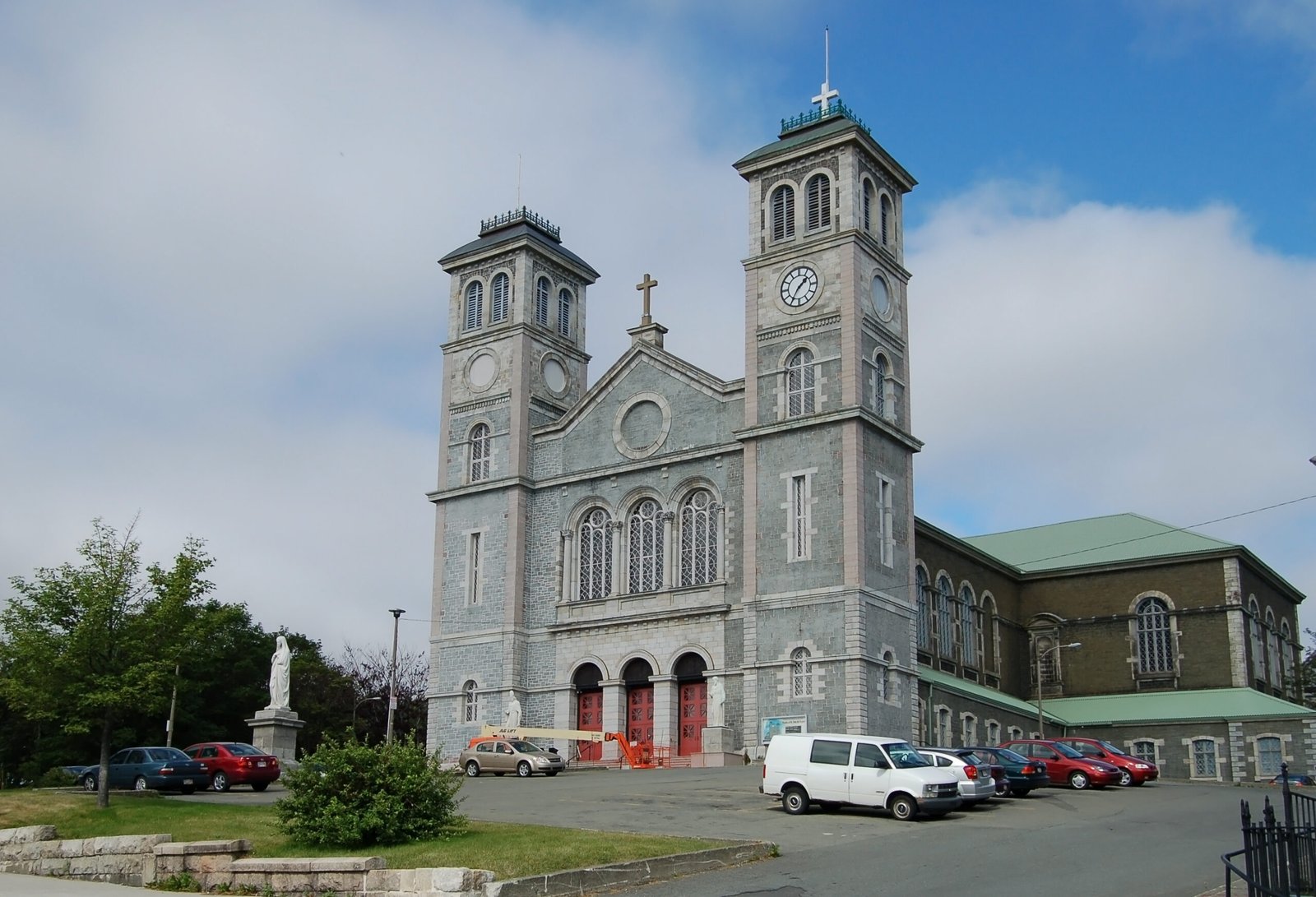
A monumental cathedral that dominated North American ecclesiastical architecture in the nineteenth century, surviving fire and time as Canada’s largest cathedral church.
At a glance
The metropolitan cathedral of the Roman Catholic Archdiocese of St. John’s sits within the St. John’s Ecclesiastical District, a National Historic District. Upon completion in 1855, it was the largest church building in North America and ranks today as the second largest church in Canada after Saint Joseph’s Oratory in Montreal.
History
Ground excavation began in May 1839, followed by the laying of the cornerstone in May 1841. Construction spanned sixteen years, concluding with consecration on 9 September 1855. The basilica represented the largest building project undertaken in Newfoundland history to that date.
Pope Pius XII elevated the cathedral to minor Basilica status through the decree Terra Novæ Cæruleis on 30 May 1955, marking the building’s centennial anniversary. The decree was signed by Apostolic Chancellor Ermenegildo Brugnola.
Remarkably, the basilica survived the Great Fire of 1892, one of few St. John’s buildings to do so.
What you see
The basilica stands as a testament to nineteenth-century ecclesiastical ambition and craftsmanship. Its architectural prominence reflects its historical importance as a symbol of religious and civic aspiration in Newfoundland.
Cultural significance
The basilica embodies the spiritual and cultural identity of St. John’s Roman Catholic community. Its survival of the devastating 1892 fire has made it an enduring architectural landmark and symbol of resilience for the city and province.
Key facts
- Country: Canada
- City: St. John’s, Newfoundland and Labrador
- Coordinates: 47.5674, −52.7101
- Consecrated: 9 September 1855
- Minor Basilica status: 30 May 1955
- Designation: National Historic District (St. John’s Ecclesiastical District)
Practical information & getting there
The basilica is located in downtown St. John’s at the coordinates above. As an active cathedral and National Historic District site, visiting hours and access may vary; check ahead for current information and any liturgical schedules that may affect public entry.
Sources & resources
Find it on the map
See this place and what’s around it →📷 Become a Cultural Heritage Online photographer
Share your photos of places: they stay published under your name as the author. The more they're seen, the more you get noticed — and soon a contest will reward the most appreciated photos.
Log in or sign up free to add a photoIs this page about you?
This page is read by travellers and heritage enthusiasts who find it on Google. Tell us how you are connected to this place and we will take it from there.