
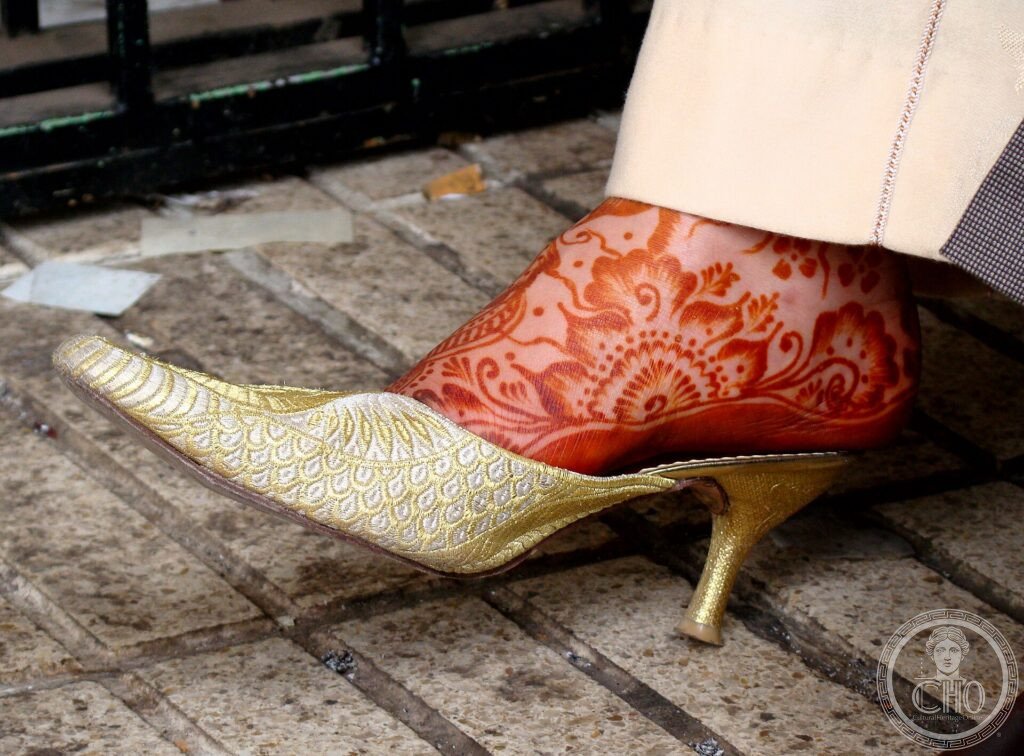
A centuries-old practice of applying plant-based dye to skin and hair, henna rituals unite aesthetic expression, social celebration, and regional identity across North Africa and the Middle East.
At a glance
Henna rituals centre on the application of a natural reddish dye made from the powdered leaves of Lawsonia inermis. The practice produces temporary body art known as mehndi—intricate patterns applied to hands, feet, and other areas of skin that deepen in colour over hours, hold for several days, then gradually fade over one to three weeks through natural exfoliation. Beyond decoration, henna carries deep social and ceremonial weight across cultures.
Origins & history
Henna has been documented in use since at least antiquity, with evidence from ancient Egypt, Mesopotamia, and pre-Islamic Arabian cultures. It was valued as both a hair and body dye across the region. From its origins in North Africa—particularly Egypt and the Maghreb—and the Middle East, including the Arabian Peninsula and West Asia, the practice gradually spread to Carthage, West Africa, Central Africa, the Horn of Africa, and eventually the Indian subcontinent, each region adapting and enriching its ceremonial and aesthetic traditions.
The practice
Henna paste is prepared from dried, powdered leaves and applied to skin using brushes or applicators, often in elaborate geometric or floral patterns. The stain begins to develop within hours, reaching peak colour after 24 to 48 hours. Practitioners range from family members and professional henna artists to ceremonial specialists. The dye also colours hair, fingernails, and historically has been used on fabrics including silk, wool, and leather.
Application occasions span marriages, celebrations, religious festivals, and daily adornment. The practice engages multiple senses: the earthy scent of henna paste, the tactile experience of application, and the visual transformation of skin.
Cultural significance
Henna rituals mark rites of passage, affirm cultural identity, and create spaces for social bonding—particularly among women. The practice transmits aesthetic values, technical knowledge, and regional styles across generations. In wedding ceremonies, henna nights are central celebrations. Beyond celebration, henna carries meaning in daily life as an expression of beauty, spirituality, and belonging to a living cultural tradition shared across a vast region.
Key facts
- Active in at least 16 countries: Egypt, United Arab Emirates, Algeria, Bahrain, Iraq, Jordan, Kuwait, Mauritania, Morocco, Oman, Palestine, Qatar, Saudi Arabia, Sudan, Tunisia, and Yemen
- UNESCO Intangible Cultural Heritage reference: 02116 (inscribed)
- Anchor community: Cairo, Egypt (30.04489°N, 31.24019°E)
- Active ingredient: dried, powdered leaves of Lawsonia inermis
- Stain duration: typically one to three weeks
Where to experience it
Cairo and cities across the Middle East and North Africa remain centres of living henna practice. Wedding celebrations, religious festivals, and cultural events throughout the region feature henna rituals. Professional henna artists work in souks, salons, and at private ceremonies, particularly in Algeria, Morocco, Tunisia, and the Gulf states. The heartland tradition remains strongest in Egypt and the Maghreb.
Sources & resources
- Henna — Wikipedia
- Henna Rituals: Aesthetic and Social Practices — UNESCO Intangible Cultural Heritage
- Cultural Heritage Online
Find it on the map
See this place and what’s around it →📷 Become a Cultural Heritage Online photographer
Share your photos of places: they stay published under your name as the author. The more they're seen, the more you get noticed — and soon a contest will reward the most appreciated photos.
Log in or sign up free to add a photo