
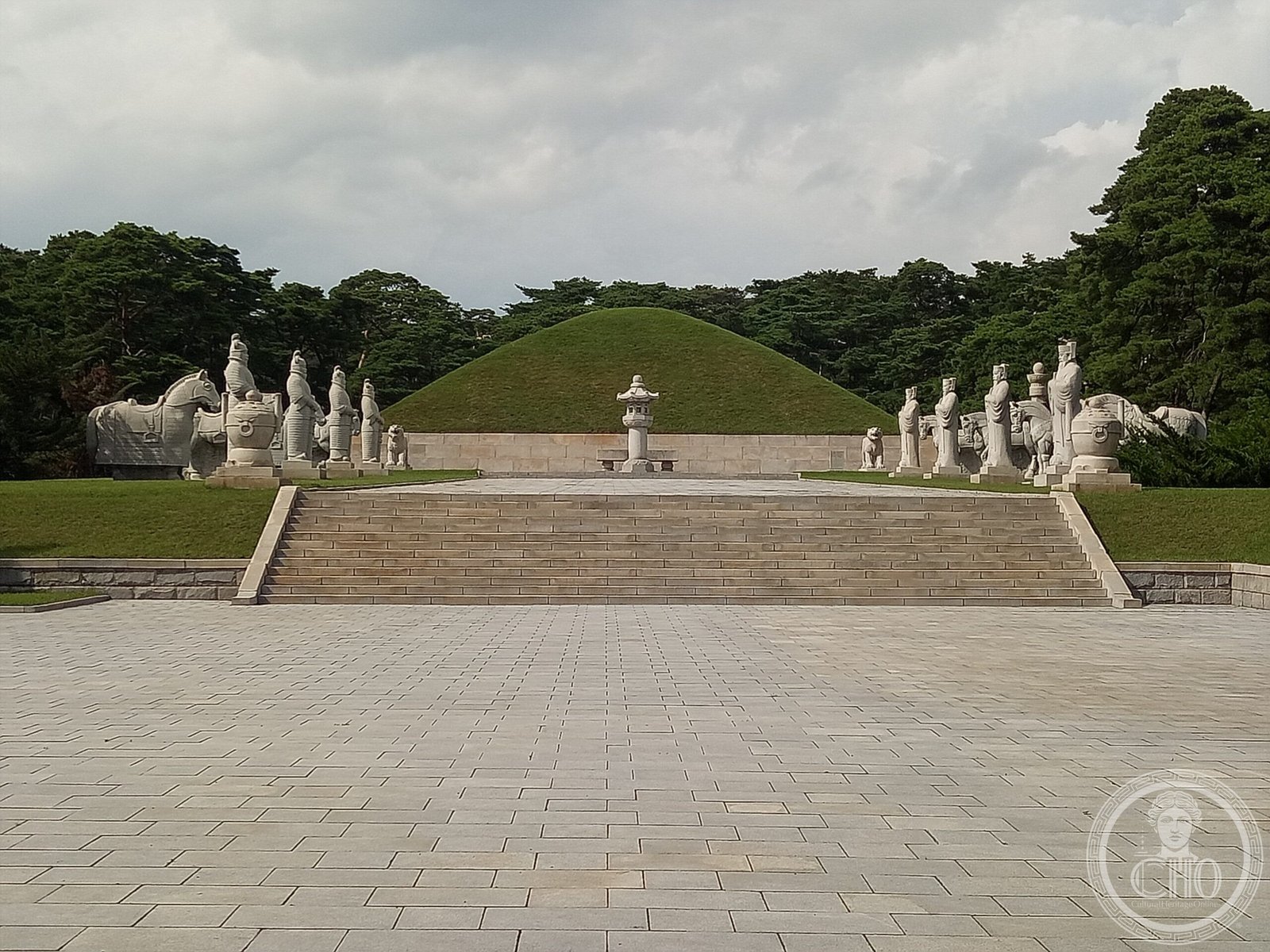
A UNESCO-designated complex of 30 royal burial sites preserves the wall paintings and material culture of Goguryeo, one of Korea’s most powerful ancient kingdoms. The murals offer rare visual testimony to everyday life, mythology, and burial customs spanning centuries.
At a glance
The Complex of Koguryo Tombs became North Korea’s first UNESCO World Heritage site in July 2004. Spread across P’yŏngyang and Namp’o, the 30 inscribed tombs represent a fraction of over 10,000 surviving Goguryeo burials—but contain the majority of known painted examples. The site is believed to have served as a necropolis for the royal family and highest elite.
History
Goguryeo, one of Korea’s Three Kingdoms, was founded around 37 BCE in what is now North Korea and parts of Manchuria. By 427 CE, the capital had moved to P’yŏngyang, establishing the city as a center of power for this military empire spanning the northern Korean Peninsula and southern Manchuria. The tombs date to the later Goguryeo period and represent centuries of burial practice among the kingdom’s ruling elite.
Over 10,000 Goguryeo tombs have survived to modern times, yet only about 90 discovered in China and Korea bear wall paintings. This complex preserves the largest concentration of such decorated burials, making it an exceptional archive of material culture.
What you see
The tombs themselves demonstrate sophisticated engineering, with construction methods reflecting the kingdom’s technical capabilities. Many feature internal wall paintings rendered in strong colors, most notably the Anak Tomb No. 3 and the Tomb of King Tongmyong, both included in the complex. By 2005, seventy murals had been documented, with concentrations in the Taedong River basin near Pyongyang, the Anak region of South Hwanghae Province, and Ji’an in Jilin Province, China. The paintings depict scenes of daily life, celestial imagery, and religious or mythological subjects, offering unprecedented visual insight into Goguryeo society.
Cultural significance
The murals rank among the Goguryeo period’s greatest artistic achievements and serve as primary sources for understanding the kingdom’s social structure, religious beliefs, and material culture. UNESCO recognized the site for its exceptional testimony to burial typology, ingenious construction, and the unique window it opens onto everyday life in an ancient East Asian power.
In May 2006, excavations at the broader Goguryeo kingdom site uncovered 2,360 additional individual tombs, a city wall standing 1.5 meters tall and four meters wide, and evidence of a defensive moat—discoveries that further illuminate the scale and organization of this civilization.
Key facts
- Country: North Korea
- Cities: P’yŏngyang, Namp’o
- UNESCO World Heritage site: July 2004 (North Korea’s first)
- Complex comprises: 30 individual tombs
- Coordinates: 38.8631, 125.415
- Estimated total Goguryeo tombs surviving: over 10,000
- Documented wall paintings in complex: 70 by 2005
Practical information & getting there
The site is located in P’yŏngyang and Namp’o. Access to North Korea is restricted; visitors must typically arrange travel through authorized tour operators and comply with government requirements. We recommend consulting current travel advisories and contacting specialists in travel to the region before planning a visit.
Sources & resources
Find it on the map
See this place and what’s around it →📷 Become a Cultural Heritage Online photographer
Share your photos of places: they stay published under your name as the author. The more they're seen, the more you get noticed — and soon a contest will reward the most appreciated photos.
Log in or sign up free to add a photo