

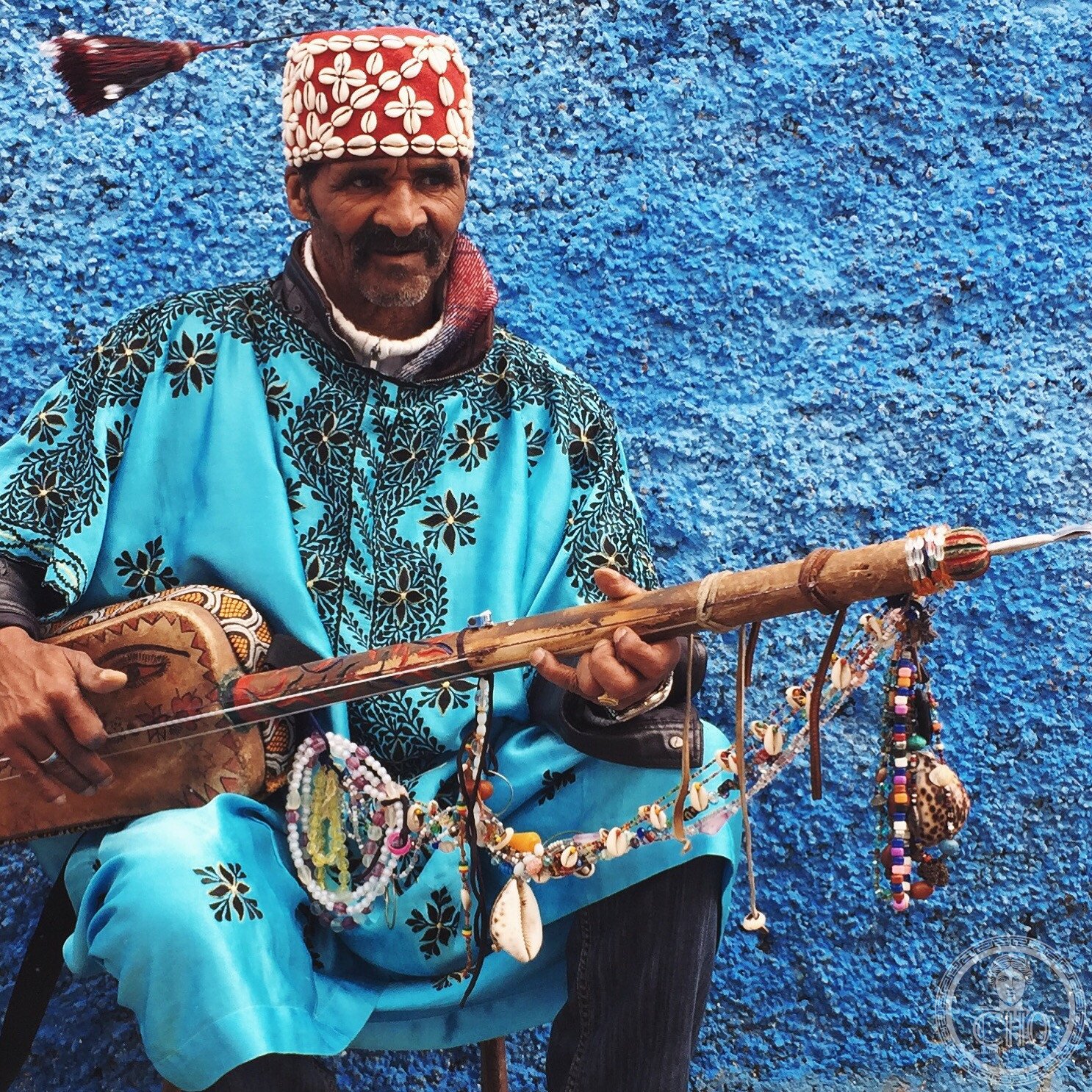
A spiritual and celebratory music born from the cultural fusion of West African and Moroccan traditions, performed at communal healing rituals guided by master musicians.
At a glance
Gnawa music is a body of Moroccan religious songs and rhythms practiced primarily in Essaouira and surrounding regions. The tradition weaves together ritual poetry, traditional instrumentation, and dance within a framework of spiritual healing and community celebration. Performance and transmission remain rooted in the apprenticeship between maalem—master musicians—and their ensembles.
Origins and history
Gnawa music emerged during the 16th and 17th centuries through the cultural fusion of West African peoples brought to Morocco, notably the Hausa, Fulani, and Bambara. Their presence and heritage are directly reflected in the songs and rituals that define the tradition today. The origins of Gnawa music are intricately associated with Morocco’s famed royal “Black Guard.” Though many influences can be traced to West African kingdoms, the traditional practice remains concentrated in Morocco, though it has since spread to other countries in Africa and Europe, including France.
The tradition today
Gnawa music is performed at lila—communal nights of celebration dedicated to prayer and healing. Each lila is guided by a Gnawa maalem, or master musician, who leads a group of musicians and dancers through the night. The well-preserved heritage combines ritual poetry with traditional music and movement, creating a multisensory spiritual experience. Apprenticeship remains the primary mode of transmission, with knowledge passed directly from maalem to student.
Cultural significance
Gnawa music serves a dual purpose: it is both a spiritual practice centered on healing and a celebration of Moroccan cultural identity forged through centuries of cross-cultural exchange. The tradition embodies the history of West African diaspora in Morocco and maintains living connections to ancestral memory through song, rhythm, and communal ritual. Its recognition as intangible cultural heritage reflects its importance to Moroccan society and global cultural diversity.
Key facts
- Country: Morocco
- Anchor community: Essaouira
- UNESCO Intangible Cultural Heritage: Representative List
- Origin period: 16th and 17th centuries
- Key communities: Hausa, Fulani, and Bambara cultural heritage
- Performance context: Lila (communal healing nights)
Where to experience it
Gnawa music thrives in Essaouira and surrounding regions of Morocco, particularly during lila ceremonies. You can experience authentic performances at local cultural venues and during festivals celebrating the tradition. The Essaouira Gnawa and World Music Festival, held annually, showcases both traditional performances and contemporary interpretations. Contact local cultural organizations or tourist offices in Essaouira for information on attending lila ceremonies and performances.
Sources & resources
- Gnawa music (Wikipedia)
- Cultural Heritage Online
Find it on the map
See this place and what’s around it →📷 Become a Cultural Heritage Online photographer
Share your photos of places: they stay published under your name as the author. The more they're seen, the more you get noticed — and soon a contest will reward the most appreciated photos.
Log in or sign up free to add a photo