

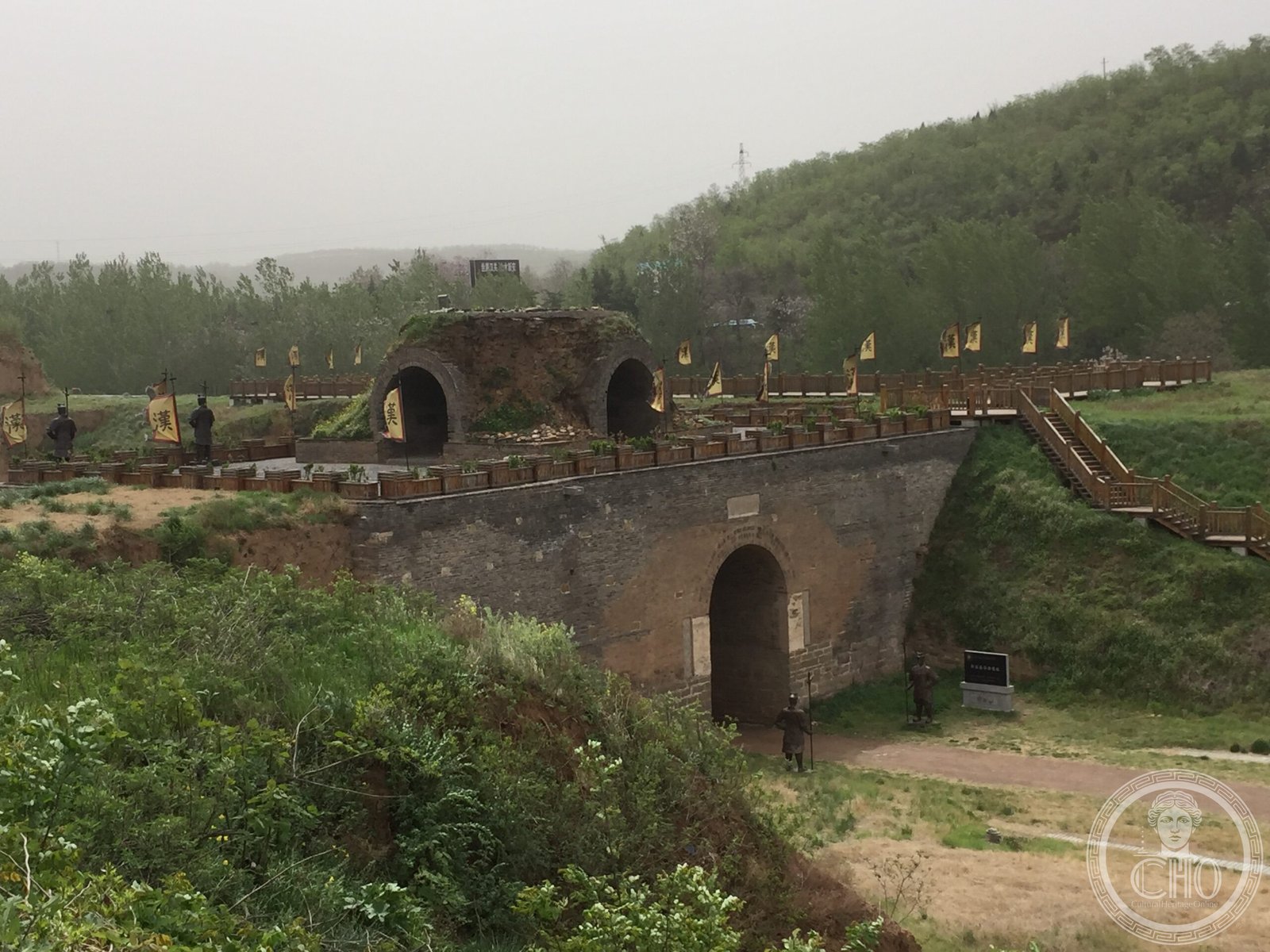
A fortified mountain gateway that controlled the only land passage between China’s Central Plain and the fertile Guanzhong region, protecting the heartland of dynasties from Qin through Tang.
At a glance
Hangu Pass was a strategic choke point commanding the narrow corridor between the Yellow River and Qinling Mountains. Built in 330 BC by the state of Qin, it restricted access to the lower Wei River valleys and guarded the power centres of successive imperial dynasties. Its location determined the fate of armies and empires for over five centuries.
History
Constructed in 330 BC during the Warring States period, Hangu Pass became the scene of repeated sieges and field battles as rival powers fought to control passage through the mountains. It remained strategically vital throughout the Qin, Han, Sui and Tang dynasties, each one depending on its defensive strength.
The pass gradually lost military importance after 196 AD, when the warlord Cao Cao built Tong Pass near the mouth of the Wei River to the west. Centuries of Yellow River bank erosion and alluvial deposits transformed the landscape, eventually rendering Hangu Pass indefensible. It fell into ruins as a strategic site, superseded by newer fortifications.
What you see
The archaeological remains lie on the south bank of the Yellow River, approximately 60 kilometres downstream from where the river bends eastward out of the Ordos Loop. The site today preserves evidence of the fortified gateway that once commanded this narrow mountain passage.
Cultural significance
Hangu Pass exemplifies the strategic geography that shaped Chinese imperial history. Control of this single corridor determined political power for centuries, making it one of the most contested locations in pre-imperial and early imperial China.
In 2014, UNESCO recognised the archaeological site as part of the “Silk Roads: the Routes Network of Chang’an-Tianshan Corridor” World Heritage designation, acknowledging its role in facilitating one of history’s most important trade and cultural networks.
Key facts
- Country: China
- Location: Hanguguan Town, Lingbao County, Sanmenxia, Henan Province
- Coordinates: 34.63°N, 110.92°E
- Built: 330 BC by the state of Qin
- UNESCO status: Part of Silk Roads: the Routes Network of Chang’an-Tianshan Corridor World Heritage Site (2014)
- Note: A second Han-era Hangu Pass exists in Xin’an County, Luoyang; the Qin-era site is the traditional reference
Practical information & getting there
The archaeological site is located in Sanmenxia, Henan Province. For specific visiting hours, facilities and current access conditions, consult local tourism information or the Sanmenxia municipal government website.
Sources & resources
Find it on the map
See this place and what’s around it →📷 Become a Cultural Heritage Online photographer
Share your photos of places: they stay published under your name as the author. The more they're seen, the more you get noticed — and soon a contest will reward the most appreciated photos.
Log in or sign up free to add a photoIs this page about you?
This page is read by travellers and heritage enthusiasts who find it on Google. Tell us how you are connected to this place and we will take it from there.