

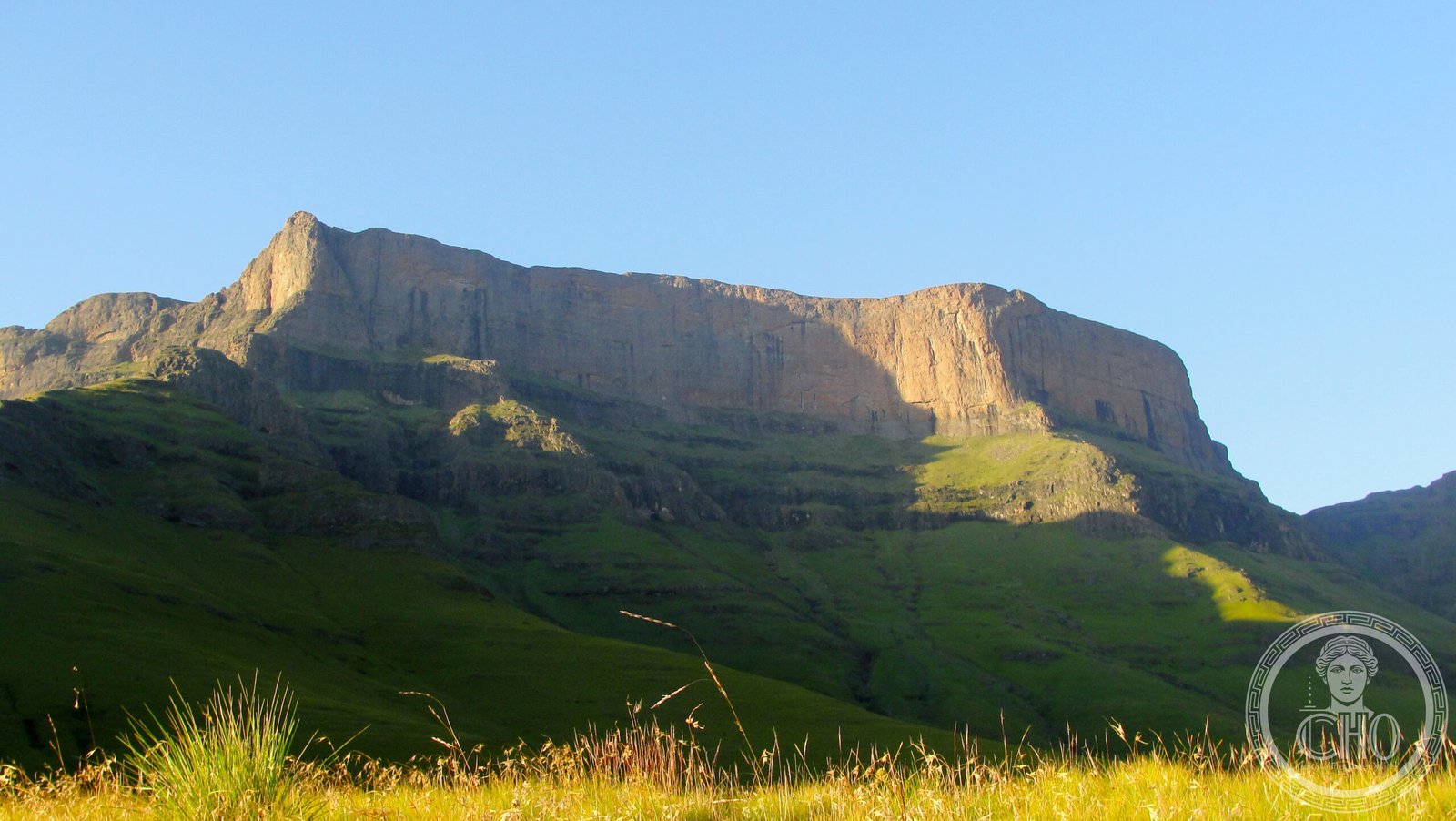
A dramatic peak in the Drakensberg range whose silhouette resembles a sleeping giant, now protected as a nature reserve renowned for San rock art and alpine wildlife.
At a glance
Giant’s Castle crowns the southern Drakensberg with a grassy plateau carved by deep valleys. The mountain’s distinctive profile—created by the alignment of peaks and escarpment—inspired its evocative name. Today, the reserve balances conservation with public access, drawing hikers and researchers to one of South Africa’s most visited mountain destinations.
History
The mountain’s caves preserve San rock art, evidence of the indigenous peoples who inhabited the region for centuries. The reserve itself was established to protect both the cultural heritage and the mountain’s rich biodiversity.
What you see
The landscape is defined by steep escarpments, precipitous valleys, and a characteristic high plateau. The main caves house significant rock art panels. Alpine grassland dominates the summit region, creating a stark and exposed environment at elevation.
Cultural significance
Giant’s Castle is central to South African wilderness culture and adventure tourism. The annual Giant’s Challenge marathon (held each April) attracts distance runners, while the mountain remains a rite of passage for hikers. The preserved San rock art testifies to millennia of human occupation in the Drakensberg.
Key facts
- Country: South Africa
- Province: KwaZulu-Natal
- Mountain range: Drakensberg
- Coordinates: −29.333°, 29.483°
- Notable wildlife: eland, bearded vulture, Cape vulture
- Main feature: San rock art caves
Practical information & getting there
The nature reserve welcomes visitors year-round. A network of trails suits all fitness levels, from short cave walks to multi-day summits. The Giant’s Challenge marathon takes place each April. For detailed access routes, facilities, and current conditions, consult the reserve directly.
Sources & resources
Find it on the map
See this place and what’s around it →
📷 Become a Cultural Heritage Online photographer
Share your photos of places: they stay published under your name as the author. The more they're seen, the more you get noticed — and soon a contest will reward the most appreciated photos.
Log in or sign up free to add a photo