
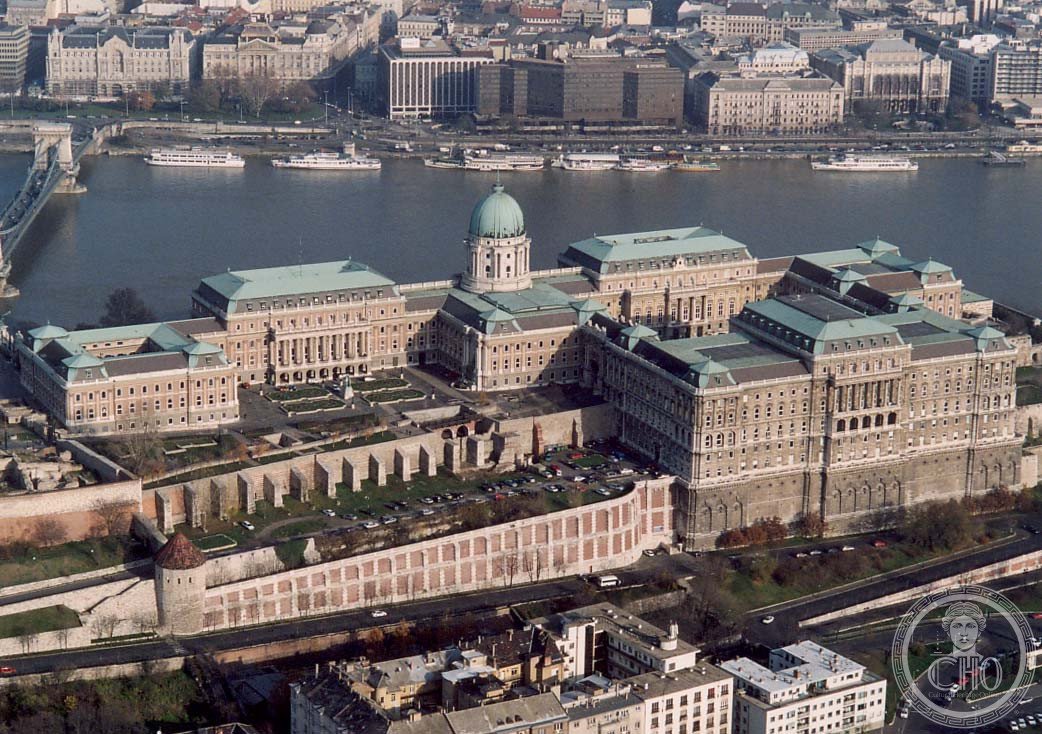
Occupying three wings of the Royal Palace of Buda, this national collection spans one hundred thousand objects of Hungarian art from the Middle Ages to the present day.
At a glance
The Hungarian National Gallery holds approximately one hundred thousand works across four floors of the Buda Castle Palace complex. Its holdings represent the most important examples of Hungarian artistic production across centuries, from medieval stone sculpture to contemporary work.
History
Founded in 1957, the gallery remained in the former Palace of Justice until 1975, when it relocated to its current location within the Royal Palace of Buda. The move expanded its capacity and allowed for a more comprehensive presentation of the national collection.
What you see
The gallery occupies buildings B, C, and D of the palace complex, with works distributed across four floors. The ground floor houses the Lapidarium, a collection of stone artifacts and architectural fragments recovered during the Royal Palace’s reconstruction. Among its treasures is a 13th-century head of King Béla III carved in red marble. Two Renaissance bas-reliefs depicting King Mattia Corvino with his wife Beatrice d’Aragona, attributed to an unknown Lombard master, are also displayed on this level.
Cultural significance
The gallery serves as the primary repository for Hungarian national art. Its Lapidarium provides essential evidence of medieval Hungarian royal portraiture and Renaissance cultural exchange, while the broader collection documents the nation’s artistic evolution across more than eight centuries.
Key facts
- Address: Szent Gyorgy tér 2, 1014 Budapest
- Coordinates: 47.496194190793396, 19.039725065231323
- Website: http://mng.hu/
- Phone: +36 20 439 7325
Practical information
The gallery is arranged across four floors within three wings of the Buda Castle Palace. Visitors should check the official website for current opening hours, admission fees, and any temporary exhibitions or closures.
Getting there
The gallery is located at Szent Gyorgy tér 2 in the historic Buda Castle district. You can reach it via public transportation to the castle area or by climbing the stairs from the lower levels of Buda.
See the place
Sources & resources
Find it on the map
See this place and what’s around it →📷 Become a Cultural Heritage Online photographer
Share your photos of places: they stay published under your name as the author. The more they're seen, the more you get noticed — and soon a contest will reward the most appreciated photos.
Log in or sign up free to add a photoIs this page about you?
This page is read by travellers and heritage enthusiasts who find it on Google. Tell us how you are connected to this place and we will take it from there.