

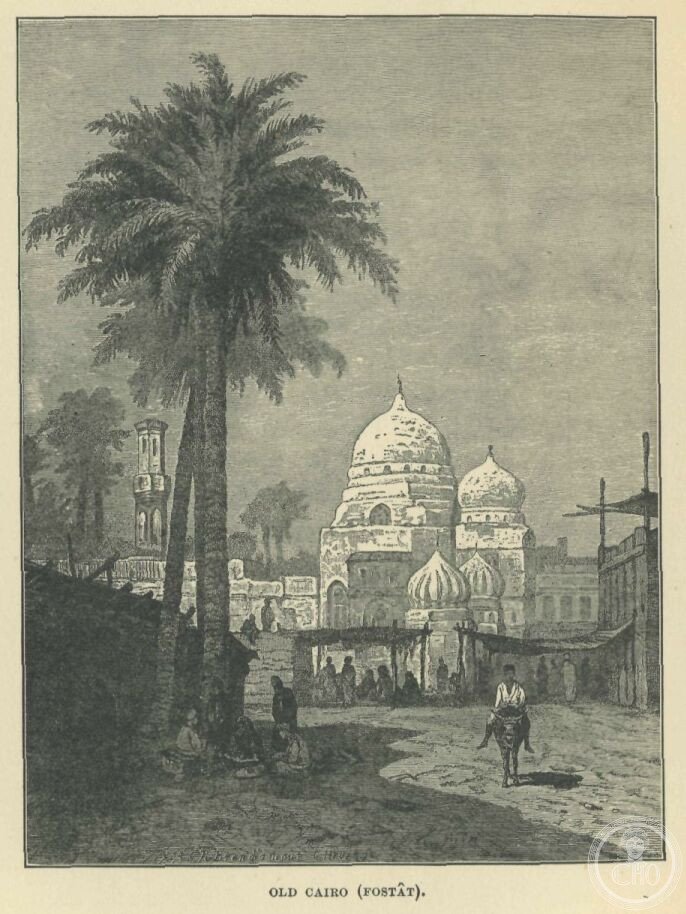
The first capital of Muslim Egypt, founded in 641 by the Rashidun general ʿAmr ibn ul-ʿĀṣ, Fustat rose to prominence as a centre of Islamic civilization before its deliberate destruction in 1168. Now absorbed into modern Cairo, its archaeological remains testify to centuries of administrative power and mercantile wealth.
At a glance
Fustat was established immediately following the Muslim conquest of Egypt and served as the region’s administrative heart until the 12th century. Built adjacent to what is now Old Cairo, it flourished as a major urban centre before being deliberately burned to prevent Crusader forces from seizing its riches. The city’s remains were eventually absorbed by Cairo, which the Fatimids founded to the north in 969 as a royal enclosure.
History
ʿAmr ibn ul-ʿĀṣ founded Fustat in AD 641, immediately after the Muslim conquest of Egypt, making it the region’s first capital under Islamic rule. The city grew into a thriving metropolis and by the 12th century had reached a population of approximately 200,000, establishing itself as the centre of administrative power in Egypt.
In 1168, vizier Shawar ordered the city burned to deny its wealth to invading Crusaders. This deliberate destruction marked the beginning of Fustat’s decline. Cairo, established by the Fatimids in 969 as a royal enclosure, eventually eclipsed Fustat as Egypt’s principal city. The ruins of Fustat were gradually absorbed into the expanding metropolis, and the site fell into disrepair for centuries, serving for a time as a rubbish dump.
What you see
Few structures from Fustat’s era as a capital remain standing today. The most significant was the Mosque of ʿAmr, the first mosque built in Egypt, which was constructed during the city’s foundation. Extensive archaeological excavations have revealed layers of buried material—ceramics, glass, textiles, and everyday objects—that document the city’s former prosperity and daily life.
Cultural significance
Fustat represents a pivotal moment in Egyptian and Islamic history, marking the establishment of Muslim governance in the Nile Valley. The city’s transition from thriving capital to archaeological site illustrates the fragility of urban power and the dramatic shifts in medieval geopolitics. Its destruction and absorption into Cairo reflect broader patterns of medieval urbanism in the Islamic world.
Key facts
- Country: Egypt
- Coordinates: 30.005°N, 31.2375°E
- Founded: AD 641 by ʿAmr ibn ul-ʿĀṣ
- Peak population: c. 200,000 (12th century)
- Destroyed: 1168
- Current status: Archaeological site within Old Cairo district
Practical information & getting there
Fustat lies within the modern Old Cairo district and is accessible as part of visits to that area. The Museum of Islamic Art in Cairo houses many artefacts recovered from archaeological digs at the site, offering an overview of the city’s material culture and daily life. The area remains active in archaeological research.
Sources & resources
Find it on the map
See this place and what’s around it →📷 Become a Cultural Heritage Online photographer
Share your photos of places: they stay published under your name as the author. The more they're seen, the more you get noticed — and soon a contest will reward the most appreciated photos.
Log in or sign up free to add a photoIs this page about you?
This page is read by travellers and heritage enthusiasts who find it on Google. Tell us how you are connected to this place and we will take it from there.