
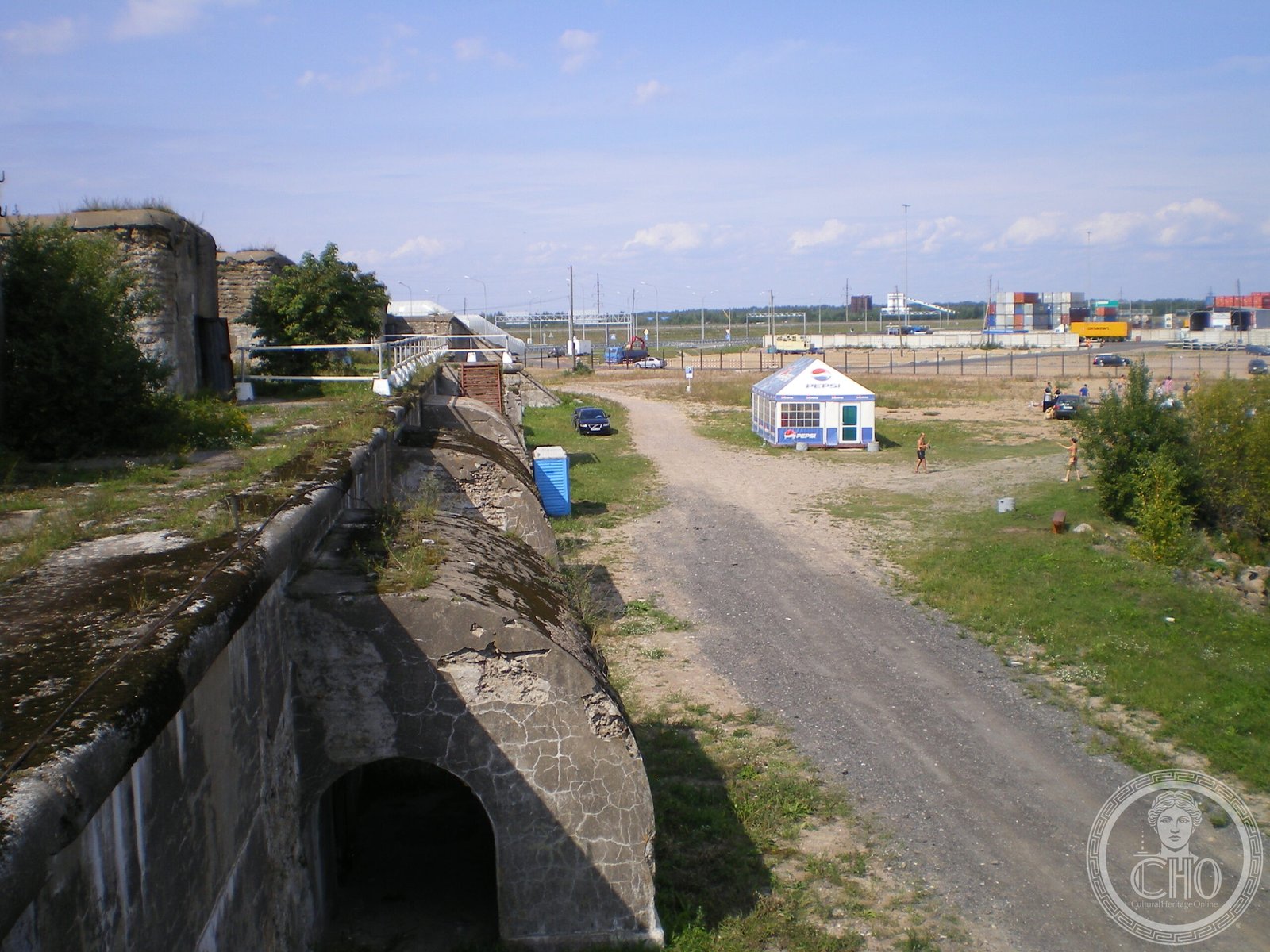
A coastal artillery battery defending Kronstadt’s southern waters, this fortification now stands as a monument to imperial Russia’s Baltic defenses, awaiting restoration and redevelopment.
At a glance
Fort Constantin was a defensive artillery battery positioned to protect the fortified city of Kronstadt from seaward attack. Located on the Kotlin Island in the Gulf of Finland, it formed part of Russia’s strategic military architecture in the Baltic.
History
Constructed as part of Kronstadt’s multi-fort defensive system, Fort Constantin took its name from Grand Duke Constantine. The fortification played a protective role during periods of imperial Russian naval importance, guarding the southern approaches to the city from the Baltic Sea.
What you see
The fort’s structures remain visible but deteriorated. Its design reflects 19th-century coastal artillery engineering, with batteries oriented toward the water. Current preservation challenges mean many original features require documentation and repair.
Cultural significance
Fort Constantin represents Russia’s naval and military heritage in the Baltic region. As part of Kronstadt’s fortified ensemble, it embodies the strategic ambitions and engineering capabilities of imperial Russia during a period of great-power competition in Northern Europe.
Key facts
- Location: Kotlin Island, Gulf of Finland, Kronstadt, Russia
- Coordinates: 59.9952°N, 29.7017°E
- Type: Coastal artillery battery
- Current status: No longer in military use; structures in disrepair
Practical information & getting there
Fort Constantin is located on Kotlin Island within the Kronstadt fortress complex. Currently, the territory is undergoing development by tourism interests. Check local conditions and access policies before visiting, as restoration work may affect public entry. The site remains a work in progress for heritage preservation and tourism development.
Sources & resources
Find it on the map
See this place and what’s around it →📷 Become a Cultural Heritage Online photographer
Share your photos of places: they stay published under your name as the author. The more they're seen, the more you get noticed — and soon a contest will reward the most appreciated photos.
Log in or sign up free to add a photoIs this page about you?
This page is read by travellers and heritage enthusiasts who find it on Google. Tell us how you are connected to this place and we will take it from there.