
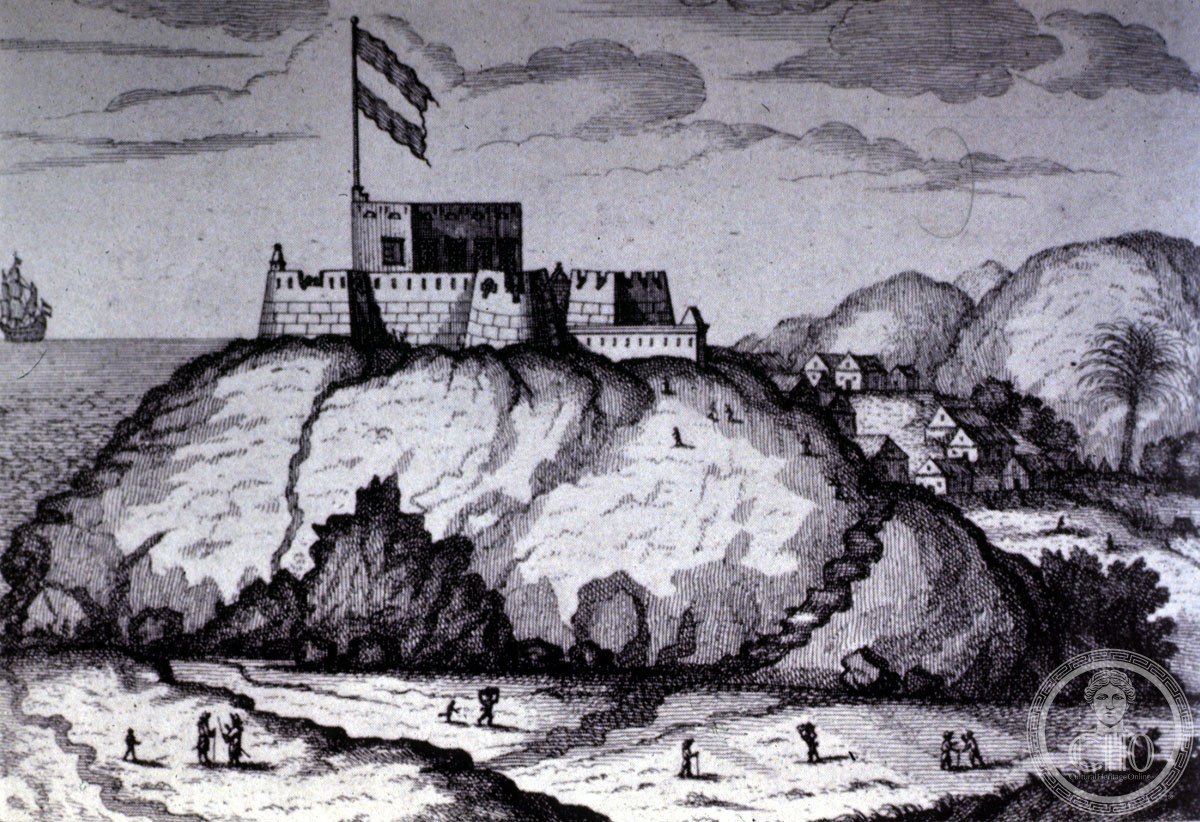
A fortified trading post that changed hands between European powers, Fort Amsterdam stands as evidence of the Atlantic slave trade and colonial competition on the West African coast.
At a glance
Fort Amsterdam is a former slave fort located in Abandze, near Cape Coast in Ghana’s Central Region. Built by the English between 1638 and 1645 as Fort Cormantin, it was seized by Dutch forces in 1665 and remained under Dutch control until 1868, when it was traded to the British. Today it stands as a UNESCO World Heritage site documenting centuries of European economic and colonial presence in West Africa.
History
English traders constructed the fort between 1638 and 1645, naming it Fort Cormantin or Fort Courmantyne as a trading post on the Gold Coast. In 1665, Dutch Admiral Michiel de Ruyter of the Dutch West India Company captured the fort in retaliation for English Admiral Holmes’s seizure of several Dutch forts the previous year. The capture marked a turning point in European colonial rivalries on the coast.
Integrated into the Dutch Gold Coast, Fort Amsterdam remained a Dutch possession for over two centuries. In 1868, the British acquired the fort through trade, concluding the Dutch era of control and beginning the final phase of European occupation before eventual independence.
Cultural significance
Fort Amsterdam bears witness to the intersection of European commercial ambition and the human devastation of the Atlantic slave trade. Its changing ownership reflects the power struggles between English, Dutch, and other European interests competing for control of West African trade routes and resources. The fort’s survival makes it an essential document of this period.
In 1979, UNESCO recognized Fort Amsterdam’s historical importance by inscribing it on the World Heritage List alongside other Ghanaian forts and castles—a collective acknowledgment of these sites’ roles in both colonial history and the transatlantic slave trade.
Key facts
- Country: Ghana
- Region: Central Region, Mfantseman District
- Location: Abandze, northeast of Cape Coast
- Coordinates: 5.192222° N, 1.093056° W
- Original name: Fort Cormantin (English, 1638–1665)
- UNESCO World Heritage site: Inscribed 1979
Practical information & getting there
Fort Amsterdam is situated in Abandze, a coastal settlement in Ghana’s Central Region northeast of Cape Coast. The fort is accessible to visitors as part of Ghana’s network of preserved slave forts and castles. For current opening hours, admission fees, and guided tour availability, contact local heritage authorities or your accommodation in Cape Coast, the nearest major town.
Sources & resources
Find it on the map
See this place and what’s around it →📷 Become a Cultural Heritage Online photographer
Share your photos of places: they stay published under your name as the author. The more they're seen, the more you get noticed — and soon a contest will reward the most appreciated photos.
Log in or sign up free to add a photoIs this page about you?
This page is read by travellers and heritage enthusiasts who find it on Google. Tell us how you are connected to this place and we will take it from there.