
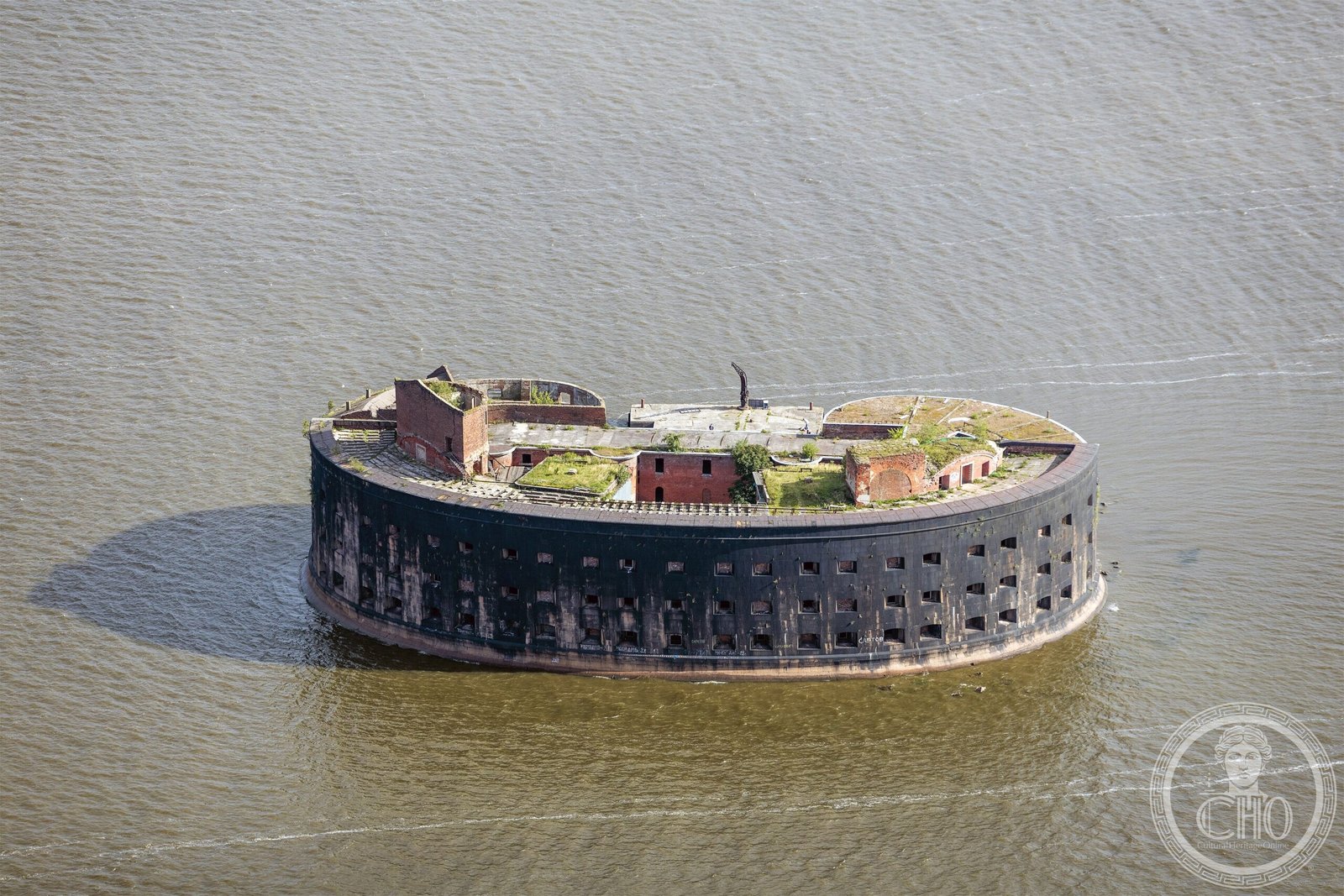
A naval fortress on an artificial island in the Gulf of Finland, Fort Alexander served as a pioneering research facility for infectious disease—earning its darker name, Plague Fort, from its scientific mission.
At a glance
Fort Alexander stands on an artificial island in the Gulf of Finland near Saint Petersburg and Kronstadt. Built as a naval fortress, it became notable for housing a research laboratory focused on plague and other bacterial diseases from 1899 to 1917.
History
Originally constructed as a military installation to protect the approaches to Saint Petersburg and Kronstadt, the fort was repurposed in the late 19th century. From 1899 onwards, it transformed into a scientific research center dedicated to studying plague and bacterial diseases—work that would define its reputation and common name among locals and historians.
What you see
The fortress stands on an artificial island, a notable feat of 19th-century engineering. Its structure reflects its dual purpose: defensive architecture married to facilities designed for bacteriological research and laboratory work.
Cultural significance
Fort Alexander holds unique importance in the history of microbiology and public health. Its research laboratory represents an early institutional approach to combating infectious disease, at a time when bacteriology was emerging as a scientific discipline. The site carries symbolic weight as both a military installation and a center of scientific inquiry.
Key facts
- Location: Gulf of Finland, near Saint Petersburg and Kronstadt, Russia
- Coordinates: 59.9895°N, 29.7178°E
- Period: 19th–20th century
- Research laboratory: active 1899–1917
- Primary focus: plague and bacterial disease research
Practical information & getting there
Fort Alexander is located on an artificial island in the Gulf of Finland. Access information and current visiting conditions should be verified before traveling, as the site’s location and historical status may affect public access.
Sources & resources
Find it on the map
See this place and what’s around it →📷 Become a Cultural Heritage Online photographer
Share your photos of places: they stay published under your name as the author. The more they're seen, the more you get noticed — and soon a contest will reward the most appreciated photos.
Log in or sign up free to add a photoIs this page about you?
This page is read by travellers and heritage enthusiasts who find it on Google. Tell us how you are connected to this place and we will take it from there.