
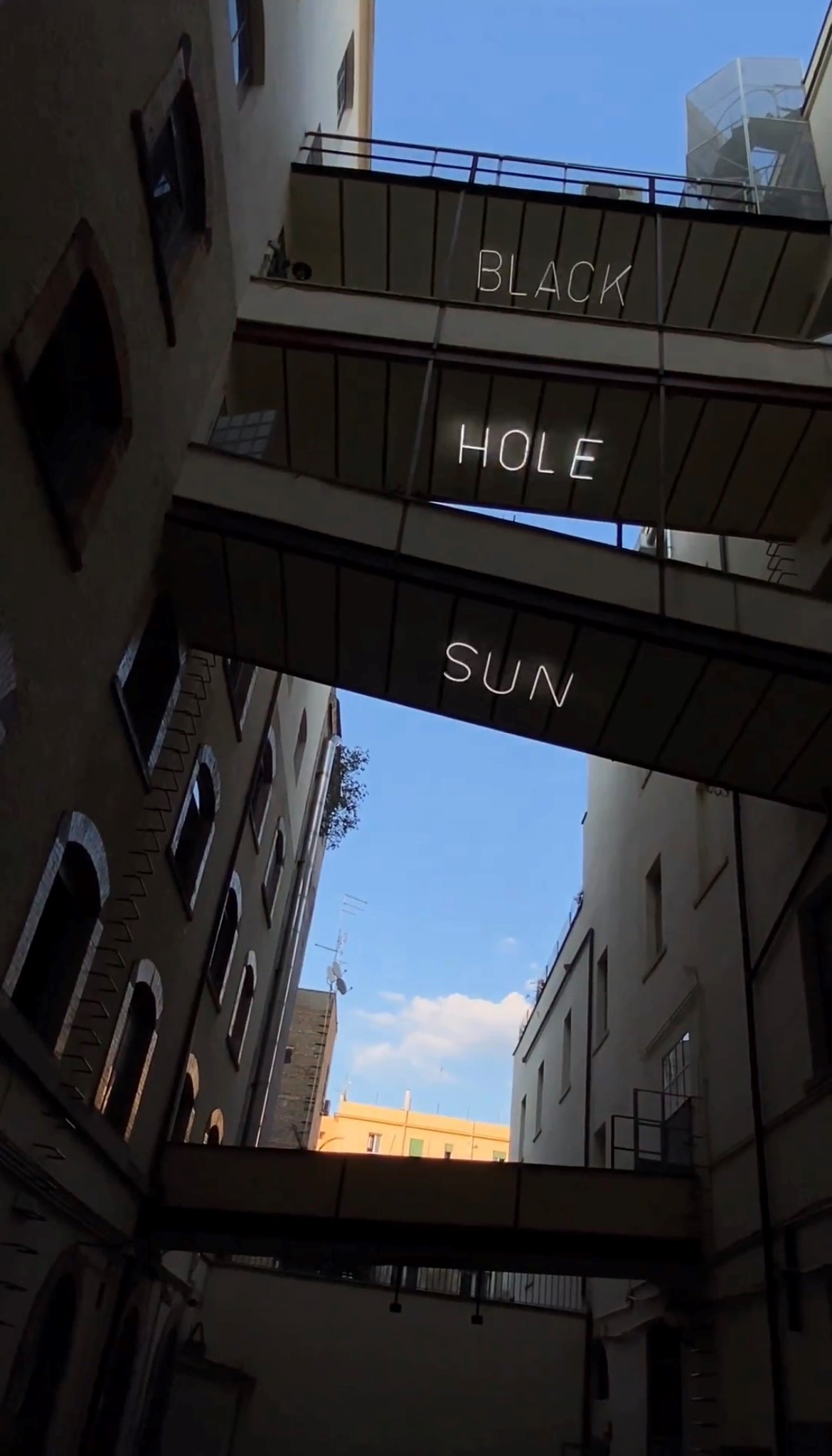
A pasta factory that closed in 1960 became, without anyone planning it, the studio building where an entire generation of Roman painters found each other in the 1970s and 80s.
At a glance
The Pastificio Cerere was built in 1905 as a pasta and flour mill in San Lorenzo, a working-class district near Rome’s Termini station, and operated until 1960. From 1973 its empty rooms began filling with artists’ studios instead, and by the 1980s the building had given its name to an entire movement, the Scuola di San Lorenzo. The Fondazione Pastificio Cerere, established in 2005, now runs a free public exhibition space inside the building alongside the studios, ateliers and the RUFA fine-art academy that share it today.
Key facts
- Built — 1905, as a pasta and flour factory; production ceased in 1960
- First artist — the sculptor Nunzio, who took a studio here in 1973, with the building’s owner Felicina Ceci leasing space to young artists
- Scuola di San Lorenzo — the informal group of artists who worked here through the late 1970s and 80s: Domenico Bianchi, Bruno Ceccobelli, Gianni Dessì, Giuseppe Gallo, Nunzio, Piero Pizzi Cannella and Marco Tirelli
- 1984 — the exhibition Ateliers, curated by Achille Bonito Oliva, opened the studios to the public and made the group’s name
- Foundation established — 2005, following the 2002 exhibition Interno F.M. organised by Flavio Misciattelli, whose family owns part of the building
History
For over half a century the building did exactly what its name says: it milled flour and made pasta, in San Lorenzo, a district built for railway workers and known through the twentieth century as one of Rome’s most working-class quarters. Production stopped in 1960, and the factory floors and offices sat mostly unused through the following decade.
The turn toward art was gradual and informal. In 1973 the sculptor Nunzio became the first artist to take a studio in the empty building, with its owner Felicina Ceci willing to lease rooms cheaply to young artists rather than leave them empty. Others followed through the rest of the decade and into the 1980s — Domenico Bianchi, Bruno Ceccobelli, Gianni Dessì, Giuseppe Gallo, Piero Pizzi Cannella and Marco Tirelli among them — until the building held one of the most concentrated clusters of working studios in the city. In 1984 the critic Achille Bonito Oliva curated Ateliers, an exhibition that opened the artists’ working spaces to the public for the first time and gave the group a name that stuck: the Scuola di San Lorenzo, one of the defining currents of Italian painting in the 1980s.
The building’s more recent chapter as a public institution began with Interno F.M., a 2002 exhibition organised by Flavio Misciattelli, whose family owns part of the property; the public response to it led directly to the founding of the Fondazione Pastificio Cerere in 2005.
What you see
The building keeps the plain, functional architecture of an early-twentieth-century Roman factory — brick, iron and a working courtyard rather than any decorative ambition — and that industrial shell is still legible behind everything that has been added since. Today it holds artists’ studios, fashion and graphic-design ateliers, the RUFA (Rome University of Fine Arts) academy, and the Foundation’s own exhibition space, which is free to visit and open to the public.
Practical information
The Foundation’s exhibition space is open to the public free of charge; opening hours follow the current exhibition programme, so it is worth checking the Foundation’s own channels before visiting. The wider building remains a working complex of artists’ studios and academic space, not all of which is open to casual visitors.
Getting there
The address is Via degli Ausoni 7, in San Lorenzo, a short walk from Termini station and from Sapienza University’s main campus. The district is well served by tram and bus routes along Via Tiburtina and Via dei Ramni.
Sources & resources
- Fondazione Pastificio Cerere — official site, “Who we are”, for the 1905 construction, the 1960 closure, the 2002 Interno F.M. exhibition and the Foundation’s founding in 2005
- Il Giornale dell’Arte, “Pastificio Cerere: un ventenne di cinquant’anni”, and the Fondazione CRJ profile of the Scuola di San Lorenzo, for Nunzio’s arrival in 1973, the artists of the Scuola di San Lorenzo and the 1984 Ateliers exhibition curated by Achille Bonito Oliva
Find it on the map
See this place and what’s around it →Historical events at this place (1)
📷 Become a Cultural Heritage Online photographer
Share your photos of places: they stay published under your name as the author. The more they're seen, the more you get noticed — and soon a contest will reward the most appreciated photos.
Log in or sign up free to add a photoIs this page about you?
This page is read by travellers and heritage enthusiasts who find it on Google. Tell us how you are connected to this place and we will take it from there.