

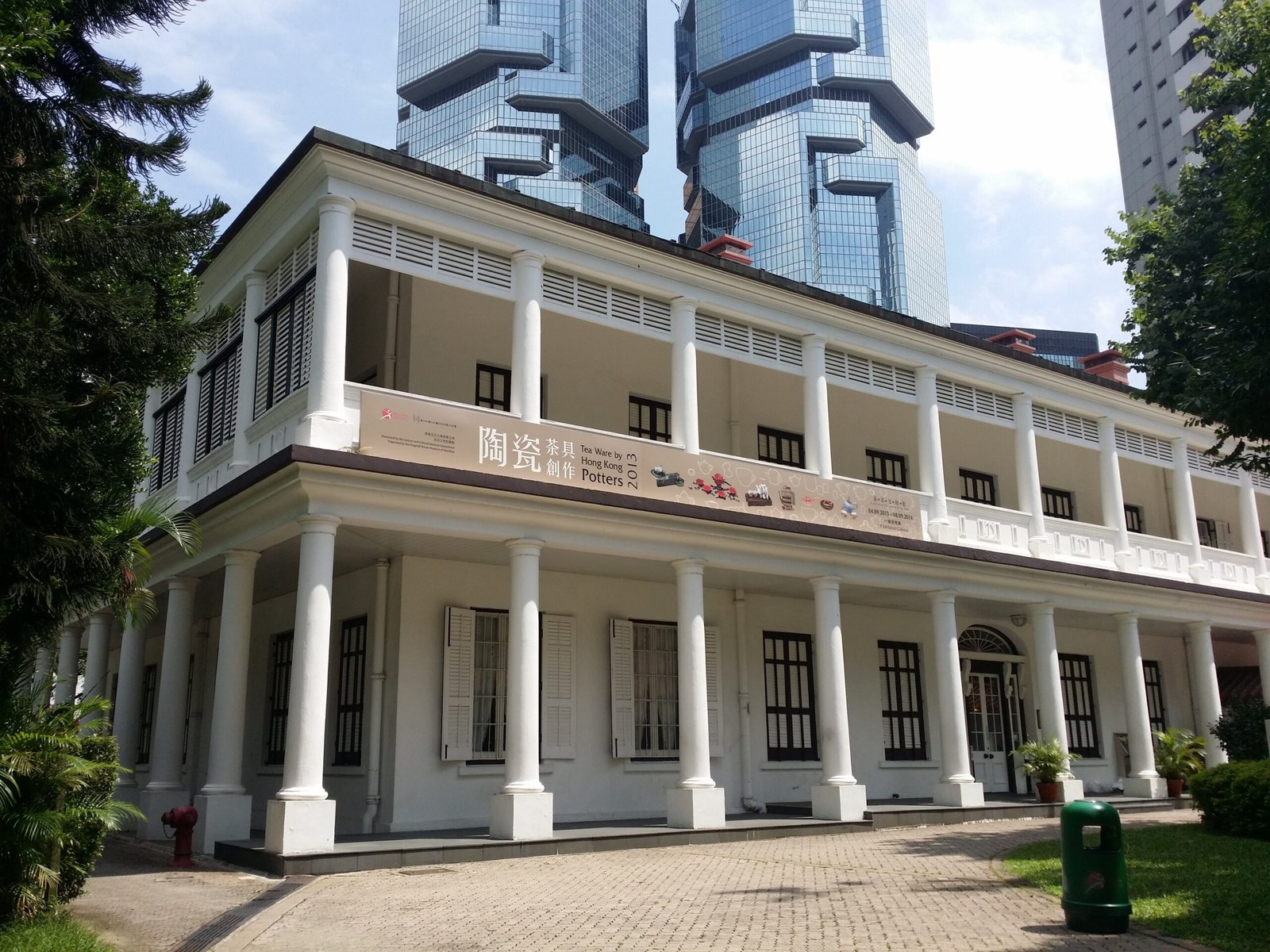
Hong Kong’s oldest surviving colonial building, this 1846 residence once commanded British military authority and now preserves the island’s refined tea culture.
At a glance
Flagstaff House stands as the earliest example of colonial architecture to survive in Hong Kong. Built in 1846, it occupies a hillside position within Hong Kong Park in Central, the colony’s original administrative heart. The residence served as the official home of successive British military commanders during nearly two centuries of imperial rule.
History
Constructed in 1846, Flagstaff House predates Hong Kong’s transformation from a sparsely inhabited fishing settlement into a major colonial port. The building’s establishment coincided with Britain’s consolidation of power following the First Opium War. For generations it functioned as the residence of the Commander of the British forces, making it both a domestic and symbolic seat of colonial authority.
What you see
The structure exemplifies early colonial domestic design adapted to Hong Kong’s subtropical climate and terrain. Its architectural vocabulary reflects mid-nineteenth-century British conventions, though details remain understudied in available sources.
Cultural significance
Flagstaff House embodies Hong Kong’s colonial heritage at its most formative moment. Today it functions as a museum dedicated to Chinese tea ware, transforming a symbol of imperial residence into a space celebrating traditional Asian aesthetics and craftsmanship. This cultural transition marks a shift in how colonial architecture is understood and repurposed in contemporary Hong Kong.
Key facts
- Built: 1846
- Location: 10 Cotton Tree Drive, Central, within Hong Kong Park
- Coordinates: 22.2785°N, 114.1625°E
- Country: China
- Current use: Flagstaff House Museum of Tea Ware
Practical information & getting there
Flagstaff House is situated within Hong Kong Park, accessible from Central. The museum welcomes visitors to explore its tea ware collections and colonial interiors. Check opening hours and any entry requirements before your visit to the museum.
Sources & resources
Find it on the map
See this place and what’s around it →📷 Become a Cultural Heritage Online photographer
Share your photos of places: they stay published under your name as the author. The more they're seen, the more you get noticed — and soon a contest will reward the most appreciated photos.
Log in or sign up free to add a photoIs this page about you?
This page is read by travellers and heritage enthusiasts who find it on Google. Tell us how you are connected to this place and we will take it from there.