
A living tradition of hunting with trained birds of prey, falconry binds handler and raptor in pursuit of wild game across open landscapes. Rooted in Arabian culture for millennia, the practice persists across continents, connecting hunter, bird, and prey in an ancient dialogue of skill and patience.
At a glance
Falconry is the art of hunting wild animals using a conditioned bird of prey—a peregrine falcon, red-tailed hawk, Harris’s hawk, or Eurasian goshawk—trained to work alongside a human partner. The falconer or austringer (keeper of goshawks) reads the bird’s behavior, launches it toward quarry, and retrieves it after the kill. Small game—rabbits, squirrels—forms the typical prey. The practice demands years of training for both bird and human.
Origins & history
Falconry is thought to be an Arabian sport that grew throughout Europe over centuries. Saker falcons have been integral to Arab heritage and culture for over 9,000 years, used in the Arabian Peninsula since ancient times. The birds themselves—called “Hur” (Free-bird) in Arabic—became national emblems of the United Arab Emirates, Saudi Arabia, Qatar, Oman, and Yemen, embedding the practice deep in the identity of these nations.
The practice
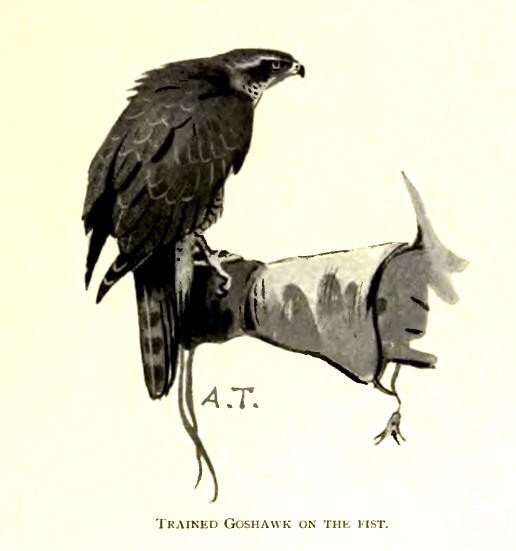
A falconer stands in open country, a leather-gloved arm extended. Perched there: a peregrine falcon, red-tailed hawk, or Harris’s hawk, fitted with jesses (short leather straps) and a bell. At the signal, the bird launches skyward, climbing on thermals above the grassland. When prey is spotted—a rabbit bolting through cover, a squirrel darting up a trunk—the raptor dives with lethal speed. The falconer whistles or calls the bird back with a lure, rewarding it with food.
Traditional terminology persists among practitioners: a “falconer” flies a falcon; an “austringer” (from Old French) keeps Eurasian goshawks and accipiters. Male hawks and falcons are called “tiercels,” roughly one-third smaller than females. The vocabulary of the craft—jesses, bells, lures, perches—forms a language passed from teacher to apprentice across generations.
Cultural significance
Falconry embodies a covenant between human and animal—discipline tempered with respect, control paired with freedom. For Arab cultures, the saker falcon represents liberty and nobility, woven into poetry, heraldry, and national identity. Across Europe and Central Asia, the practice preserves medieval knowledge and ritual, linking modern practitioners to centuries of kings, nobles, and hunters who saw in the hunt a mirror of courage and honor.
Key facts
- UNESCO Intangible Cultural Heritage reference: 01708
- Anchor community: Abu Dhabi, United Arab Emirates
- Practiced across 23 countries: Austria, Belgium, Croatia, Czechia, France, Germany, Hungary, Ireland, Italy, Kazakhstan, Republic of Korea, Kyrgyzstan, Mongolia, Morocco, Netherlands, Pakistan, Poland, Portugal, Qatar, Saudi Arabia, Slovakia, Spain, Syria, and the United Arab Emirates
- Primary birds of prey: peregrine falcon, red-tailed hawk, Harris’s hawk, Eurasian goshawk, saker falcon
- Saker falcons integral to Arab heritage for over 9,000 years; national bird of five Arab states
Where to experience it
Abu Dhabi and the wider Arabian Peninsula remain the heartland of falconry tradition. Contemporary practitioners—falconers and austringers—can be found across Europe, Central Asia, and the Middle East. Seek local falconry clubs, exhibitions, and master falconers who still use traditional terminology and methods. Many regions host falconry demonstrations and mentorship programs for those wishing to learn the craft.
Sources & resources
Find it on the map
See this place and what’s around it →📷 Become a Cultural Heritage Online photographer
Share your photos of places: they stay published under your name as the author. The more they're seen, the more you get noticed — and soon a contest will reward the most appreciated photos.
Log in or sign up free to add a photo