
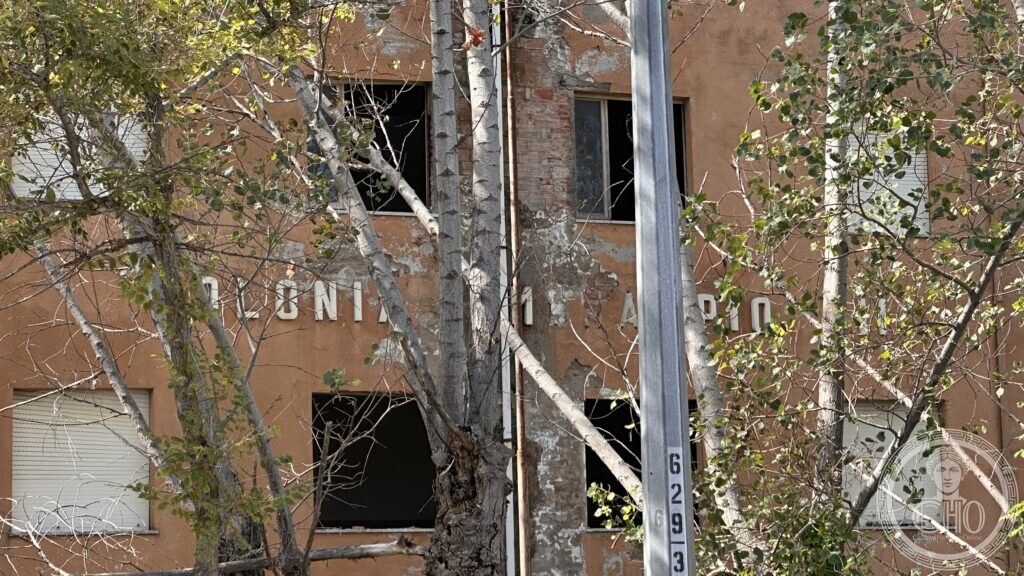
A four-storey seaside home built in the 1930s to send the children of Soliera and Carpi, two towns of the Modena countryside, to the sun and sea of Riccione. It has stood empty and derelict for decades, its name still legible on the front in broken letters.
At a glance
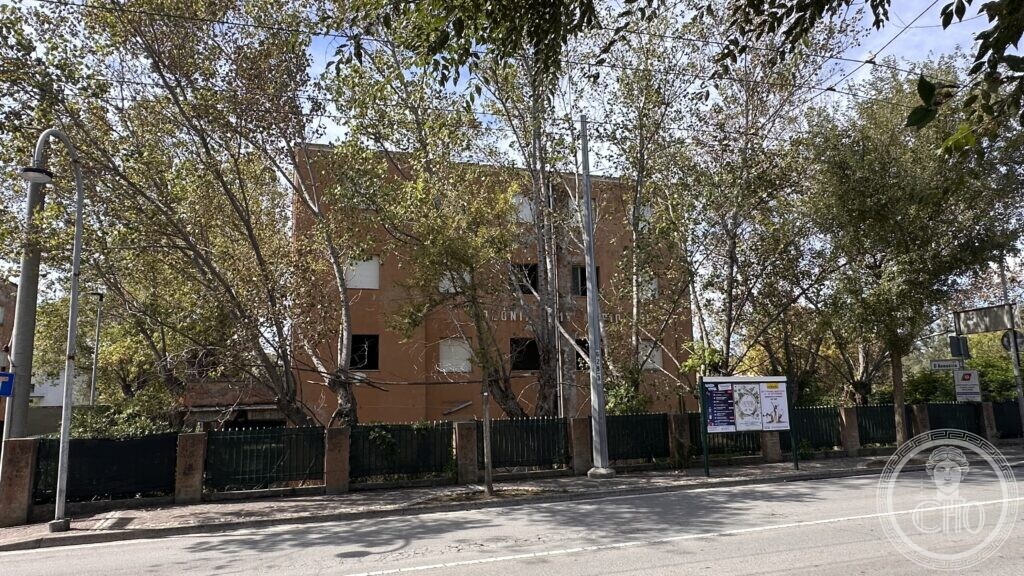
On Viale Gabriele D’Annunzio in the Spontricciolo district of Riccione stands a four-storey building in salmon-coloured render, its windows broken or shuttered, ivy climbing the brick, the trees around it now taller than when it was built. It is the Colonia Adriatica Soliera-Carpi, a children’s seaside home financed jointly by the municipalities of Soliera and Carpi — both in the province of Modena — to bring their children to the coast for heliotherapy, the supervised sun-cure that was standard preventive medicine for the young in the 1930s. The building covers about 430 square metres on a plot of 950. It has not been in use for a very long time, and has been declared structurally unsound.
Key facts
- Where: Viale Gabriele D’Annunzio, Spontricciolo, Riccione
- Built: the 1930s
- Financed by: the municipalities of Soliera and Carpi, in the province of Modena
- Size: a four-storey building of about 430 m², on a plot of 950 m²
- Later use: part of the building served, until 2022, as the workshop of the sculptor Giorgio Giulianelli
- Today: derelict and declared unfit for use; part of a stalled redevelopment alongside the neighbouring Colonia Reggiana
Two towns on the Adriatic
Like dozens of other buildings along this stretch of coast, the Colonia Adriatica exists because an inland town wanted a place to send its children to the sea. Carpi and Soliera, both in the Modena countryside, financed this one together, and its double name records the arrangement. It belongs to the same family of buildings, and the same stretch of Riccione seafront, as the better-documented Colonia Reggiana next door — commissioned by Reggio Emilia and now itself a monument, restored and reopened after its own long abandonment.
The Adriatica did not share that fortune. In 2004 the municipality of Riccione granted a concession over both the Reggiana and the Adriatica to a company that was supposed to restore and convert them; the company met none of its obligations, and the concession was later terminated. While the Reggiana has since found a path back into use, the Adriatica remained empty, its condition worsening, until it was declared structurally unfit. For some years part of the ground floor gave shelter to the sculptor Giorgio Giulianelli, who used it as a studio with the informal tolerance of the city; that arrangement ended in 2022. The building is now named, along with the Reggiana, the Murri, the Novarese and the Bertazzoni colonies, in a 2026 regeneration project for the colonie of the Rimini–Riccione coast.
What you see
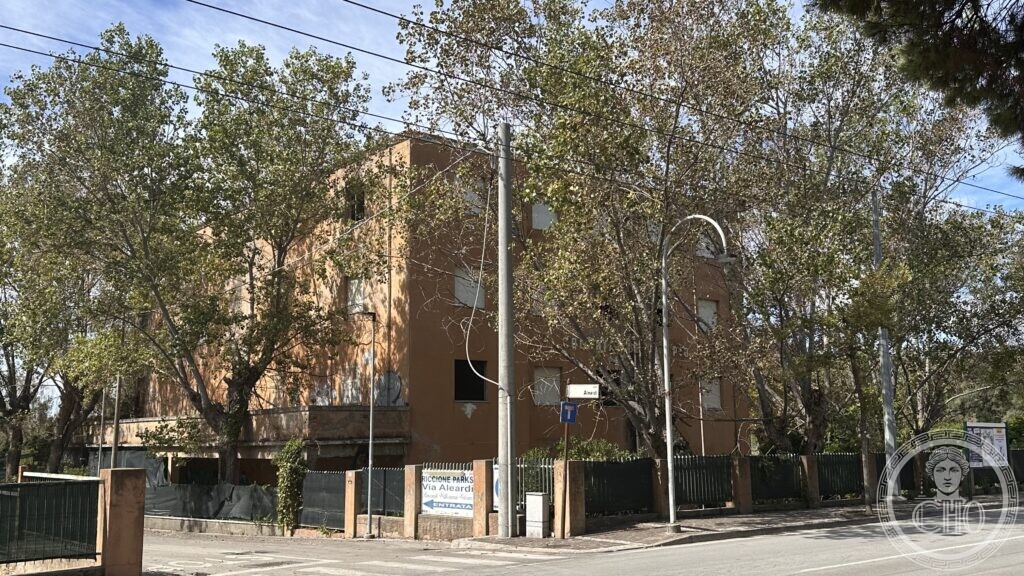
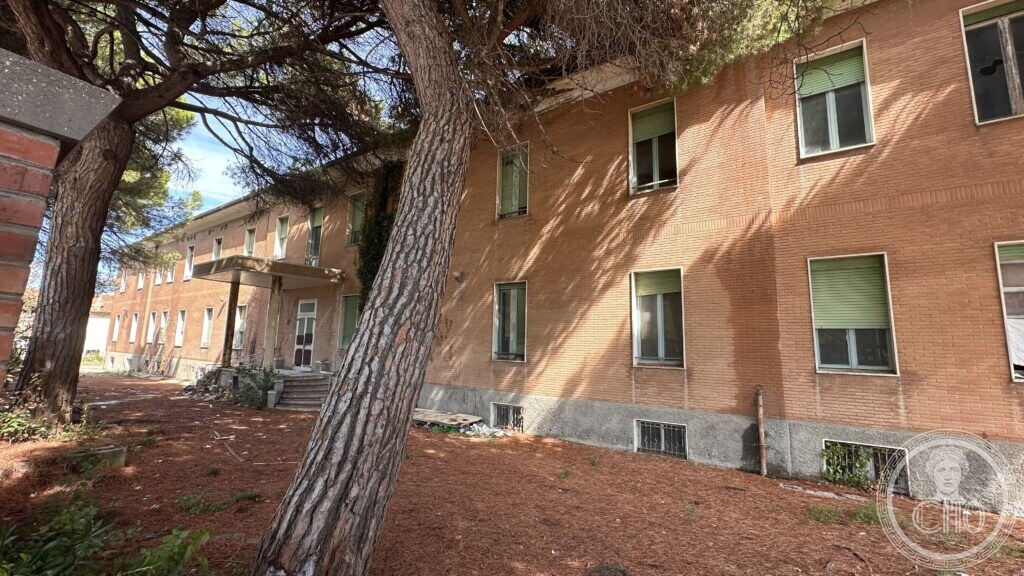
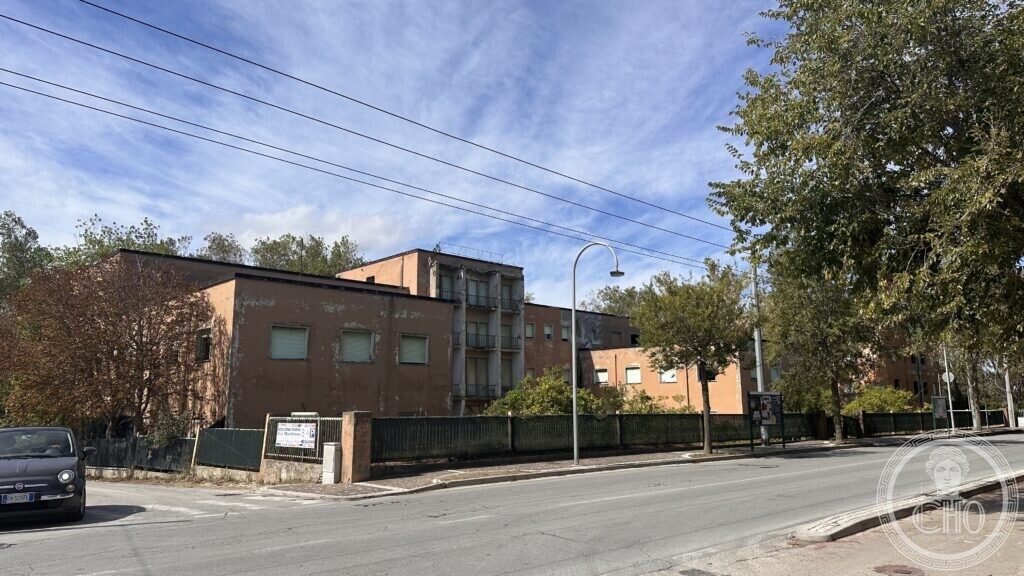
The building rises four storeys in salmon-rendered brick, plain and functional rather than showpiece Rationalism, with plain window openings and a covered entrance porch on its garden side. Across the front, high up, the lettering that named the building is still there in outline — COLONIA on one line, ELIOTERAPICA on the one below — broken by damp and half-hidden now by the trees that have grown up around it since the 1930s. Street signs on two sides of the block, for Viale Gabriele D’Annunzio and Via Aleardi, fix its position; a parking operator’s sign nearby uses the same corner as a landmark.
Do you know more?
We have not found the name of the architect, or the exact year the building opened. If you know either, or have an old photograph of it in use, write to Sofia, who looks after these pages.
Write to Sofiaor send a message on WhatsApp
Please start your message with the title of this page, so it reaches the right file. Every contribution is checked against independent sources before it goes on the page, and we always say where a piece of information came from.
Getting there
The building is on Viale Gabriele D’Annunzio in the Spontricciolo district of Riccione, close to the seafront. It is private property, fenced, and not open to visitors.
Sources
- The photographs themselves — the painted lettering on the front, and the street signs for Viale Gabriele D’Annunzio and Via Aleardi, which fix the building’s position; the coordinates recorded by the camera match this corner of Spontricciolo exactly.
- Spazi Indecisi, “Ex Colonia Adriatica Soliera-Carpi (Riccione)” — on the building’s size, the 1930s date, and the 2004 concession to restore it jointly with the Colonia Reggiana.
- Geronimo.news, opinion piece on the sculptor Giorgio Giulianelli — on the building’s later use as his workshop and its structural condemnation.
- RiminiToday, on the failed restoration concession for the Reggiana and Adriatica colonies and its termination.
- Luigi De Marchi, who photographed the building.
Gallery
Photographs by Luigi De Marchi.
Find it on the map
See this place and what’s around it →Record researched and written by Luigi De Marchi for Cultural Heritage Online, 2026.
📷 Become a Cultural Heritage Online photographer
Share your photos of places: they stay published under your name as the author. The more they're seen, the more you get noticed — and soon a contest will reward the most appreciated photos.
Log in or sign up free to add a photo