
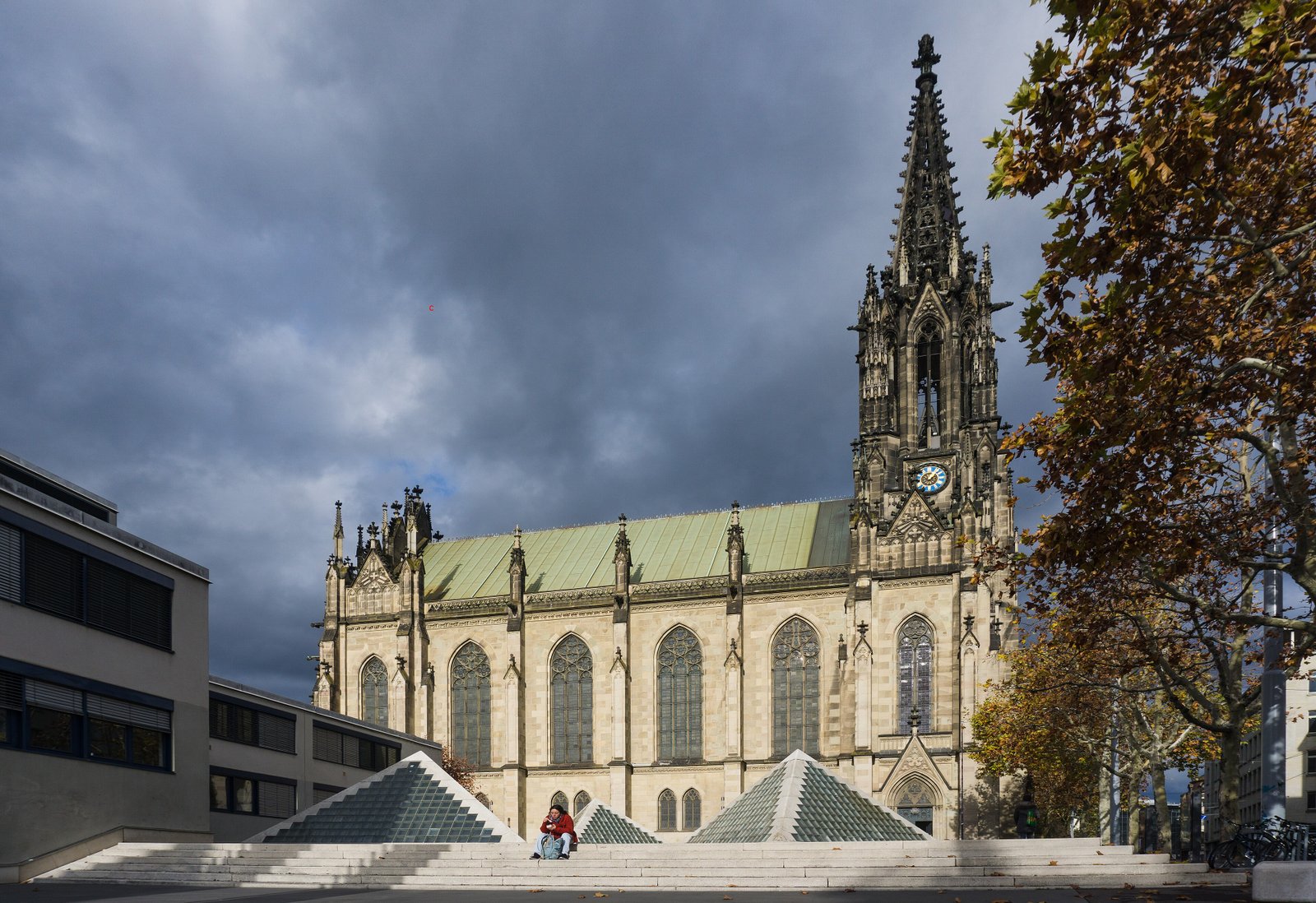
A masterwork of Swiss Gothic Revival architecture, this 19th-century church stands as a landmark of Basel’s cultural landscape, crowned by a soaring 72-metre bell tower.
At a glance
The Elisabethenkirche, also known as the Offene Kirche Elisabethen, anchors the heart of Basel’s city centre adjacent to the Theater Basel. Its Gothic Revival design exemplifies the 19th-century return to medieval aesthetic principles, executed with meticulous Swiss craftsmanship and detail.
History
Built during the 19th century, the Elisabethenkirche emerged during a period of architectural revival across Europe. The church reflects the era’s fascination with Gothic forms and the desire to reconnect with historical architectural traditions through contemporary construction techniques.
What you see
The church’s most striking feature is its 72-metre tall bell tower and spire, which rises prominently above the surrounding streetscape. The tower houses internal stairs, allowing access to its upper reaches. Every element demonstrates careful attention to detail characteristic of the Gothic Revival style, from ornamental stonework to proportional relationships.
Cultural significance
As a well-preserved example of Swiss Gothic Revival ecclesiastical architecture, the Elisabethenkirche contributes meaningfully to Basel’s architectural heritage. Its position in the city centre, near the theatre district, places it at the intersection of religious and cultural life in one of Switzerland’s most important cities.
Key facts
- Country: Switzerland
- City: Basel (Canton of Basel-Stadt)
- Period: 19th century
- Bell tower height: 72 metres (236 feet)
- Coordinates: 47.55277778, 7.59111111
Practical information & getting there
The Elisabethenkirche is located in central Basel, directly adjacent to the Theater Basel. For current opening hours and accessibility information, consult local tourism resources or the church directly.
Sources & resources
Find it on the map
See this place and what’s around it →📷 Become a Cultural Heritage Online photographer
Share your photos of places: they stay published under your name as the author. The more they're seen, the more you get noticed — and soon a contest will reward the most appreciated photos.
Log in or sign up free to add a photoIs this page about you?
This page is read by travellers and heritage enthusiasts who find it on Google. Tell us how you are connected to this place and we will take it from there.