
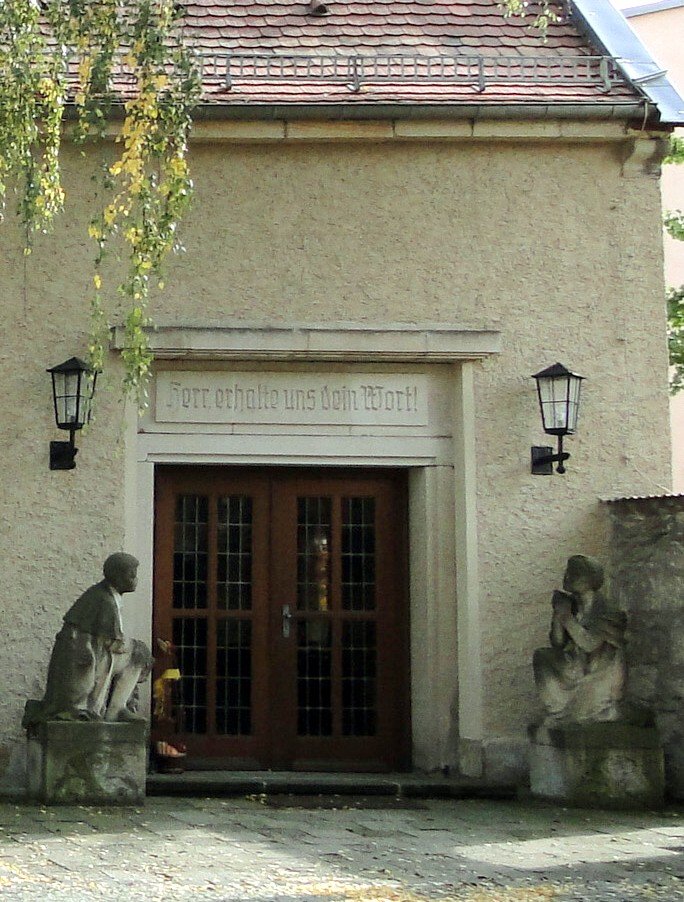
A historicist church built in early 20th-century Dresden, the Ehrlichsche Gestiftskirche replaced an older institution church displaced by urban development—only to fall to postwar demolition.
At a glance
This Protestant church stood on Stübelplatz in Dresden’s inner city. Built in 1907, it embodied the historicist architectural tastes of the Wilhelmine era. The building survived Allied bombing during World War II but was demolished in 1951 as the city rebuilt.
History
The Ehrlichsche Gestift was a charitable institution whose original church, the Lazarettkirche, occupied Wettiner Platz. When that site was required for construction of the new Jakobikirche in 1897, the institution relocated and commissioned a replacement building on Stübelplatz. The new Ehrlichsche Gestiftskirche opened in 1907. Despite surviving the firebombing campaigns of 1945, it was demolished in August 1951 during Dresden’s postwar reconstruction.
What you see
The church exemplified historicism, the dominant architectural mode of late Imperial Germany. No detailed architectural description survives in readily available sources.
Cultural significance
The Ehrlichsche Gestiftskirche represents the vanished Protestant charitable architecture of Dresden’s Belle Époque. Its demolition—a quarter-century after the war—underscores the scale of postwar urban renewal that reshaped the city, erasing buildings that had endured military destruction.
Key facts
- Built: 1907
- Location: Stübelplatz, Dresden
- Country: Germany
- Demolished: August 1951
- Coordinates: 51.0467, 13.7547
Practical information & getting there
The site of the Ehrlichsche Gestiftskirche no longer exists. Visitors interested in Dresden’s lost sacred architecture and postwar urban transformation may consult local historical archives and the city’s heritage documentation.
Sources & resources
Find it on the map
See this place and what’s around it →📷 Become a Cultural Heritage Online photographer
Share your photos of places: they stay published under your name as the author. The more they're seen, the more you get noticed — and soon a contest will reward the most appreciated photos.
Log in or sign up free to add a photoIs this page about you?
This page is read by travellers and heritage enthusiasts who find it on Google. Tell us how you are connected to this place and we will take it from there.