

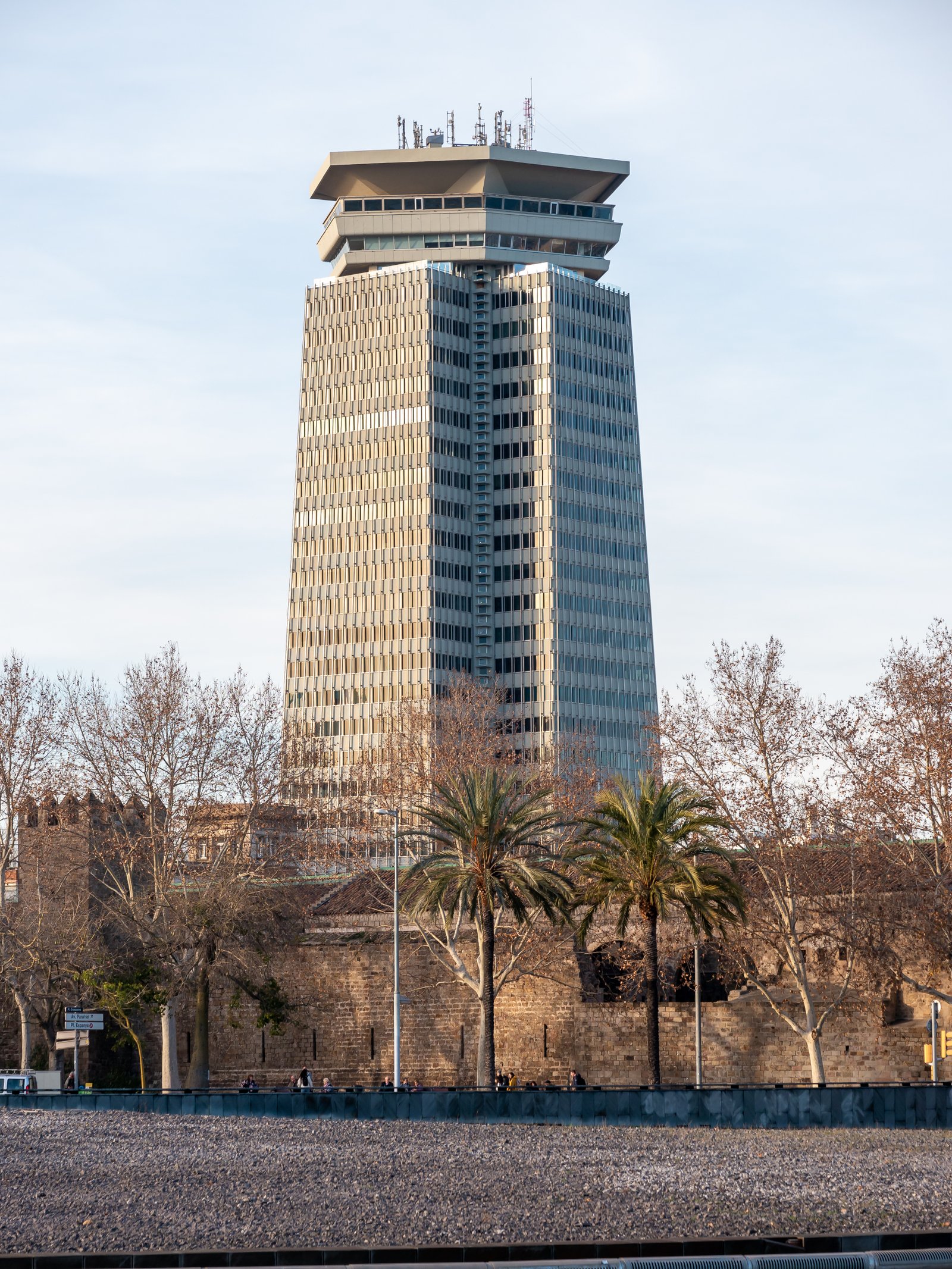
A modernist office tower that marked Barcelona’s entry into the age of high-rise architecture, this 110-metre landmark dominated the city’s skyline upon completion.
At a glance
Edificio Colón stands as a defining moment in Barcelona’s urban development. Completed in 1970, this 28-storey office skyscraper was the first building in the city to exceed 100 metres in height. Located in the historic Ciutat Vella district along Avinguda de les Drassanes, it represents the intersection of tradition and modernisation in Barcelona’s built environment.
History
The tower was built in 1970, a period when Barcelona was undergoing rapid urban transformation. Its construction marked a symbolic shift toward vertical development in a medieval city centre, introducing the skyscraper typology to a landscape previously defined by lower-rise architecture.
What you see
The building rises 110 metres across 28 floors of office space. Its modernist form reflects the commercial ambitions of 1970s Barcelona. The tower’s vertical emphasis and functional design exemplify the pragmatic modernism of post-war European cities.
Cultural significance
Edificio Colón holds historical importance as a symbol of Barcelona’s modernisation. The tower’s completion demonstrated the city’s capacity for contemporary architecture and set the stage for subsequent urban development. Its presence reshaped perceptions of Barcelona’s skyline and urban identity.
Key facts
- Country: Spain
- City: Barcelona (El Raval district)
- Completed: 1970
- Height: 110 metres
- Floors: 28
- Coordinates: 41.3765° N, 2.1752° E
Practical information & getting there
The tower is situated in Barcelona’s historic El Raval neighbourhood, accessible by public transport. Avinguda de les Drassanes connects the building to the surrounding waterfront district and city centre.
Sources & resources
Find it on the map
See this place and what’s around it →📷 Become a Cultural Heritage Online photographer
Share your photos of places: they stay published under your name as the author. The more they're seen, the more you get noticed — and soon a contest will reward the most appreciated photos.
Log in or sign up free to add a photoIs this page about you?
This page is read by travellers and heritage enthusiasts who find it on Google. Tell us how you are connected to this place and we will take it from there.