
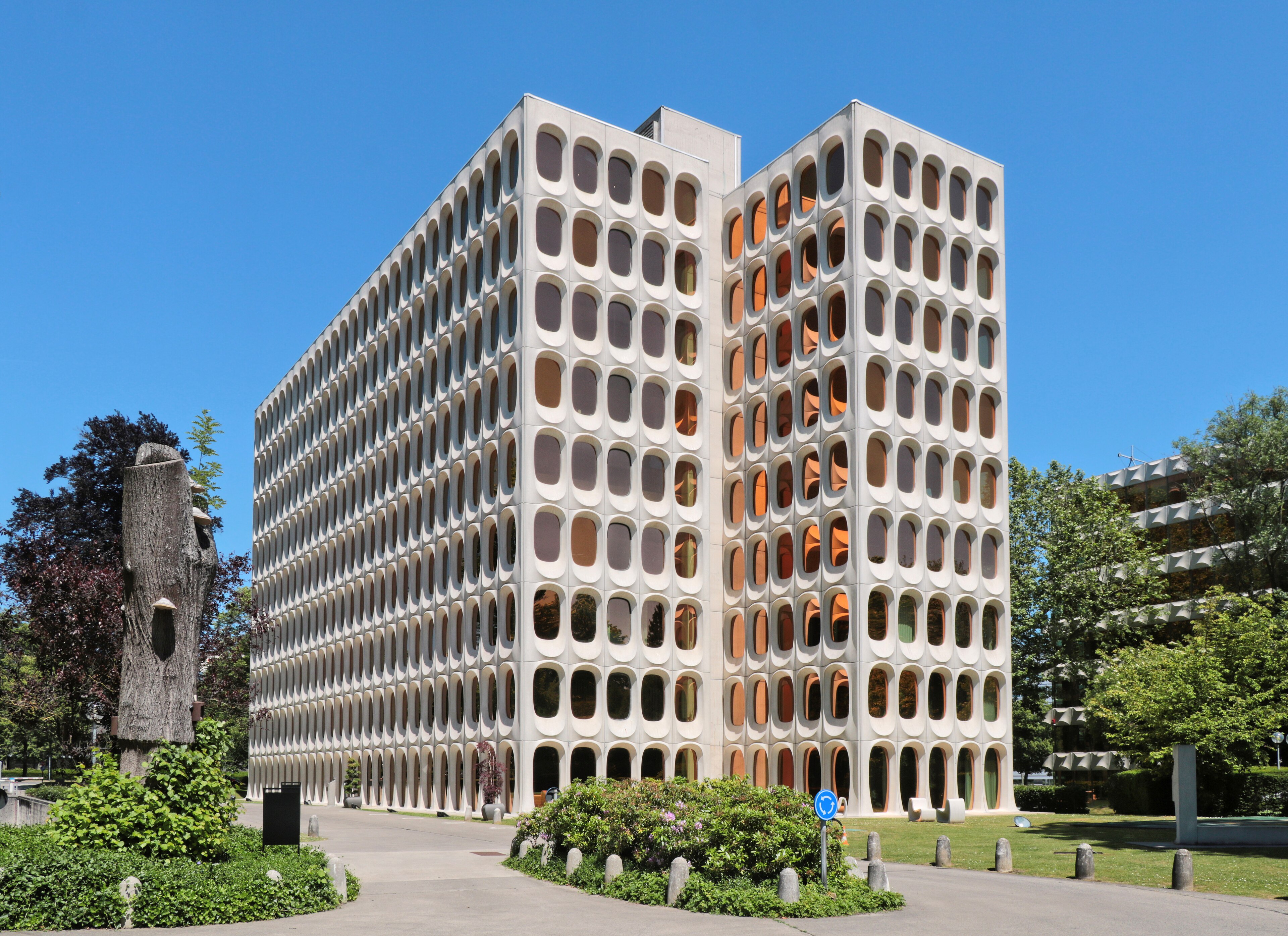
A functionalist office tower that celebrates raw concrete as expressive material, the CBR Building stands as a landmark of New Brutalist design in Brussels.
At a glance
Completed in 1970, the CBR Building demonstrates the architects’ commitment to prefabrication and modular design. Its white concrete façade—left exposed rather than concealed—defines the structure’s bold aesthetic and structural logic. The building earned protected heritage status in 2018.
History
Designed by Constantin Brodzki and Marcel Lambrichs, the CBR Building was constructed between 1967 and 1970. Its completion marked a significant moment in Brussels’s architectural modernism. Recognition of its cultural value came decades later when the Brussels-Capital Region added it to its protected heritage list in November 2018.
What you see
The building’s most striking feature is its prefabricated modular façade of white concrete. Rather than hiding this material behind cladding or veneer, the architects made it the principal visual and structural expression. This honest use of concrete—left raw and unadorned—is central to the New Brutalist vocabulary that defines the structure’s austere, rectilinear form.
Cultural significance
The CBR Building exemplifies the functionalist and Brutalist movements that dominated post-war European architecture. Its protected status recognizes the building as an important representative of 1970s Brussels modernism and the technical innovations of modular construction that influenced contemporary design practice.
Key facts
- Country: Belgium
- City: Watermael-Boitsfort, Brussels
- Architects: Constantin Brodzki and Marcel Lambrichs
- Built: 1967–1970
- Style: New Brutalism, functionalism
- Protected heritage status: November 2018
- Coordinates: 50.79527778, 4.40527778
Practical information & getting there
The CBR Building is located in Watermael-Boitsfort, a municipality southeast of central Brussels. It is visible from public streets. For detailed visiting information and current access, consult local Brussels tourism resources.
Sources & resources
Find it on the map
See this place and what’s around it →📷 Become a Cultural Heritage Online photographer
Share your photos of places: they stay published under your name as the author. The more they're seen, the more you get noticed — and soon a contest will reward the most appreciated photos.
Log in or sign up free to add a photoIs this page about you?
This page is read by travellers and heritage enthusiasts who find it on Google. Tell us how you are connected to this place and we will take it from there.