
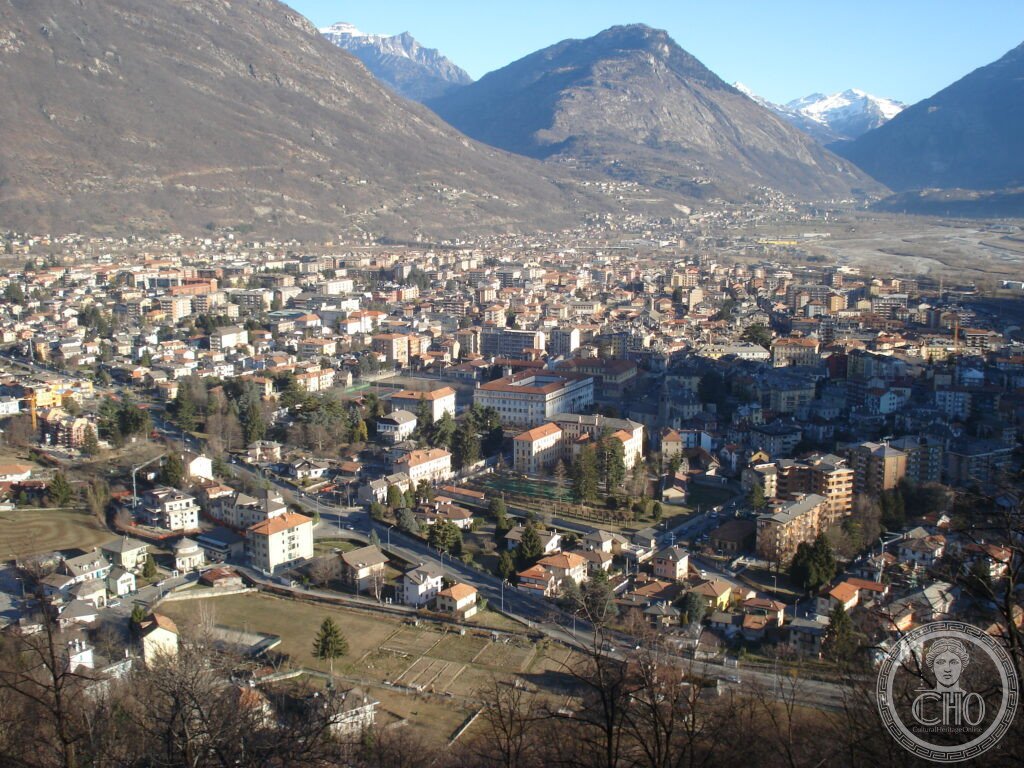
Above Domodossola, a wooded hill of chestnut trees holds fifteen seventeenth-century chapels whose groups of polychrome terracotta statues tell the Way of the Cross. Founded by a Franciscan friar in 1657, the path ends in a composition of sixteen figures and in a view that runs from the Swiss Alps to Lake Maggiore.
At a glance
The Sacro Monte Calvario of Domodossola occupies the Calvary hill, which rises above the old town to 690 metres, against the 500 of Domodossola itself. The fifteen chapels of the Way of the Cross are visible from the town centre, in particular from Piazza Mercato, and this is held to be the most direct relationship between a town and its Sacro Monte among the Piedmontese and Lombard sites built around this kind of devotional path.
Domodossola lies a short way from the Swiss border, by the Simplon Pass, and from the town runs the Centovalli railway, a narrow-gauge line that crosses the Vigezzo valley, known as the valley of the painters, as far as Locarno.
Key facts
- Founder: Friar Giovanni Matteo Mattei, a Franciscan of Domodossola, who began the path in 1657 after visiting the Sacro Monte of Varallo.
- Chapels: fifteen, matching the fourteen Stations of the Way of the Cross plus the final Calvary with its three crosses.
- Construction: carried out between 1657 and 1750.
- Largest chapel: Chapel 14, the Deposition from the Cross, of 1735, with sixteen statues in polychrome terracotta.
- Recognition: the site has been on the UNESCO World Heritage List since 2003, within the serial property of the Sacri Monti of Piedmont and Lombardy (reference 1068).
History
Domodossola is an old Alpine market town on the river Toce: the first documented mention goes back to an imperial diploma of Otto III of the year 1000, granting trading rights to the town. The weekly market in Piazza Mercato is still held and is considered the oldest documented market in the Verbano-Ossola area.
The Sacro Monte was founded in 1657 by Friar Giovanni Matteo Mattei, who obtained the bishop’s permission in 1655 after visiting the Sacro Monte of Varallo. The historical archive of the municipality of Domodossola keeps the founding documents: the episcopal permission, the building contract for the first chapel and the record of the completion of the first five chapels in 1660.
Building the fifteen chapels went on until 1750. The largest, Chapel 14, dedicated to the Deposition, was made in 1735 with funding from the Confraternita del Calvario of Domodossola, which still looks after the upkeep of the site today. The complex was inscribed on the UNESCO World Heritage List in 2003.
What you see
The path begins in Via del Calvario, marked by a blue stone with a cross; the first stretch is cobbled, then it becomes a dirt track among the chestnut trees. Chapel 1, the Condemnation to Death, of 1657, is the oldest and the plainest: local grey stone and three terracotta figures, Jesus, Pilate and a soldier.
Halfway along comes Chapel 7, Jesus Falls the Second Time, of 1700, with five figures, among them Jesus stretched on the ground, the only horizontal composition in all the chapels of the Sacri Monti, a soldier raising a leather whip that is still preserved, and Mary watching from a distance.
Chapel 14, the Deposition from the Cross of 1735, is the largest on the whole path: sixteen figures in polychrome terracotta, between 1.6 and 1.8 metres tall, arranged so as to form a triangular composition seen from the entrance, with the three crosses at the corners and the thirteen figures of the bystanders in an arc below. At the top of the hill is the Calvary proper, the fifteenth chapel, with its three crosses: from here the view runs north towards the Simplon Pass and the Valais Alps, and south towards Lake Maggiore, visible on clear days.
Practical information
- Access: the entrance to the path is in Via del Calvario, a short walk from the centre of Domodossola.
- The walk: the track climbs through a chestnut wood, so it is worth allowing time both for the climb and for visiting the chapels.
- Hours and tickets: for opening times and visiting arrangements it is best to check the official channels of the Confraternita del Calvario or of the municipality of Domodossola.
Getting there
Domodossola has regular rail services from Milan; for up-to-date times and fares it is best to consult the Trenitalia site. From the town centre the Sacro Monte is reached on foot along Via del Calvario, where the track starts that climbs among the chapels to the Calvary at the top of the hill.
Nearby
- Centovalli railway — it leaves from Domodossola station: a scenic narrow-gauge line that crosses 83 tunnels and 30 viaducts to Locarno, passing through Santa Maria Maggiore, the valley of the painters tied to the landscape artists Fornara and Cavalli.
- Sacro Monte di Ghiffa — about 35 km to the south, reached by train to Verbania-Pallanza and then by boat: another site inscribed in the serial UNESCO property of the Sacri Monti, with three chapels dedicated to the Most Holy Trinity set in untouched woodland.
Sources
- Archivio Storico del Comune di Domodossola.
- Confraternita del Calvario di Domodossola.
- UNESCO (Sacri Monti del Piemonte e della Lombardia, reference 1068).
- Museo del Paesaggio di Santa Maria Maggiore.
Gallery
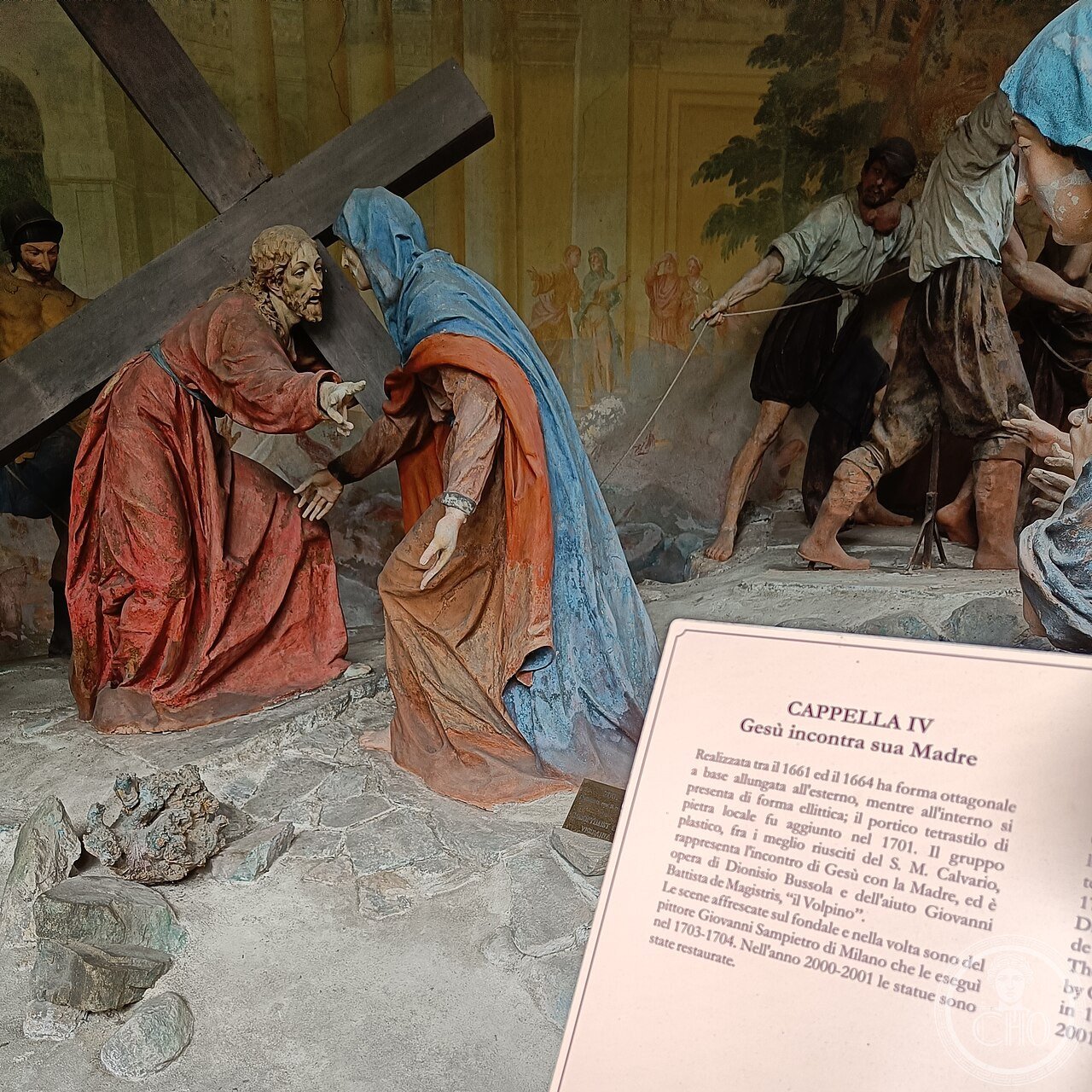
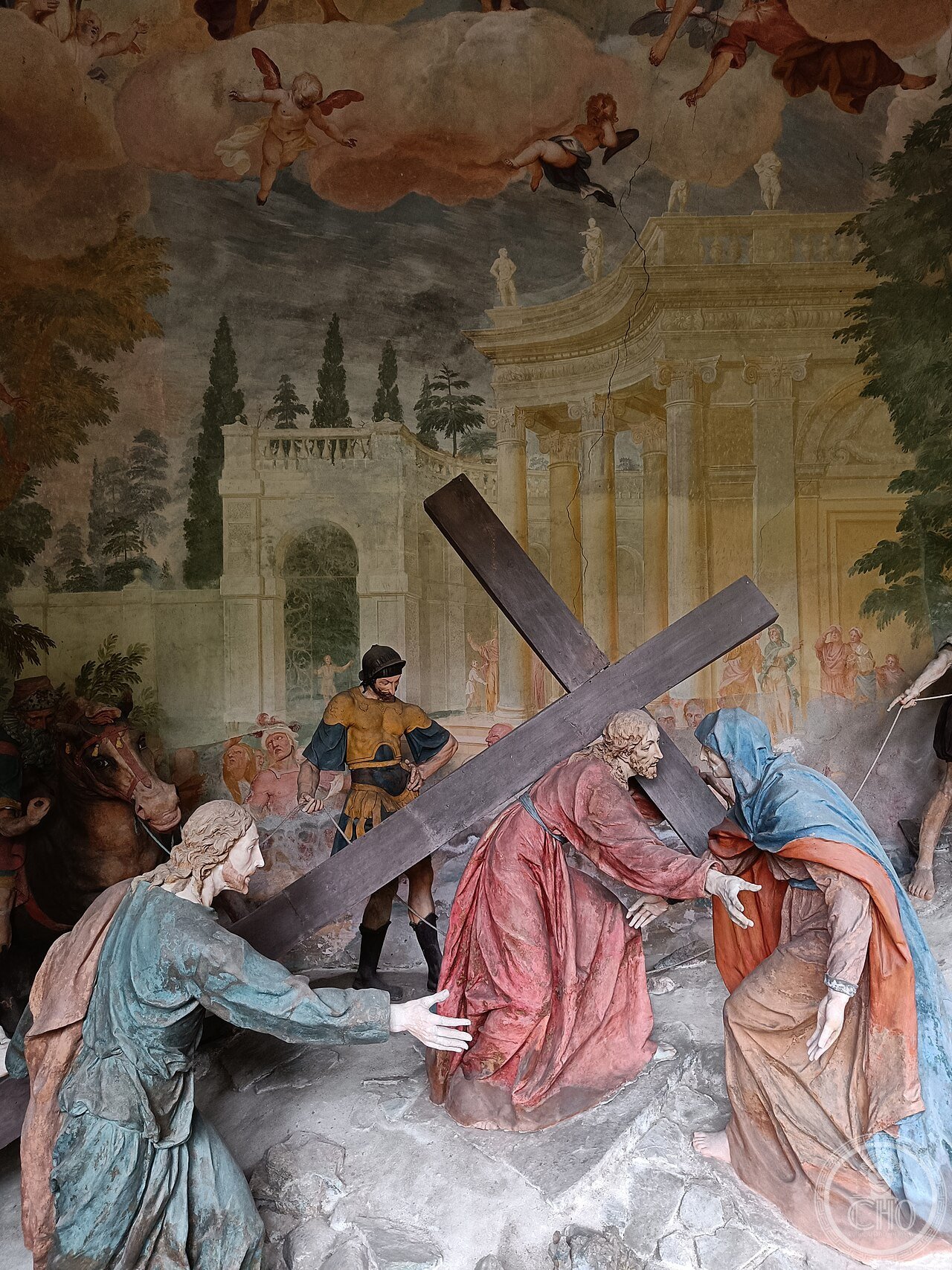
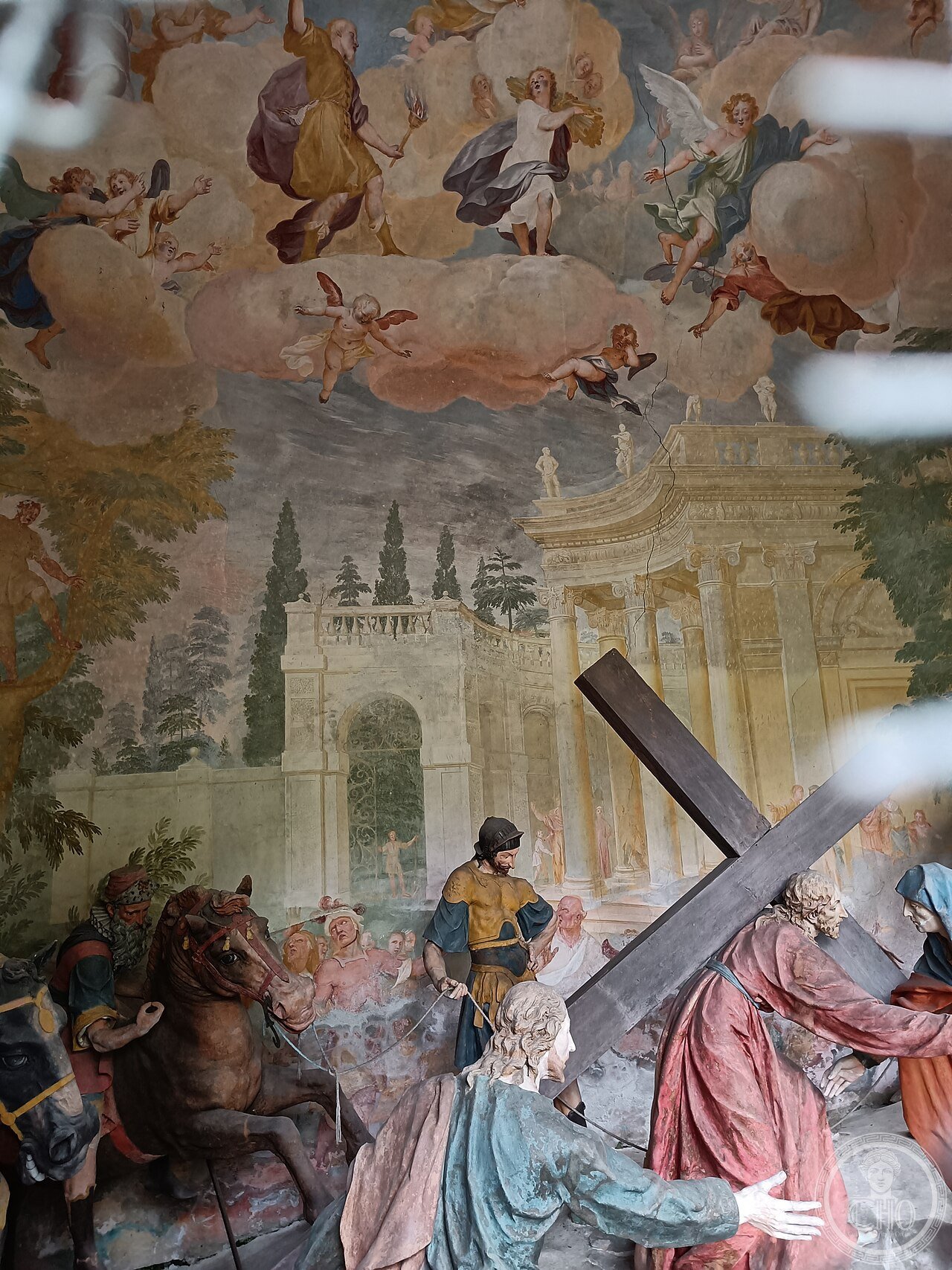
Find it on the map
See this place and what’s around it →📷 Become a Cultural Heritage Online photographer
Share your photos of places: they stay published under your name as the author. The more they're seen, the more you get noticed — and soon a contest will reward the most appreciated photos.
Log in or sign up free to add a photo