
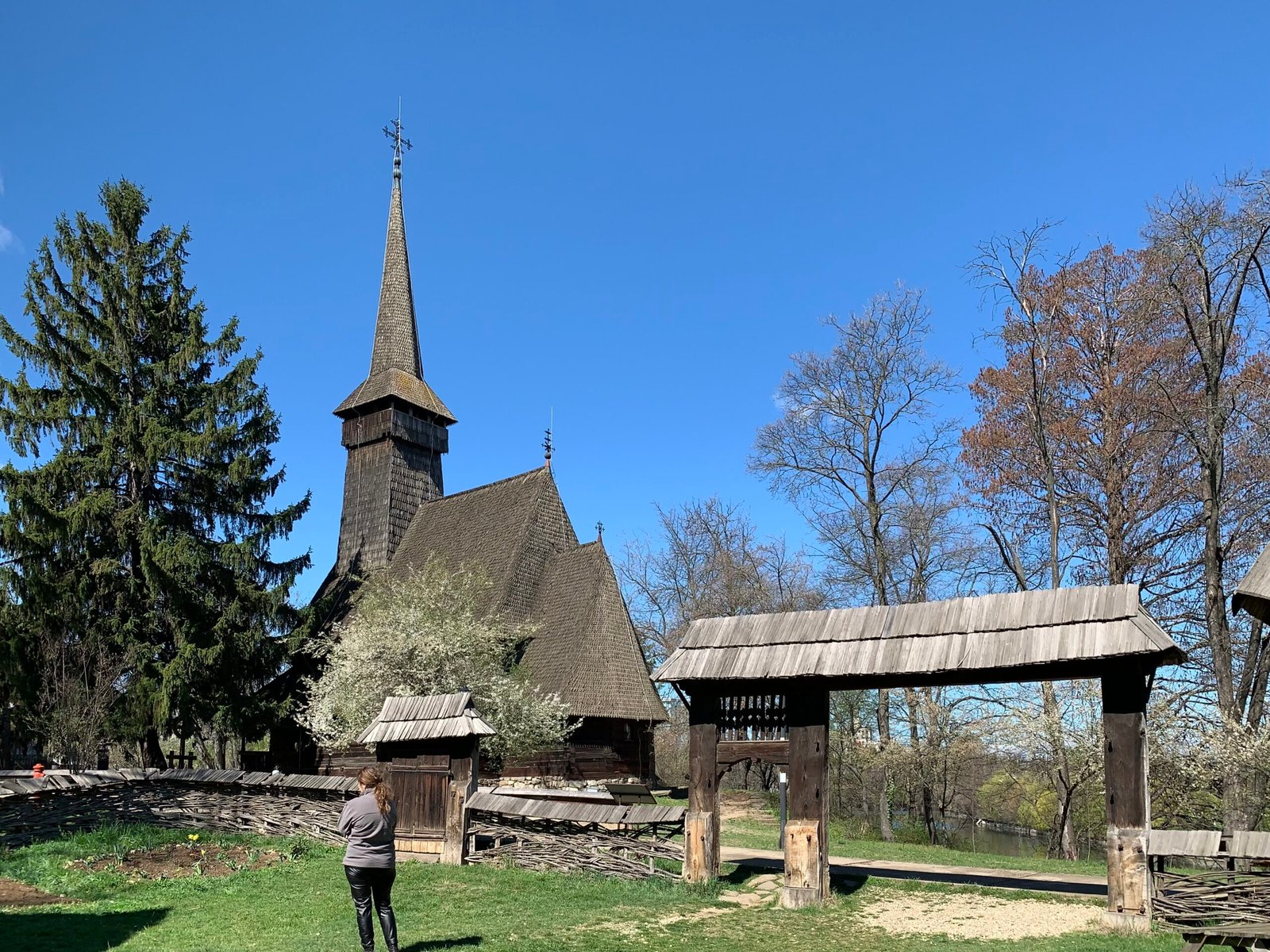
An open-air ethnographic museum preserving over a century of Romanian village life across 123 authentic peasant settlements and 363 monuments spanning seven cultural regions.
At a glance
Located within King Michael I Park, this sprawling museum occupies more than 100,000 square metres and holds one of Europe’s most comprehensive collections of traditional rural architecture. The museum contains over 50,000 artefacts representing village life from the 17th to 20th centuries across Banat, Transylvania, Moldavia, Maramures, Oltenia, Dobrogea, and Muntenia.
History
Folklorist and sociologist Dimitrie Gusti conceived the museum to document and preserve vanishing Romanian village traditions. Writer and playwright Victor Ion Popa executed the location plans alongside set designer Henri H. Stahl. The Royal Cultural Foundation financed the project, and King Carol II inaugurated the museum on 10 May 1936 in the presence of the monarch.
At its opening, it ranked as Europe’s fourth open-air museum, following only Skansen in Stockholm, the Norsk Folkemuseum in Oslo, and the Ethnographic Museum of Transylvania in Cluj-Napoca. The initial 4.5-hectare site contained 33 authentic settlements transferred from researched villages across Romania.
What you see
The museum’s centrepiece is a wooden church from Dragomirești in Maramures county—a structure so iconic it appears in the museum’s logo. Each settlement represents distinct building traditions and domestic life of its region. Structures range chronologically from the 17th century through the 20th, demonstrating how rural architecture evolved while maintaining regional character.
Cultural significance
The museum serves as a living archive of Romanian peasant culture at a moment when traditional village life faced modernisation and extinction. By relocating entire settlements rather than displaying isolated objects, Gusti’s vision captures the spatial relationships and social contexts that give architecture meaning. The collection documents how geography and ethnicity shaped building practices across Romania’s diverse regions.
Key facts
- Country: Romania
- City: Bucharest
- Coordinates: 44.47336, 26.07656
- Founded: 1936
- Size: Over 100,000 m²
- Holdings: 123 peasant settlements, 363 monuments, 50,000+ artefacts
- Chronological range: 17th–20th centuries
Practical information & getting there
The museum is located in King Michael I Park in Bucharest. Consult the official website for current opening hours, admission fees, and guided tour availability. Public transport connects to the park from central Bucharest.
Sources & resources
Find it on the map
See this place and what’s around it →📷 Become a Cultural Heritage Online photographer
Share your photos of places: they stay published under your name as the author. The more they're seen, the more you get noticed — and soon a contest will reward the most appreciated photos.
Log in or sign up free to add a photoIs this page about you?
This page is read by travellers and heritage enthusiasts who find it on Google. Tell us how you are connected to this place and we will take it from there.