

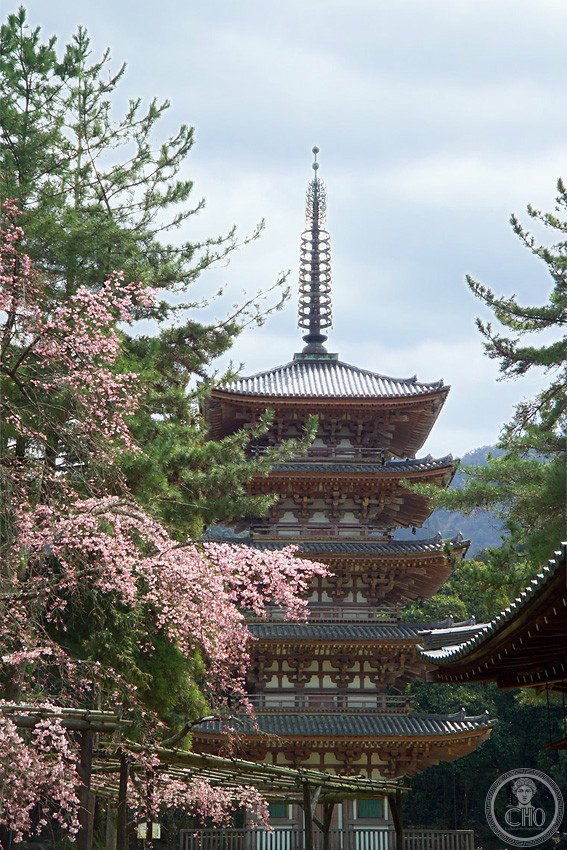
A vast mountaintop Buddhist temple and UNESCO World Heritage component, Daigo-ji houses one of Japan’s most significant collections of sacred art and was the celebrated venue for a feudal warlord’s legendary cherry blossom viewing.
At a glance
Daigo-ji sprawls across Mount Daigo in southeast Kyoto, commanding over 6.6 million square meters. As the head temple of the Shingon-shū Daigo-ha sect, it holds approximately 150,000 treasures, many designated as National Treasures or Important Cultural Properties. The temple’s name derives from “daigo” (literally ghee), a metaphor for the most profound teachings of Buddhism.
History
Founded during the Heian period, Daigo-ji became the principal temple of its Shingon Buddhist lineage. The temple achieved particular prominence in 1598 when the powerful daimyo Toyotomi Hideyoshi chose its grounds for his “Daigo Cherry Blossom Viewing”—a lavish ceremony that cemented the site’s cultural prestige. The event remains celebrated in Japanese history as a symbol of aesthetic refinement during the late feudal era.
What you see
The temple complex demonstrates the evolution of Japanese wooden architecture across centuries of construction and renovation. Its extensive grounds contain numerous structures, gardens, and devotional spaces arranged across the mountainside. The honzon is a hibutsu (secret) statue of Yakushi Nyorai, the Buddha of healing, housed within the temple’s inner sanctum.
Cultural significance
Daigo-ji is the 11th station on the sacred Saigoku Kannon Pilgrimage, a centuries-old Buddhist pilgrimage circuit across western Japan. Its designation as part of the UNESCO World Heritage Site “Historic Monuments of Ancient Kyoto” reflects its pivotal role in developing Japanese wooden architecture and garden design. The site testifies to the continuous evolution of Buddhist temple aesthetics.
Key facts
- Country: Japan
- City: Kyoto (Fushimi-ku)
- Coordinates: 34.9515°N, 135.8218°E
- UNESCO World Heritage Site: Historic Monuments of Ancient Kyoto (inscribed 1994)
- Temple grounds: 6.6+ million square meters
- Treasures held: approximately 150,000 items
Practical information & getting there
Daigo-ji is accessible from central Kyoto via the Tozai Line subway (Daigo-ji Station) or by bus. The temple welcomes pilgrims and visitors year-round. Check official sources for current opening hours, admission fees, and any seasonal closures. The mountainous terrain offers both spiritual pilgrimage and scenic walking routes.
Sources & resources
Find it on the map
See this place and what’s around it →📷 Become a Cultural Heritage Online photographer
Share your photos of places: they stay published under your name as the author. The more they're seen, the more you get noticed — and soon a contest will reward the most appreciated photos.
Log in or sign up free to add a photoIs this page about you?
This page is read by travellers and heritage enthusiasts who find it on Google. Tell us how you are connected to this place and we will take it from there.