

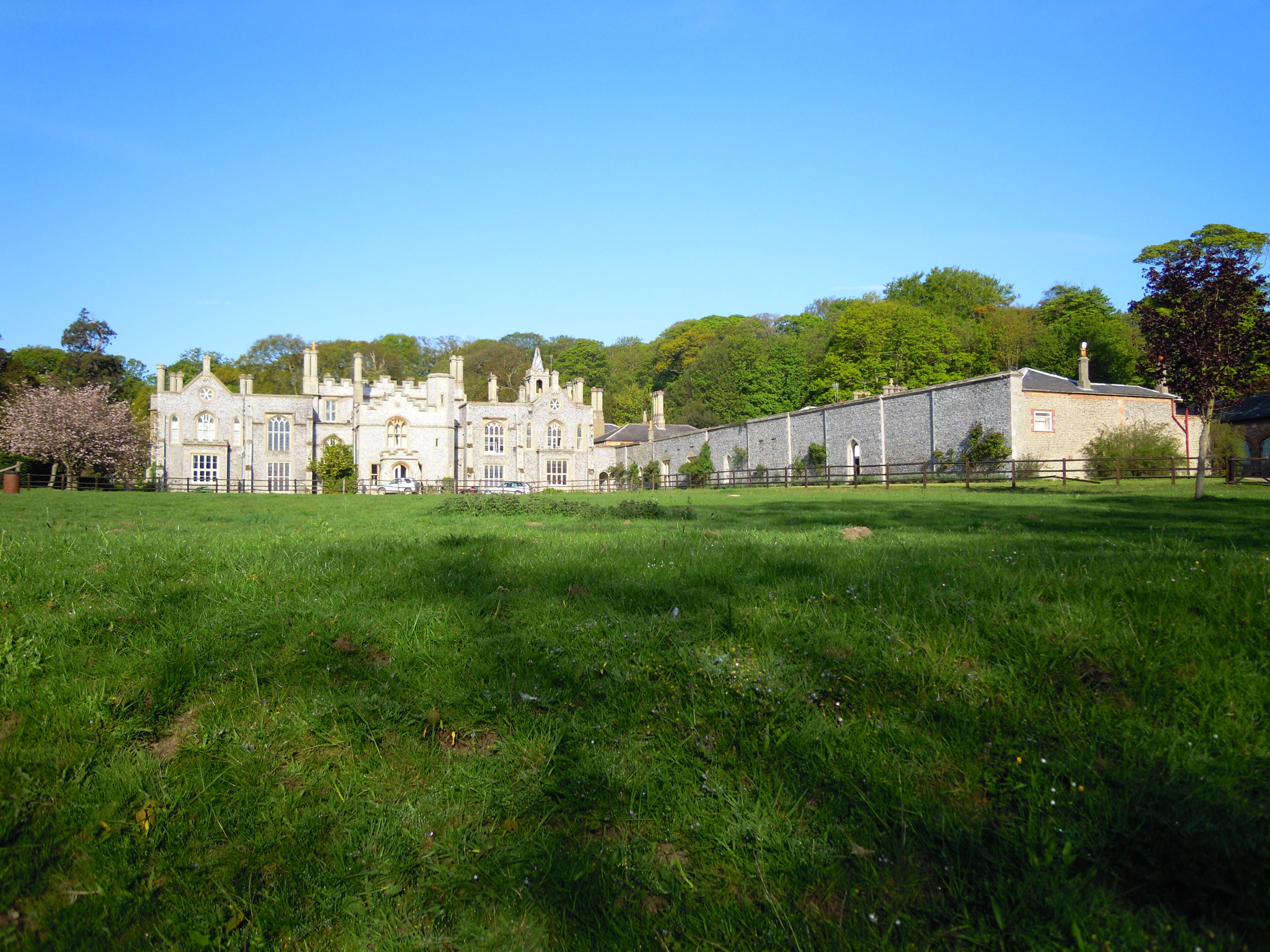
A Grade II* listed country house designed by William Donthorne, Cromer Hall stands one mile south of the Norfolk coastal town, representing early 19th-century domestic architecture.
At a glance
Cromer Hall is a country residence built in 1829 on Holt Road, just outside Cromer. Its architectural significance has secured it Grade II* listed status, the second-highest designation for buildings of special interest in England.
History
The hall was constructed in 1829 under the direction of William Donthorne, an architect active in early 19th-century England. The building represents a period of substantial country-house development in Norfolk, when prosperous landowners and merchants commissioned new residences reflecting contemporary tastes and building practices.
What you see
Designed by Donthorne, the hall exemplifies architectural conventions of its era. Its Grade II* classification indicates features of particular merit warranting preservation and protection under English heritage law.
Cultural significance
Cromer Hall contributes to the architectural heritage of Norfolk and the broader narrative of 19th-century English domestic building. Its listing reflects the importance of maintaining representative examples of period design and construction methods.
Key facts
- Country: United Kingdom
- City: Cromer, Norfolk
- Built: 1829
- Architect: William Donthorne
- Heritage designation: Grade II* listed
- Location: One mile south of Cromer on Holt Road
- Coordinates: 52.9265, 1.2934
Practical information & getting there
Cromer Hall is situated on Holt Road, approximately one mile south of Cromer town centre in Norfolk. The hall is a private residence; please respect its privacy and do not trespass. For further information about visiting or its history, contact local heritage organisations or Cromer’s visitor information centre.
Sources & resources
Find it on the map
See this place and what’s around it →📷 Become a Cultural Heritage Online photographer
Share your photos of places: they stay published under your name as the author. The more they're seen, the more you get noticed — and soon a contest will reward the most appreciated photos.
Log in or sign up free to add a photoIs this page about you?
This page is read by travellers and heritage enthusiasts who find it on Google. Tell us how you are connected to this place and we will take it from there.