
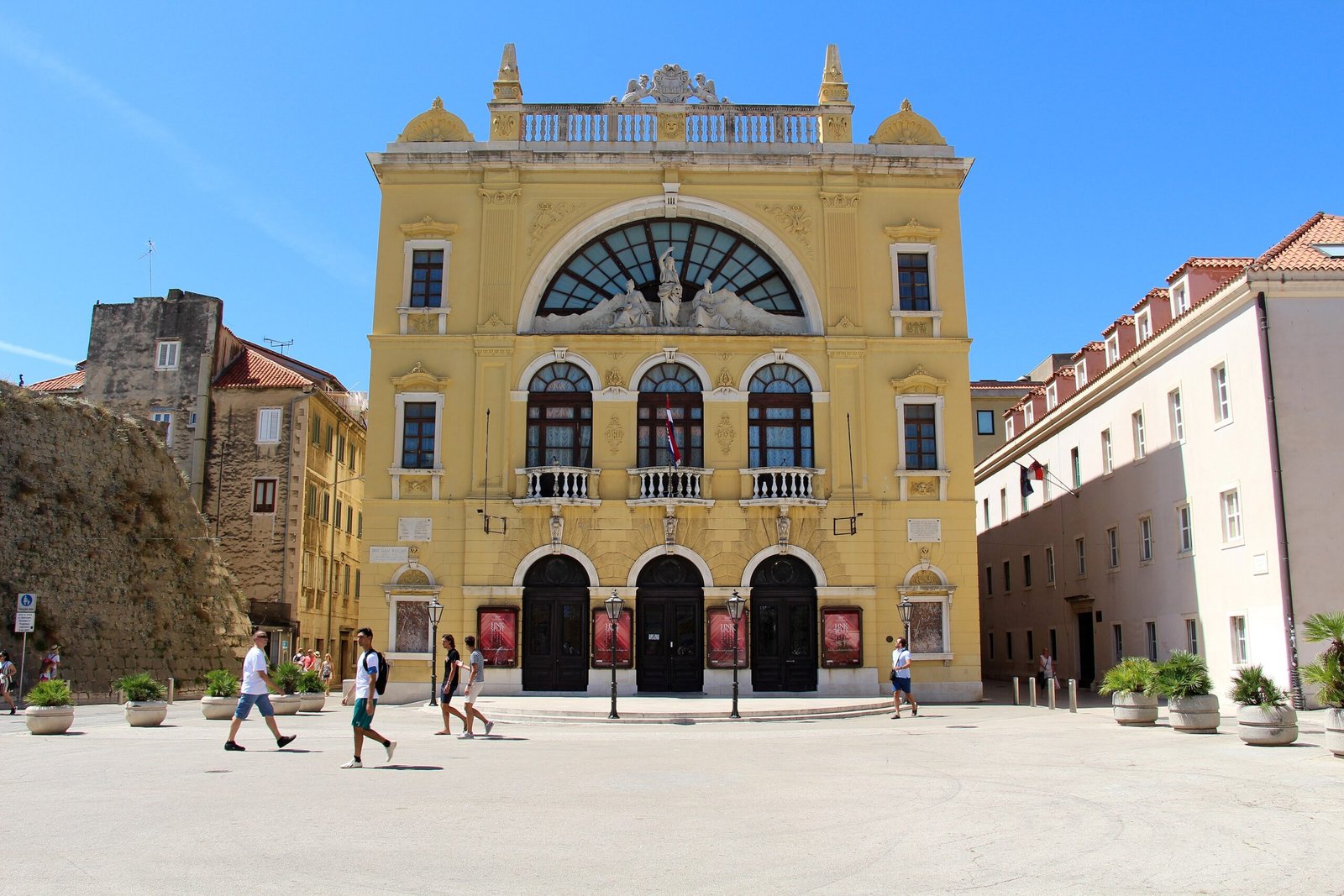
One of Dalmatia’s oldest surviving theatres, this Split institution has hosted performances for over 130 years.
At a glance
The Croatian National Theatre in Split stands as a cultural anchor in this Adriatic port city. Opened in 1893, it remains among the region’s longest-operating theatres and continues to serve the local and visiting public through drama, opera, and ballet performances.
History
The theatre opened its doors in 1893, establishing itself during a period of cultural development in Dalmatia. Now owned and operated by the City of Split, it has maintained its role as a civic institution for more than a century. The theatre’s endurance testifies to its importance within Split’s cultural life and broader Dalmatian heritage.
What you see
The building represents 19th-century theatre design from the Austro-Hungarian period. Its architecture reflects the civic ambitions of the era, though specific architectural details require further research.
Cultural significance
As one of Dalmatia’s oldest theatres, HNK Split embodies the region’s artistic traditions. The theatre serves as a venue for contemporary performance while maintaining historical continuity with Split’s cultural past. Its survival underscores the resilience of cultural institutions in the Adriatic.
Key facts
- Country: Croatia
- City: Split
- Opened: 1893
- Coordinates: 43.51083333, 16.43805556
- Ownership: City of Split
Practical information & getting there
The theatre is centrally located in Split. For current performance schedules, venue hours, and ticket information, consult the theatre’s official website or local Split tourism resources.
Sources & resources
Find it on the map
See this place and what’s around it →📷 Become a Cultural Heritage Online photographer
Share your photos of places: they stay published under your name as the author. The more they're seen, the more you get noticed — and soon a contest will reward the most appreciated photos.
Log in or sign up free to add a photoIs this page about you?
This page is read by travellers and heritage enthusiasts who find it on Google. Tell us how you are connected to this place and we will take it from there.