

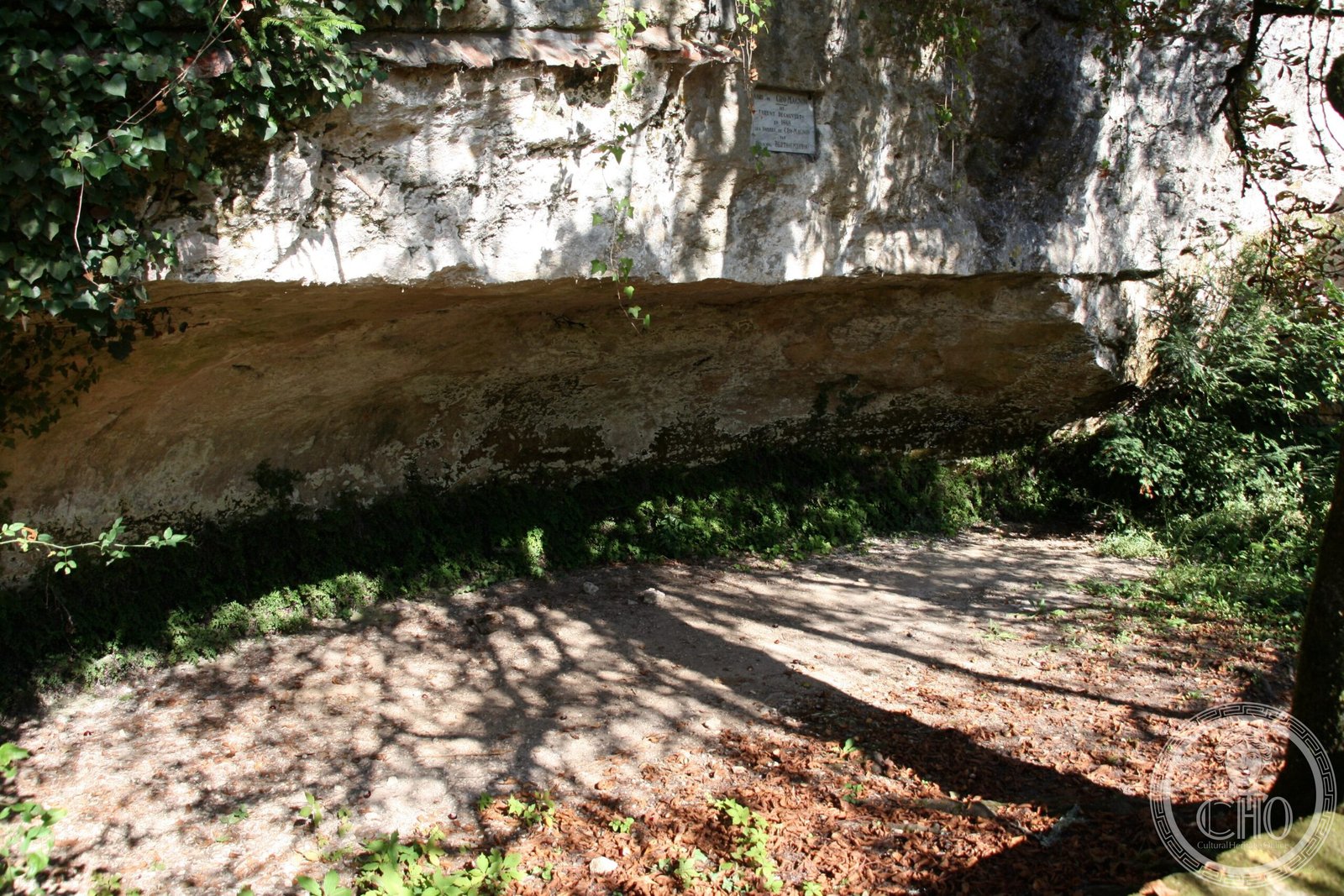
A modest rock shelter in southwestern France that became world-famous for its discovery of anatomically modern human remains dating to approximately 28,000 years ago.
At a glance
Abri de Cro-Magnon is an Aurignacian (Upper Paleolithic) archaeological site sheltered beneath a rock overhang in the Dordogne valley. Its scientific significance rests entirely on a single, pivotal discovery: human skeletal remains that provided early evidence of anatomically modern humans in Europe during the last Ice Age.
History
The rock shelter contains evidence of human occupation from the Aurignacian period. Most significantly, it is the site where anatomically modern human remains were discovered, apparently representing a deliberate burial. These remains have been dated to approximately 28,000 years ago, making them crucial to understanding the archaeological record of early modern humans in Europe.
What you see
The site consists of a natural rock shelter—a simple overhang providing basic protection rather than an enclosed cave. The modest physical remains visible today offer little dramatic spectacle; the archaeological importance lies in what was excavated here rather than what remains visible.
Cultural significance
The Cro-Magnon discovery fundamentally shaped scientific understanding of human prehistory. The skeletal finds gave their name to the Cro-Magnon people, a term long used to denote the earliest anatomically modern humans in Europe. This site stands as a cornerstone in paleoanthropology, linking European Upper Paleolithic culture to our own species’ deep history.
Key facts
- Location: Les Eyzies, Dordogne, southwestern France
- Coordinates: 44.9403, 1.0097
- Period: Aurignacian (Upper Paleolithic)
- Human remains dated to approximately 28,000 years ago
- UNESCO World Heritage status as part of the Prehistoric Sites and Decorated Caves of the Vézère Valley
Practical information & getting there
The shelter is located in Les Eyzies, a small commune in the Dordogne region renowned for its concentration of Paleolithic sites. The town is accessible by road and serves as a base for exploring the broader Vézère Valley archaeological landscape. Consult local tourism information for current visiting arrangements and any restrictions on access to the actual shelter site.
Sources & resources
Find it on the map
See this place and what’s around it →📷 Become a Cultural Heritage Online photographer
Share your photos of places: they stay published under your name as the author. The more they're seen, the more you get noticed — and soon a contest will reward the most appreciated photos.
Log in or sign up free to add a photoIs this page about you?
This page is read by travellers and heritage enthusiasts who find it on Google. Tell us how you are connected to this place and we will take it from there.