

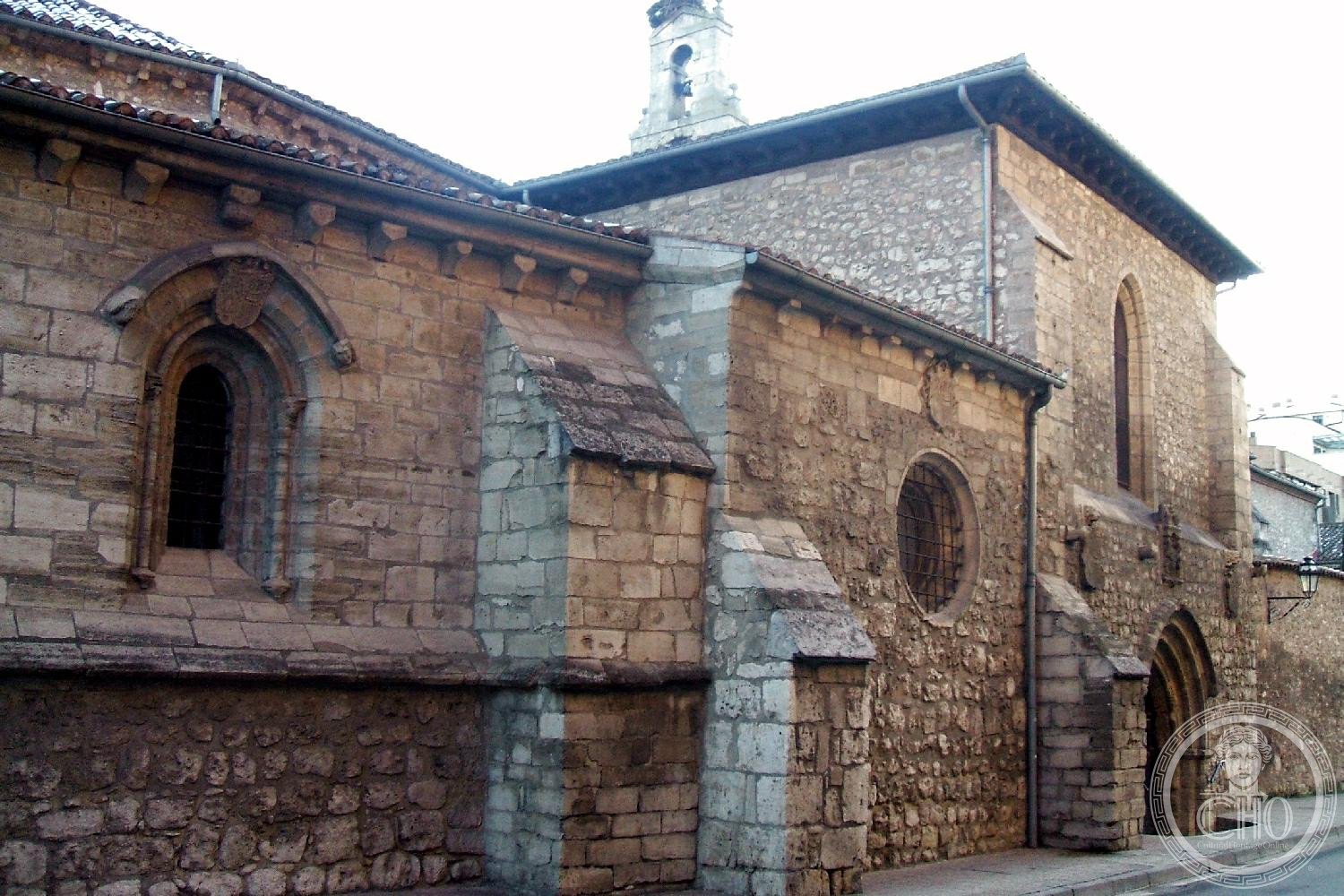
A Gothic convent founded in 1234, this contemplative community has occupied its Burgos site for nearly eight centuries, its austere architecture reflecting the spiritual discipline of its inhabitants.
At a glance
The Convento de Santa Clara is a nuns’ convent in central Burgos, situated at the intersection of Calle de Covarrubias, del Progreso, and Santa Clara. This Gothic structure, built in the thirteenth century, originated as part of the Monasterio de Santa María la Real de Las Huelgas before becoming an independent religious community.
History
Founded in 1234, the convent was established during a period of vigorous monastic expansion in Castile. It maintained an affiliation with Las Huelgas, one of Spain’s most prominent royal monasteries, though it developed its own distinct community. The convent has functioned continuously as a house of contemplative religious life through the medieval, early modern, and modern periods.
What you see
The convent exemplifies Gothic design principles of the thirteenth century. Its construction in that period established the building’s fundamental character—spare, functional architecture adapted to the needs of monastic life. The corner location on its three-street intersection marks a significant urban presence within Burgos’s medieval street pattern.
Cultural significance
As one of Burgos’s oldest continuously inhabited religious communities, the convent represents the deep historical layers of the city’s spiritual and social fabric. Its longevity testifies to the enduring role of female monastic communities in Spanish religious and cultural life.
Key facts
- Founded: 1234
- Architectural style: Gothic
- Location: Burgos, Castile and León, Spain
- Coordinates: 42.337°N, 3.696°W
- Religious order: Franciscan Poor Clare sisters
Practical information & getting there
The convent is located in central Burgos at the corner of three streets in the medieval quarter. As an active religious community, visiting is restricted; inquire locally about any public access or hours. Burgos is well served by rail and road connections from Madrid and other Spanish cities.
Sources & resources
Find it on the map
See this place and what’s around it →📷 Become a Cultural Heritage Online photographer
Share your photos of places: they stay published under your name as the author. The more they're seen, the more you get noticed — and soon a contest will reward the most appreciated photos.
Log in or sign up free to add a photoIs this page about you?
This page is read by travellers and heritage enthusiasts who find it on Google. Tell us how you are connected to this place and we will take it from there.