
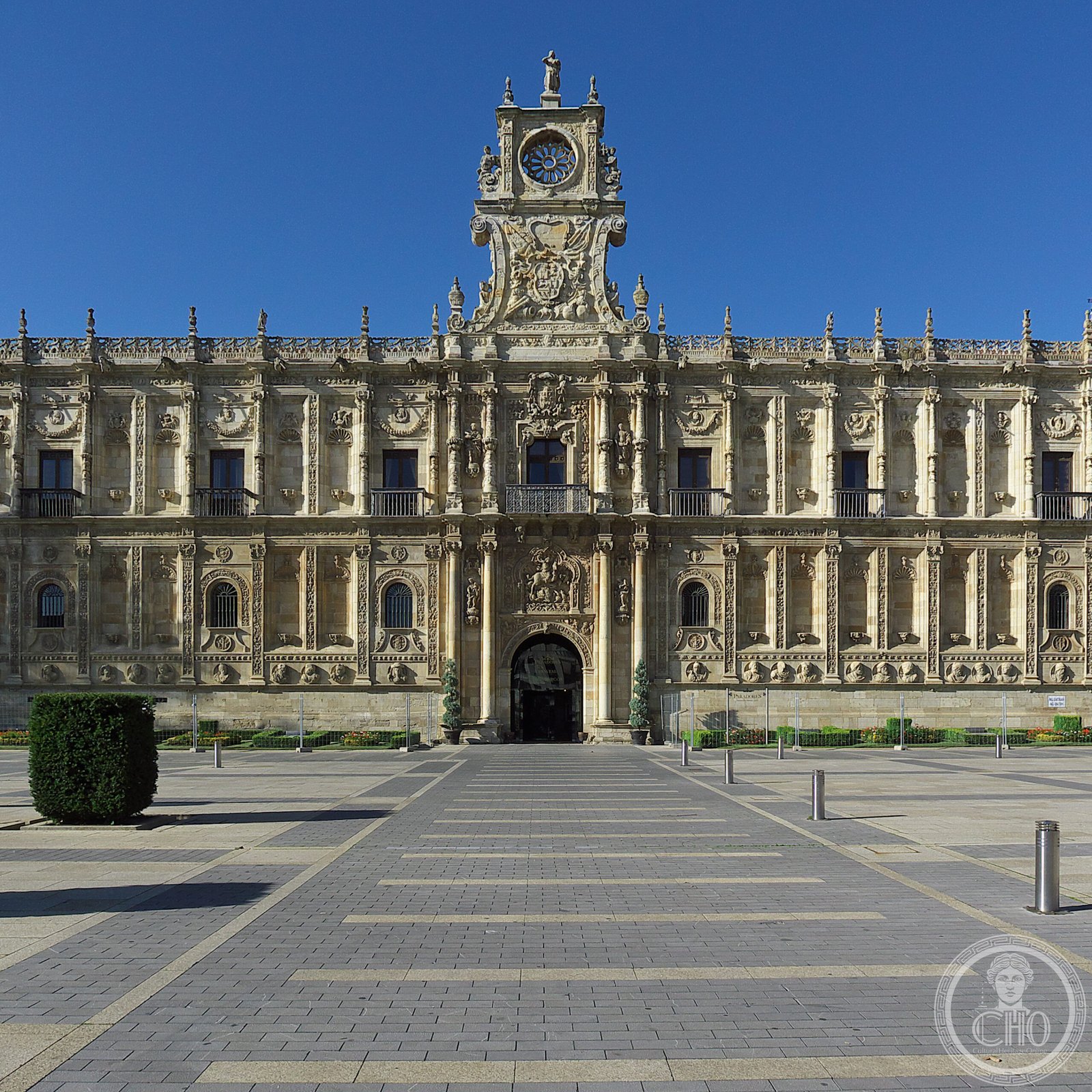
A twelfth-century monastery transformed into one of Spain’s finest Renaissance monuments, now operating as a luxury parador hotel while preserving its church, museum, and haunted historical legacy.
At a glance
The Convento de San Marcos stands among León’s greatest architectural achievements alongside the Cathedral, Basilica of San Isidoro, and Casa Botines. Its ornamental plateresque façade exemplifies Renaissance splendor, yet the building carries the weight of twentieth-century tragedy within its walls.
History
Founded in 1152 by order of the Infanta Sancha of Castile, sister of Alfonso VII, the convent was built on the city’s outskirts along the Bernesga River. Originally conceived as a hospital-temple sheltering pilgrims on the Camino de Santiago, it became the principal residence of the Order of Santiago in the Kingdom of León. Pedro Fernández de Castro, the Order’s first maestre, served as prior from 1176 and was buried in the church in 1184.
During the Spanish Civil War, this sanctuary became the infamous “Campo de concentración de San Marcos.” From July 1936 through the end of 1940, every chamber—cells, cloisters, church, choir—served as dungeons. Between 7,000 and 10,000 prisoners were held simultaneously; approximately 20,000 Republican militia members and political prisoners passed through its cells over the war and immediate postwar period. Around 3,000 deaths from repression are recorded in the province, many originating from San Marcos.
What you see
The building’s defining feature is its highly ornamental plateresque façade, the architectural vocabulary of Spanish Renaissance grandeur. The convent retains its consecrated church and museum, preserving both spiritual and historical dimensions within its Renaissance stone.
Cultural significance
San Marcos represents two centuries of Spanish cultural aspiration—medieval pilgrimage, Renaissance ambition, and monastic learning—yet remains inseparable from its role as a site of twentieth-century state violence. The building’s survival and repurposing as a hotel reflects Spain’s complex relationship with its Civil War legacy.
Key facts
- Location: León, Castile and León, Spain
- Coordinates: 42.60°N, 5.58°W
- Founded: 1152
- Architectural style: Renaissance plateresque
- Current use: Luxury parador hotel, consecrated church, museum
Practical information & getting there
The Convento de San Marcos operates as a parador, Spain’s chain of state-run luxury hotels, welcoming visitors to experience its architecture and history. The building’s church remains consecrated. A museum documents both its religious heritage and Civil War history. Located in León, accessible by rail and road connections to major Spanish cities.
Sources & resources
Find it on the map
See this place and what’s around it →📷 Become a Cultural Heritage Online photographer
Share your photos of places: they stay published under your name as the author. The more they're seen, the more you get noticed — and soon a contest will reward the most appreciated photos.
Log in or sign up free to add a photoIs this page about you?
This page is read by travellers and heritage enthusiasts who find it on Google. Tell us how you are connected to this place and we will take it from there.