
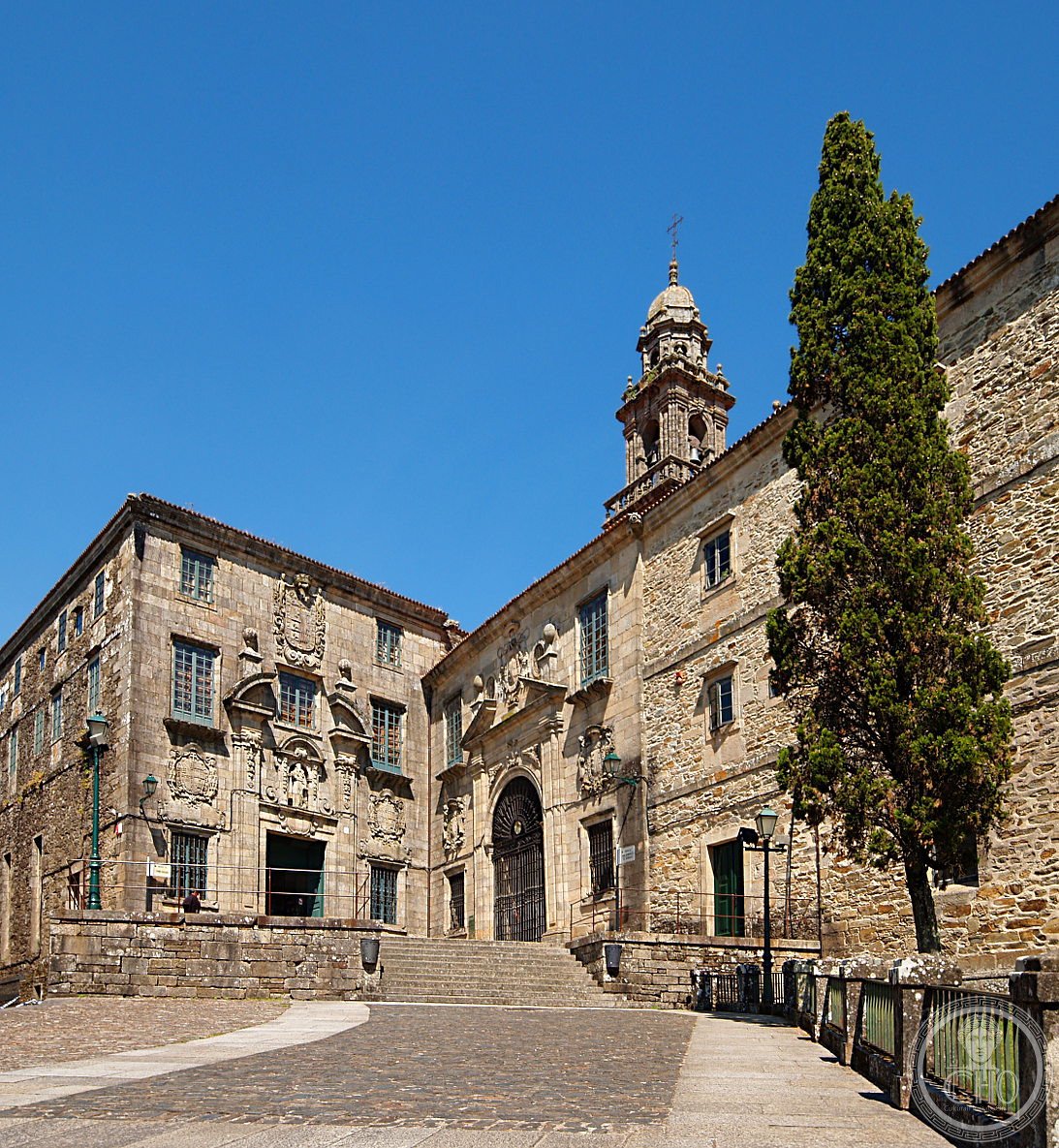
A former Dominican monastery in Santiago de Compostela distinguished by Galician Baroque architecture and centuries of religious heritage.
At a glance
The Convent of San Domingos de Bonaval stands as a significant religious complex in Galicia’s capital. Founded as a Dominican monastery, the site encompasses structures spanning multiple architectural periods and styles. Its most notable feature is the work of celebrated Galician Baroque architect Domingo de Andrade, whose influence shaped the convent’s aesthetic character. The Spanish government recognized its historical importance by declaring it a national monument in 1912.
History
The convent was established as a Dominican monastery, serving as both spiritual center and architectural landmark for Santiago de Compostela. Over centuries, successive generations added and renovated structures, creating the layered complex visible today. The monastery’s prominence grew alongside the city’s status as a pilgrimage destination. In 1912, the Spanish state formally protected the convent by granting it national monument status, ensuring its preservation for future generations.
What you see
The convent displays a rich architectural palimpsest. Various styles coexist within the complex, reflecting its long development and changing tastes across centuries. Domingo de Andrade’s Baroque contributions remain the most distinguished work on site, demonstrating the refined spatial and decorative principles of 17th- and 18th-century Galician design. The interplay of these architectural layers tells the story of religious and aesthetic evolution in medieval and early modern Spain.
Cultural significance
As a Dominican monastery in Santiago de Compostela, the convent held spiritual authority within one of Europe’s most important pilgrimage routes. The presence of Domingo de Andrade’s work elevates the site’s importance within the history of Iberian Baroque architecture. Its 1912 monument designation acknowledges both its architectural merit and its role in Spain’s religious and cultural patrimony.
Key facts
- Location: Santiago de Compostela, Galicia, Spain
- Coordinates: 42.8825°N, 8.5389°W
- Architectural styles: Multiple periods, including Galician Baroque by Domingo de Andrade
- Protected status: Declared a national monument of Spain in 1912
- Original function: Dominican monastery
Practical information & getting there
The convent is located in Santiago de Compostela, accessible by road and rail. The city serves as the terminal point of the Way of St. James pilgrimage network. For specific opening hours, admission fees, and current visiting conditions, consult local tourism information or the site directly before your visit.
Sources & resources
Find it on the map
See this place and what’s around it →📷 Become a Cultural Heritage Online photographer
Share your photos of places: they stay published under your name as the author. The more they're seen, the more you get noticed — and soon a contest will reward the most appreciated photos.
Log in or sign up free to add a photoIs this page about you?
This page is read by travellers and heritage enthusiasts who find it on Google. Tell us how you are connected to this place and we will take it from there.