
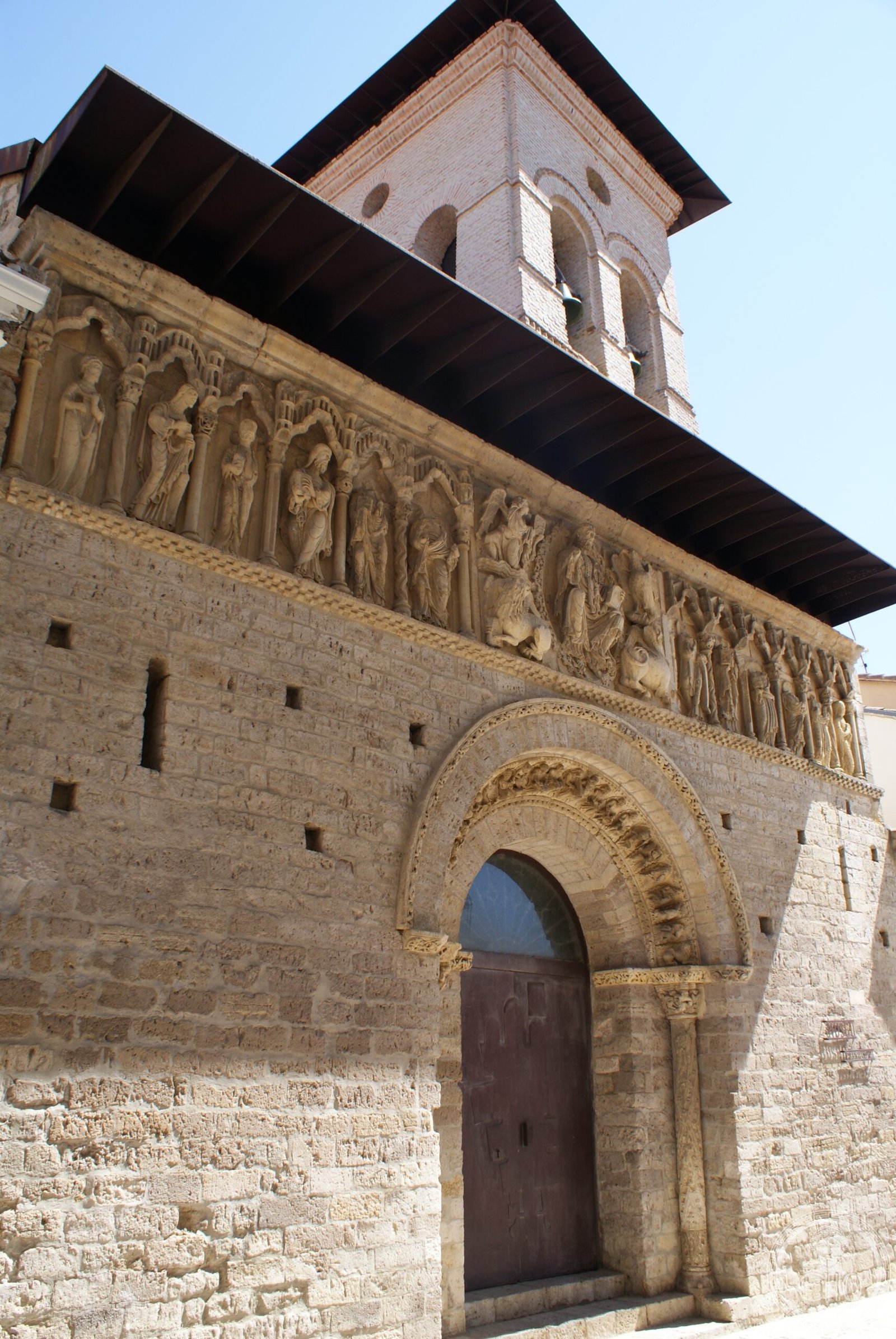
A masterpiece of Spanish Romanesque architecture, this 12th-century church anchors the pilgrimage route through Carrión de los Condes with a western façade of exceptional artistry.
At a glance
The Church of Santiago occupies the north-eastern corner of Carrión de los Condes’ main square, positioned directly on the street that carries the Camino de Santiago through the town. Built in the mid-12th century, it remains a landmark along Spain’s most famous pilgrimage route.
History
Construction began around the middle of the 12th century. The western façade, completed approximately 1160–1170, represents a pinnacle of Spanish Romanesque design. Over subsequent centuries the church underwent significant modifications. A devastating fire in 1811 caused major damage and prompted substantial restoration work that left its mark on the interior spaces and structural systems.
What you see
The western façade is the church’s greatest achievement—a refined expression of Romanesque vocabulary. The building’s interior and exterior reveal layers of stylistic change accumulated through centuries of alteration and repair. The fire of 1811 and its aftermath introduced later materials and methods alongside the original medieval work.
Cultural significance
The Church of Santiago marks a crucial point on the Camino de Santiago, one of medieval Christendom’s most important pilgrimage routes. Its façade stands as testimony to the artistic ambitions of 12th-century Spain, embodying the confident expression of Romanesque culture at its peak.
Key facts
- Country: Spain
- Town: Carrión de los Condes, Palencia province
- Built: Mid-12th century (façade c. 1160–1170)
- Coordinates: 42.33824, -4.60343
- Major fire: 1811
Practical information & getting there
The church stands on the main square and along the central street of Carrión de los Condes. This location on the Camino de Santiago makes it readily accessible to pilgrims and visitors exploring the town and the route.
Sources & resources
Find it on the map
See this place and what’s around it →📷 Become a Cultural Heritage Online photographer
Share your photos of places: they stay published under your name as the author. The more they're seen, the more you get noticed — and soon a contest will reward the most appreciated photos.
Log in or sign up free to add a photoIs this page about you?
This page is read by travellers and heritage enthusiasts who find it on Google. Tell us how you are connected to this place and we will take it from there.