
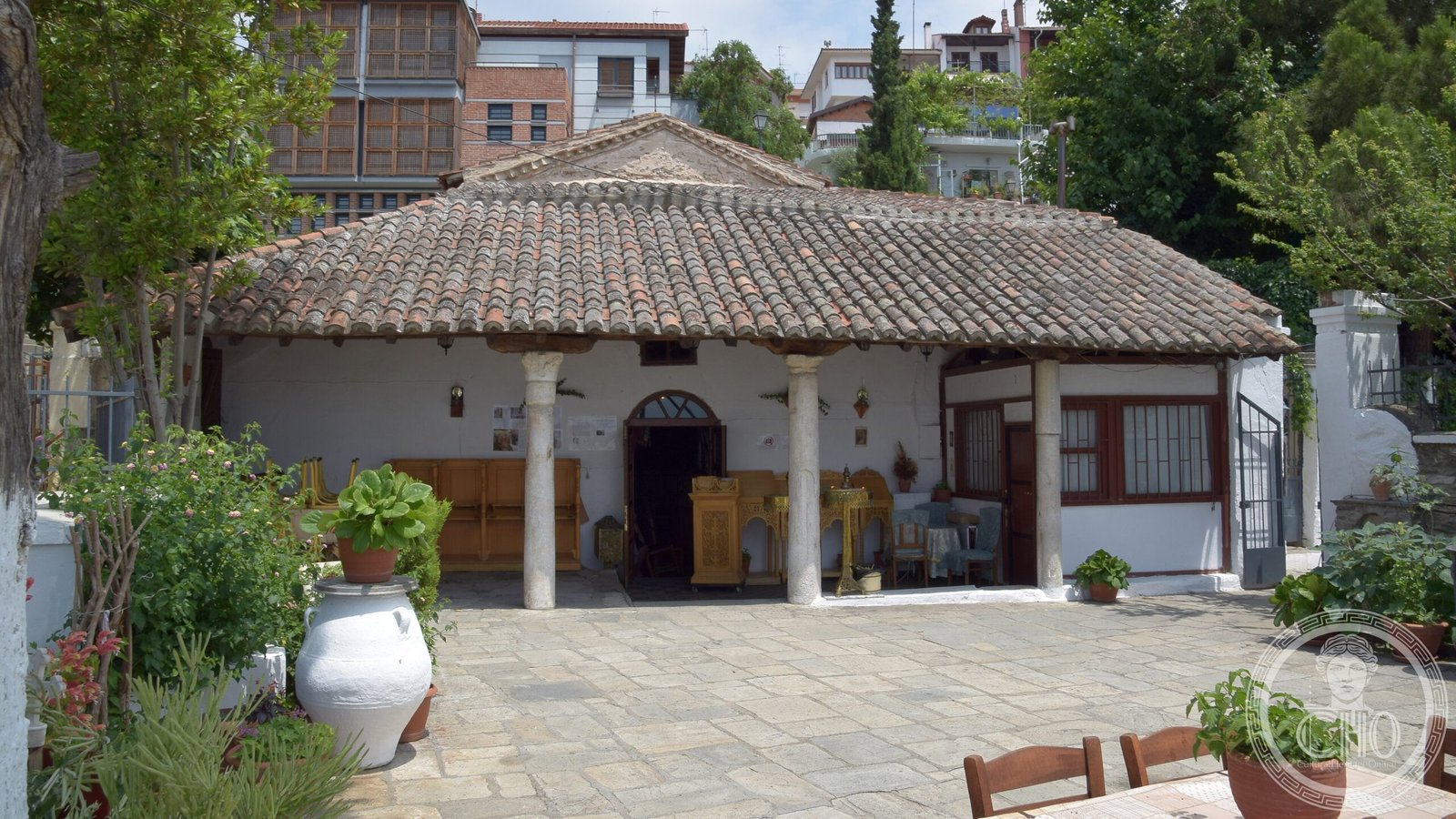
Church of Hosios David
A late 5th-century Byzantine church transformed through empires, its 5th-century apse mosaic ranks among the finest surviving examples of early Christian art.
At a glance
The Church of Hosios David served as the katholikon (main church) of the Latomos Monastery throughout the Byzantine period. Its walls hold treasures spanning centuries: original 5th-century mosaics alongside 12th–14th century renewals, testament to repeated cycles of embellishment and restoration. The church endured radical transformation under Ottoman rule, only to be reconsecrated to its Orthodox purpose in the modern era.
History
Built in the late 5th century, the church functioned as the heart of the Latomos Monastery during Byzantine times. The monastery flourished, its walls enriched with successive campaigns of decoration across three centuries. Following the Ottoman conquest, the church was converted into a mosque, most likely during the 16th century, erasing its Orthodox function for nearly four hundred years. In 1921, Greek independence and changing political fortunes allowed its reconsecration as a Greek Orthodox church, restoring its original dedication to David the Dendrite. UNESCO recognition came in 1988, when the church was inscribed alongside fourteen other monuments as part of Thessaloniki’s Paleochristian and Byzantine heritage.
What you see
The church’s greatest artistic treasure is the Icon of Christ of Latomos, a 5th-century apse mosaic of exceptional quality. This work exemplifies the refinement of early Byzantine religious imagery. Surrounding it are extensive fresco and mosaic schemes added or renewed between the 12th and 14th centuries, creating a layered visual chronicle of Byzantine artistic evolution. Many decorative elements remain remarkably well preserved.
Cultural significance
Hosios David represents a crucial bridge between late antique Christian art and mature Byzantine tradition. The survival of its 5th-century mosaics is rare; most early Christian decoration was lost to iconoclasm or time. The church’s physical history—from monastery to mosque to restored shrine—embodies the religious and political transformations that reshaped the eastern Mediterranean.
Key facts
- Country: Greece
- City: Thessaloniki, Central Macedonia
- Date: Late 5th century
- Coordinates: 40.64°N, 22.95°E
- UNESCO World Heritage Site (inscribed 1988 as part of Paleochristian and Byzantine monuments of Thessaloniki)
Practical information & getting there
Hosios David is located in central Thessaloniki. Opening hours and admission details should be verified locally before visiting. The church remains an active Orthodox place of worship; respectful dress is expected. It forms part of a broader circuit of Byzantine monuments within the city, making it well-integrated into cultural tourism routes.
Sources & resources
- Church of Hosios David — Wikipedia
- Cultural Heritage Online
Find it on the map
See this place and what’s around it →📷 Diventa un fotografo di Cultural Heritage Online
Condividi le tue foto dei luoghi: restano pubblicate con la tua firma come autore. Più vengono viste, più ti fai conoscere — e presto un concorso premierà le foto più apprezzate.
Accedi o registrati gratis per aggiungere una fotoDo you manage this place?
This page is read by travellers and heritage enthusiasts who find it on Google. Keep it accurate — and make it work for you. Free for non-profit heritage institutions.