
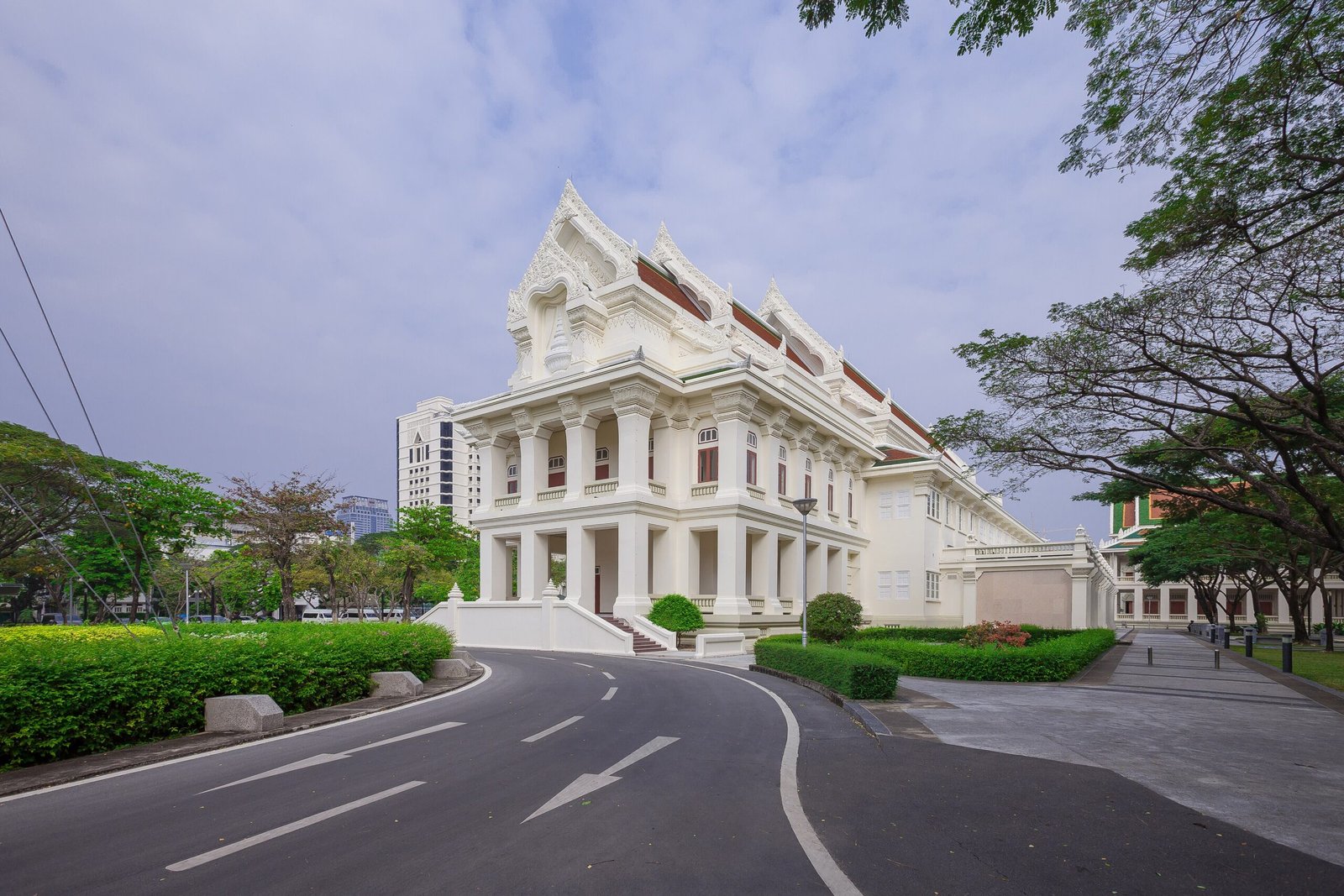
A modernist landmark that fuses concrete structure with Thai-Khmer decorative traditions, the auditorium embodies early twentieth-century Thai architectural innovation.
At a glance
Built as one of Chulalongkorn University’s principal structures, this auditorium stands as a defining example of applied Thai style during the People’s Party government era. The design merges progressive engineering with classical ornamentation, creating a distinctive synthesis of modernism and tradition.
History
Constructed between 1937 and 1938, the auditorium was designed by Phra Phromphichit (U Laphanon) and Phra Sarotrattananimman (Sarot Sukkhayang). It emerged during a pivotal moment in Thai architectural practice, when the nation’s new political leadership was shaping contemporary building design. The structure received the ASA Architectural Conservation Award in 2002, recognizing its heritage significance.
What you see
The auditorium displays reinforced concrete construction—a modern material—paired with a traditional layered roof and decorative details rooted in Thai and Khmer vocabularies. This combination represents a thoughtful negotiation between international modernism and local architectural identity, avoiding mere pastiche through disciplined structural honesty.
Cultural significance
The building marks a major moment in Thai architectural development. Rather than adopting wholesale Western styles or clinging exclusively to historical forms, it demonstrates how mid-century Thai architects approached modernization as a creative dialogue. The auditorium influenced subsequent institutional design across Southeast Asia.
Key facts
- Country: Thailand
- Location: Bangkok (13.7355°N, 100.5314°E)
- Completed: 1938
- Architects: Phra Phromphichit (U Laphanon) and Phra Sarotrattananimman (Sarot Sukkhayang)
- Status: Unregistered ancient monument
- Award: ASA Architectural Conservation Award, 2002
Practical information & getting there
The auditorium is located on the Chulalongkorn University campus in central Bangkok. You can reach it via BTS Skytrain or local transport. As an active university building, access may be limited; contact the university in advance for visiting information.
Sources & resources
Find it on the map
See this place and what’s around it →📷 Become a Cultural Heritage Online photographer
Share your photos of places: they stay published under your name as the author. The more they're seen, the more you get noticed — and soon a contest will reward the most appreciated photos.
Log in or sign up free to add a photoIs this page about you?
This page is read by travellers and heritage enthusiasts who find it on Google. Tell us how you are connected to this place and we will take it from there.