
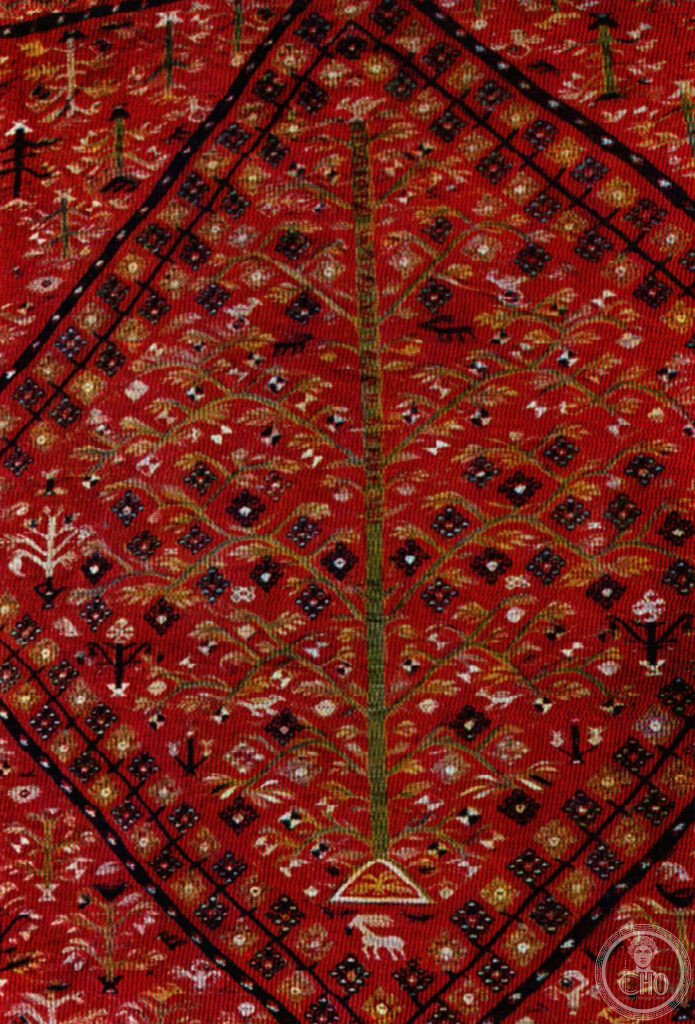
In the town of Chiprovtsi, weavers continue a centuries-old tradition of handmaking flatwoven kilim rugs with naturally dyed wool and cotton, their geometric patterns and vivid colours defining Bulgarian national craft.
In UNESCO’s words
Kilimi are hand-woven carpets made by the women of Chiprovtsi in north-eastern Bulgaria. Almost every household in the town contains a vertical handloom, which the women use to make two-sided tapestries traditionally utilized as floor coverings. The weaver takes several threads of the warp with her left hand, interlaces the weft yarn into the warp and uses a small beater to tighten the weave. The men of the town typically engage in wool production, processing and dyeing. Naturally dyed yarn gives soft pastel carpet hues, while chemical dyes produce brighter shades. The finished carpets are renowned for their composition, ornamental motifs and colour. Carpet weaving goes hand in hand with beliefs, verbal formulae and ritual practices. The weavers say prayers and make wishes for success before starting a new carpet, and sing and tell stories while working at the loom. The process of transmission occurs informally from mothers and grandmothers to daughters, often while working together on large carpets. Carpet weaving is deeply integrated into the social and cultural life of the population. The best-known forms of ornamentation are reproduced throughout the community and even constitute the coat of arms of the town.
Official description, UNESCO Intangible Cultural Heritage List — The tradition of carpet-making in Chiprovtsi
At a glance
Kilimi are hand-woven carpets made by the women of Chiprovtsi. Each household typically contains a vertical handloom used to create two-sided tapestries that serve as floor coverings. The weaver interlaces weft yarn into the warp threads with her left hand, then uses a small beater to tighten the weave. Men in the town handle wool production, processing and dyeing. Natural dyes create soft pastel hues, while chemical dyes produce brighter shades. The finished carpets are known for their composition, ornamental motifs and colour.
Origins & history
Carpet production in Chiprovtsi began in the 17th century, flourishing especially during the Bulgarian National Revival—a period of cultural and artistic reawakening. The tradition is part of a larger Balkan kilim heritage that stretches across the region and historically centered in the Balkan mountains area of what is now Eastern Serbia and Western Bulgaria. Chiprovtsi carpets are recognized as a distinct type within the historic Pirot carpet tradition.
The practice
A weaver takes several threads of the warp in her left hand, interlaces the weft yarn into the warp, and uses a small beater to tighten the weave. The men of Chiprovtsi engage in wool production, processing and dyeing. Naturally dyed yarn produces soft pastel carpet hues, while chemical dyes create brighter shades. The carpets feature ornamental motifs that are reproduced throughout the community. Knowledge is transmitted informally from mothers and grandmothers to daughters, often while working together on large carpets.
Cultural significance
Carpet weaving is deeply integrated into the social and cultural life of the population. The tradition goes hand in hand with beliefs, verbal formulae and ritual practices—weavers say prayers and make wishes before starting a new carpet, and sing and tell stories while working. The best-known forms of ornamentation are so valued that they constitute the coat of arms of the town.
Key facts
- Country: Bulgaria
- Inscribed: 2014
- UNESCO list: Representative List of the Intangible Cultural Heritage of Humanity
- UNESCO reference: 00965
- UNESCO vocabulary: Carpets; Tapestry; Weaving
- Map: Chiprovtsi — the locality named in UNESCO’s official description of this element
Where to experience it
The women of Chiprovtsi in north-eastern Bulgaria continue the tradition of kilimi weaving, with nearly every household containing a vertical handloom. Visitors can observe weavers at work in their homes and community spaces, where mothers and daughters learn the craft together across generations. The finished carpets, distinguished by their soft pastel or bright hues and intricate ornamental motifs, remain available directly from local makers. Local cultural organizations provide information on demonstrations and workshops where the weaving process and its accompanying prayers, songs and stories can be experienced firsthand.
Sources & resources
- UNESCO — official element page: The tradition of carpet-making in Chiprovtsi
- UNESCO — open data record: Intangible Heritage List, reference 00965
- UNESCO — official photograph: Photograph of this element — Mila Santova, 2013
- Reference — Wikipedia (secondary): Chiprovtsi kilim — consulted as a secondary reference, not as confirmation
- Cultural Heritage Online: Our archive and city guides

Find it on the map
See this place and what’s around it →📷 Become a Cultural Heritage Online photographer
Share your photos of places: they stay published under your name as the author. The more they're seen, the more you get noticed — and soon a contest will reward the most appreciated photos.
Log in or sign up free to add a photo