
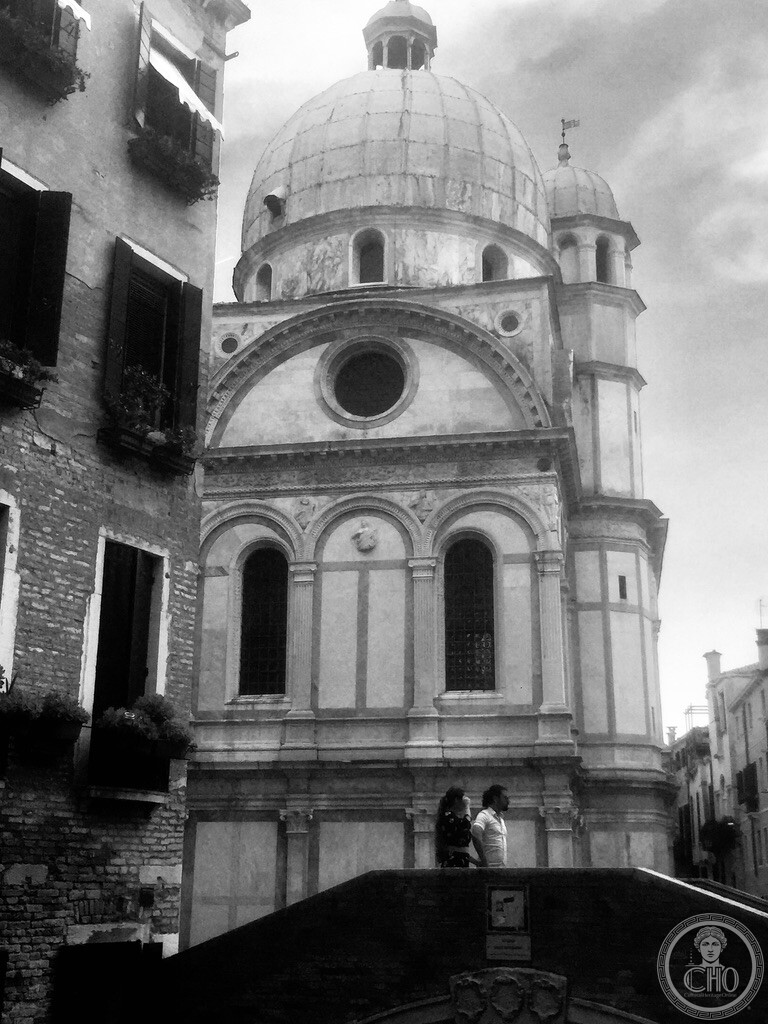
Celebrated as one of the purest and most exquisite jewels of the Early Venetian Renaissance, Santa Maria dei Miracoli is an architectural triumph designed by Pietro Lombardo between 1481 and 1489. Clad entirely in polychrome marble veneers and crowned by a semicircular barrel vault and dome, the church stands like an illuminated reliquary alongside the waters of Rio dei Miracoli.
At a glance
- Architect & Sculptor
- Pietro Lombardo, with sons Tullio and Antonio Lombardo
- Construction
- 1481–1489; consecrated 31 December 1489
- Architectural style
- Early Venetian Renaissance (Lombardesco)
- Materials
- Carrara white marble, Greek marbles, Verona broccatello, and green serpentine
- Location
- Campo dei Miracoli, Cannaregio 6075, 30121 Venice, Italy
- Coordinates
- 45.43972° N, 12.33944° E
Overview
Standing isolated beside the tranquil Rio dei Miracoli in the heart of Cannaregio, Santa Maria dei Miracoli—frequently called la chiesa di marmo or the “marble jewel box”—is unique in Venice for being entirely clad in precious decorative marble both inside and out. Rather than a conventional monumental parish church, it was conceived as an intimate, freestanding civic shrine to shelter a miraculous painted image of the Virgin Mary, financed by overwhelming donations from Venetian citizens.
History & Construction
In 1408, the merchant Francesco Amadi commissioned a painting of the Virgin and Child with two angels from the artist Nicolò di Pietro, installing it on the exterior wall of his courtyard nearby. By the late 1470s, the image was credited with performing numerous miraculous healings. As pilgrimages grew so massive that crowds choked the surrounding alleyways, the Republic authorized the construction of a dedicated sanctuary.
The commission was awarded in 1481 to master sculptor and architect Pietro Lombardo. Working with his workshop and talented sons Tullio and Antonio, Lombardo produced a unified work of sculpture and architecture. Construction was funded entirely by spontaneous civic alms, progressing with astonishing speed until its consecration on the final day of 1489.
Between 1987 and 1997, the church underwent one of the most thorough scientific restorations in modern Venetian history, led by the Save Venice organization. Over a decade, specialized conservators dismantled, desalted, and cleaned all exterior and interior marble revetments, removing five centuries of salt crystallization and industrial pollutants to restore Lombardo’s original polychromatic brilliance.
Architecture & Interior
The exterior features a double order of classical Corinthian pilasters framing decorative blind arches, diamond revetments, and medallions filled with rare marbles, culminating in a semi-circular pediment (lunette) adorned with rose windows and sculpted angels. At the eastern end, a graceful cupola on a drum crowns the semicircular apse dipping into the canal.
Inside, the single-nave interior is spanned by a wooden barrel vault divided into fifty coffered panels, exquisitely painted with portraits of Old Testament prophets and saints by Pier Maria Pennacchi (c. 1528). A steep flight of marble steps leads up to an elevated chancel (*presbiterio*), framed by sculpted marble balustrades and ambo pulpits carved with classical grotesques, sea sirens, putti, and foliage by Tullio and Antonio Lombardo. Over the high altar, the original 1408 miraculous icon of the Madonna still presides.
Practical information
- Visiting
- Part of the Chorus Association of Venetian Churches; admission included in the Chorus Pass or individual ticket (€3.50)
- Hours
- Monday to Saturday 10:30–17:00 (last entry 16:30); closed Sundays
- Canal bridge
- Ponte dei Miracoli provides the classic exterior photographic perspective across the canal
Nearby
- Campiello de la Cason — 100 m north, shaded residential square
- Palazzo Widmann Rezzonico Foscari — 120 m east along the canal
- Campo Santi Giovanni e Paolo — 200 m east
Getting there
From the Rialto Bridge, walk northeast through Campo San Bartolomeo, Salizada San Canciano, and Calle Castelli into Campo dei Miracoli (approx. 5 minutes). From the Fondamente Nove vaporetto landing, walk south along Calle Larga Giacinto Gallina (approx. 5 minutes).
Sources & resources
- Santa Maria dei Miracoli — Wikipedia
- Chorus Association — Santa Maria dei Miracoli
- Cultural Heritage Online — Venetian Renaissance Architecture
Find it on the map
See this place and what’s around it →Record researched and written by Carla Szathvary for Cultural Heritage Online, 2026.
📷 Become a Cultural Heritage Online photographer
Share your photos of places: they stay published under your name as the author. The more they're seen, the more you get noticed — and soon a contest will reward the most appreciated photos.
Log in or sign up free to add a photoIs this page about you?
This page is read by travellers and heritage enthusiasts who find it on Google. Tell us how you are connected to this place and we will take it from there.