
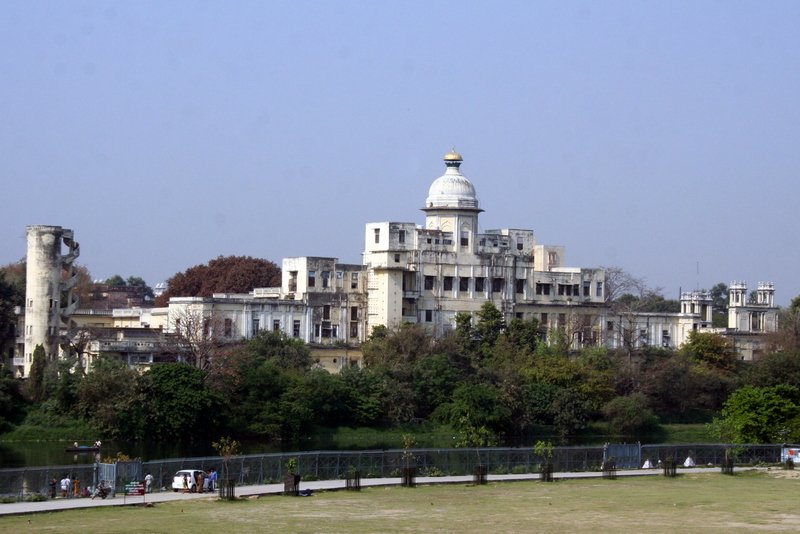
An ornate palace in Lucknow that once housed the rulers of Awadh and their families, Chattar Manzil stands as a monument to the region’s royal heritage and architectural ambition.
At a glance
Chattar Manzil—the Umbrella Palace—occupies a significant place in Lucknow’s urban landscape. Built to serve the royal household of the Awadh dynasty, it reflects the tastes and power of one of India’s most influential regional courts.
History
The palace functioned as a residence for the rulers of Awadh and their wives. Its construction was part of the broader architectural expansion that characterized Lucknow during the period of Awadhi rule, when the city became renowned for its palaces, gardens and cultural institutions.
What you see
The building’s name derives from its distinctive umbrella-like dome structure. The architectural style reflects the blend of Mughal, Persian and Indo-Islamic traditions characteristic of Awadhi palace design.
Cultural significance
Chattar Manzil represents the opulence and aesthetic refinement of the Awadh court. As one of Lucknow’s surviving palatial structures, it offers insight into the domestic arrangements and material culture of India’s royal families during the late pre-colonial and early colonial periods.
Key facts
- Country: India
- City: Lucknow, Uttar Pradesh
- Coordinates: 26.858735907352, 80.931989962872
- Original function: Royal palace
Practical information & getting there
Chattar Manzil is located in central Lucknow. For current visiting hours, access and conservation status, consult local tourism information or the site directly.
Sources & resources
Find it on the map
See this place and what’s around it →📷 Become a Cultural Heritage Online photographer
Share your photos of places: they stay published under your name as the author. The more they're seen, the more you get noticed — and soon a contest will reward the most appreciated photos.
Log in or sign up free to add a photoDo you manage this place?
This page is read by travellers and heritage enthusiasts who find it on Google. Keep it accurate — and make it work for you. Free for non-profit heritage institutions.