

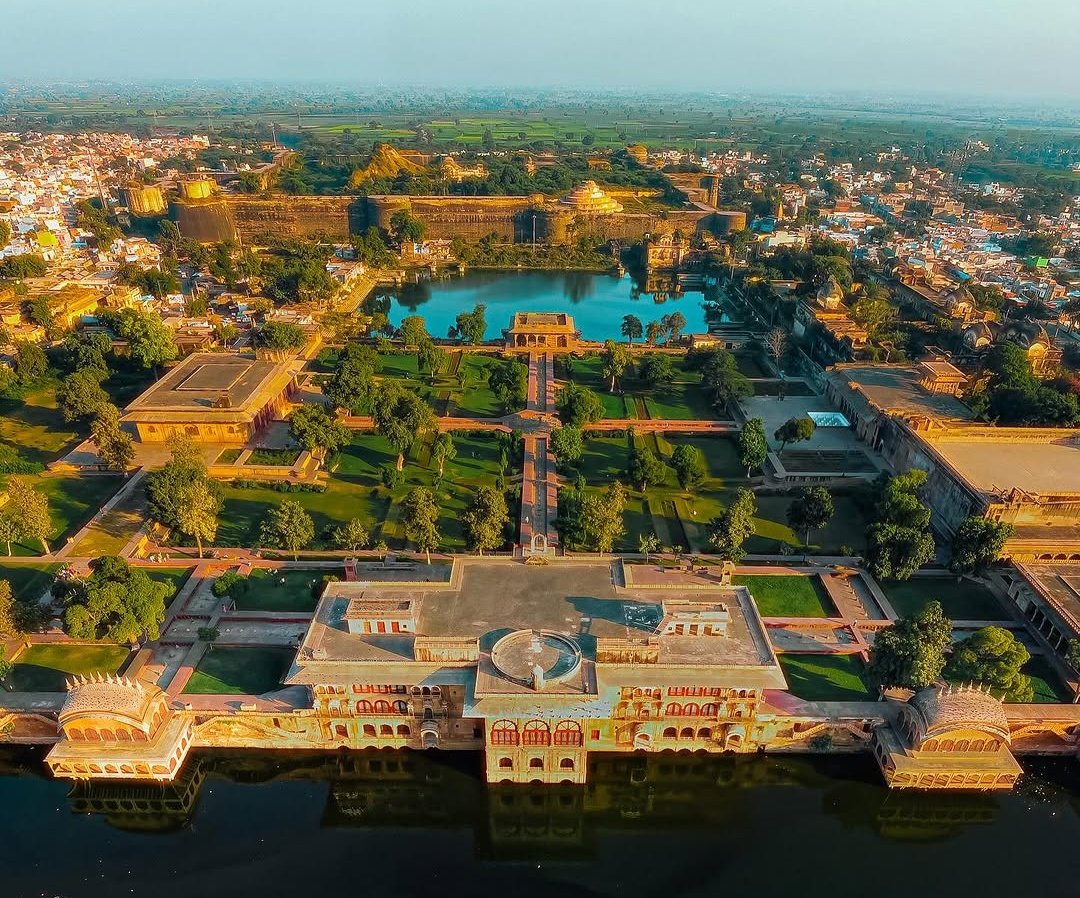
A stunning synthesis of Mughal and Rajput design, Deeg Palace stands as North India’s sole Hindu-style palace—built as a royal summer refuge and masterwork of 18th-century ambition.
At a glance
Deeg Palace was constructed in the 18th century by the rulers of Bharatpur State as a luxurious summer retreat. Its strategic location near Agra made it an ideal sanctuary during times of invasion. The palace remained in active use until the early 1970s and is now maintained as a protected monument by the Government of Rajasthan.
History
Built during the reign of Bharatpur’s rulers, Deeg Palace emerged as a response to the region’s volatile political landscape. Its proximity to Agra—then the center of Mughal power—afforded both cultural exchange and defensive advantage. The palace served its royal inhabitants for nearly two centuries before transitioning to state preservation in the modern era.
What you see
Deeg Palace represents a rare architectural achievement: the fusion of Hindu design principles with Mughal refinement. Its layout, ornamentation, and structural elements draw from both traditions, creating a distinctive aesthetic unlike any other palace in North India. The compound showcases the ambitions and cultural sophistication of 18th-century Bharatpur rulers.
Cultural significance
As North India’s only Hindu-style palace, Deeg holds singular importance in the architectural heritage of the subcontinent. It documents a moment when Hindu and Mughal aesthetics coexisted and enriched each other. The palace reflects the political acumen and aesthetic vision of Bharatpur’s dynasty during a transformative period.
Key facts
- Country: India
- City: Deeg, Rajasthan
- Coordinates: 27.47087, 77.32907
- Built: 18th century
- Function: Summer palace and refuge
- Status: Protected monument
Practical information & getting there
Deeg Palace is located in Deeg district, Rajasthan, approximately 50 kilometers from Agra. The site is managed by the Government of Rajasthan as a preserved heritage monument and is open to visitors. Check local tourism resources for current visiting hours and entry details.
Sources & resources
Find it on the map
See this place and what’s around it →📷 Become a Cultural Heritage Online photographer
Share your photos of places: they stay published under your name as the author. The more they're seen, the more you get noticed — and soon a contest will reward the most appreciated photos.
Log in or sign up free to add a photoIs this page about you?
This page is read by travellers and heritage enthusiasts who find it on Google. Tell us how you are connected to this place and we will take it from there.