

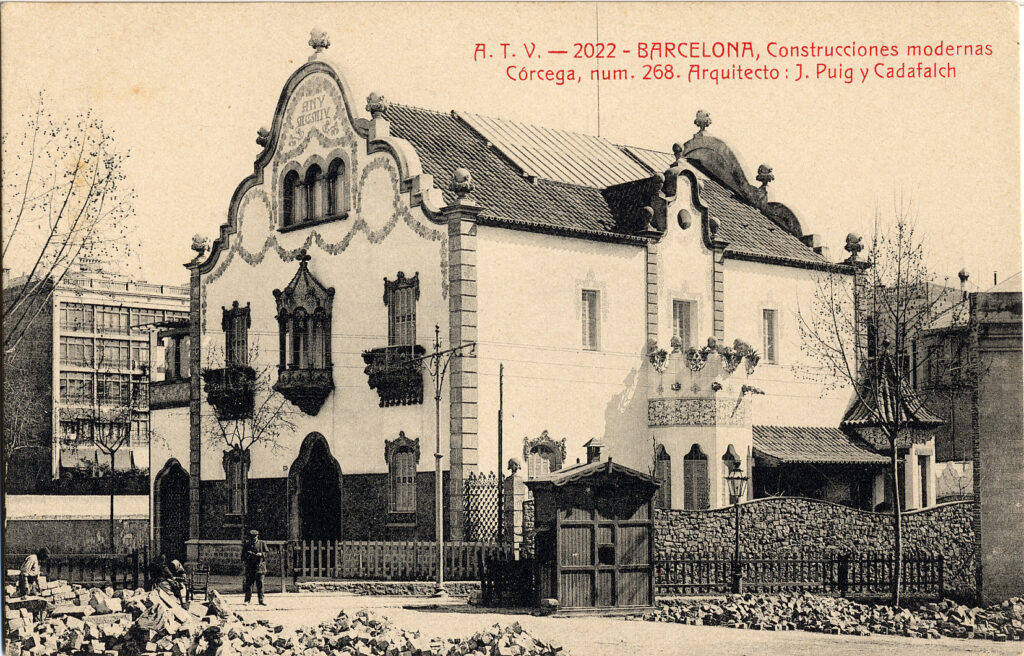
A masterwork of Catalan Modernisme by Josep Puig i Cadafalch, this residential building stands as one of Barcelona’s most celebrated early 20th-century designs.
At a glance
Casa Trinxet exemplifies the bold architectural ambitions of Barcelona’s Modernisme movement. Completed in 1904, the building stood on a prominent corner of the Eixample district until it was demolished in 1967, its distinctive design a testament to Puig i Cadafalch’s innovation and vision.
History
Commissioned by Avelino Trinxet Casas of the prominent Trinxet textile family, Casa Trinxet was constructed between 1902 and 1904. Josep Puig i Cadafalch, known also for designing Casa Amatller, created this residence during the height of Catalan Modernisme. The building was not part of the Illa de la Discòrdia on Passeig de Gràcia, the block where works by Domènech i Montaner, Puig i Cadafalch and Antoni Gaudí face one another.
What you see
The building’s distinctive character reflects Puig i Cadafalch’s sophisticated approach to Modernisme design. It stood at the crossroads of Carrer Balmes and Carrer de Córcega, a corner site that showed the architect’s care for composition and proportion, and it was pulled down in 1967.
Cultural significance
Casa Trinxet ranks among the jewels of Barcelona Modernisme. Its presence on the Illa de la Discòrdia underscores a pivotal moment in architectural history when three visionary designers shaped the city’s aesthetic identity through competing yet complementary approaches to the modern style.
Key facts
- Country: Spain
- City: Barcelona (Dreta de l’Eixample)
- Architect: Josep Puig i Cadafalch
- Built: 1902–1904
- Coordinates: 41.3942° N, 2.1567° E
Practical information & getting there
Casa Trinxet stands in Barcelona’s Eixample district at the corner of Carrer Balmes and Carrer del Consell de Cent. The surrounding neighborhood is accessible by metro and offers visitor facilities typical of central Barcelona. Consult local tourism resources for current visiting hours and guided-tour availability.
Sources & resources
Find it on the map
See this place and what’s around it →📷 Become a Cultural Heritage Online photographer
Share your photos of places: they stay published under your name as the author. The more they're seen, the more you get noticed — and soon a contest will reward the most appreciated photos.
Log in or sign up free to add a photoIs this page about you?
This page is read by travellers and heritage enthusiasts who find it on Google. Tell us how you are connected to this place and we will take it from there.
This entry stays online and free either way — and a free account lets you add to it yourself.