
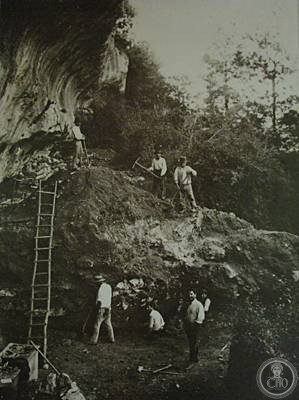
A limestone rock shelter in the Dordogne preserves remarkable Magdalenian animal sculptures carved directly into the stone, offering rare insight into prehistoric artistic practice.
At a glance
Cap Blanc is a prehistoric rock shelter distinguished by in situ animal sculptures dating to the Magdalenian period. Located near Les Eyzies on the Beune River, the site combines natural limestone shelter with human artistic expression, making it an exceptional record of Upper Paleolithic culture.
History
The site was occupied during the Magdalenian era, when hunter-gatherers carved zoomorphic figures directly into the shelter’s walls. The sculptures represent animals and date to this period of remarkable artistic flourishing in southwestern France.
What you see
Animal sculptures are incised and carved into the limestone shelter walls. The figures demonstrate the Magdalenian sculptural technique and remain in their original location, providing direct evidence of how prehistoric artists utilized natural rock formations as artistic canvas.
Cultural significance
Cap Blanc represents a rare survival of in situ Magdalenian sculpture. Unlike portable art, these carvings reveal how prehistoric artists engaged with fixed architectural space and their environment. The shelter contributes essential knowledge to understanding Upper Paleolithic aesthetics and spiritual life in the Périgord region.
Key facts
- Country: France
- Location: Marquay commune, Dordogne, on the right bank of the Beune River, west of Les Eyzies
- Period: Magdalenian
- Coordinates: 44.94555556, 1.09694444
Practical information & getting there
Cap Blanc lies a few kilometers west of Les Eyzies in the Dordogne. The rock shelter is situated on the right bank of the Beune River. Contact local tourism authorities in Les Eyzies for current access information and visiting arrangements.
Sources & resources
- Cap Blanc rock shelter – Wikipedia
- Cultural Heritage Online
Find it on the map
See this place and what’s around it →📷 Become a Cultural Heritage Online photographer
Share your photos of places: they stay published under your name as the author. The more they're seen, the more you get noticed — and soon a contest will reward the most appreciated photos.
Log in or sign up free to add a photoDo you manage this place?
This page is read by travellers and heritage enthusiasts who find it on Google. Keep it accurate — and make it work for you. Free for non-profit heritage institutions.