
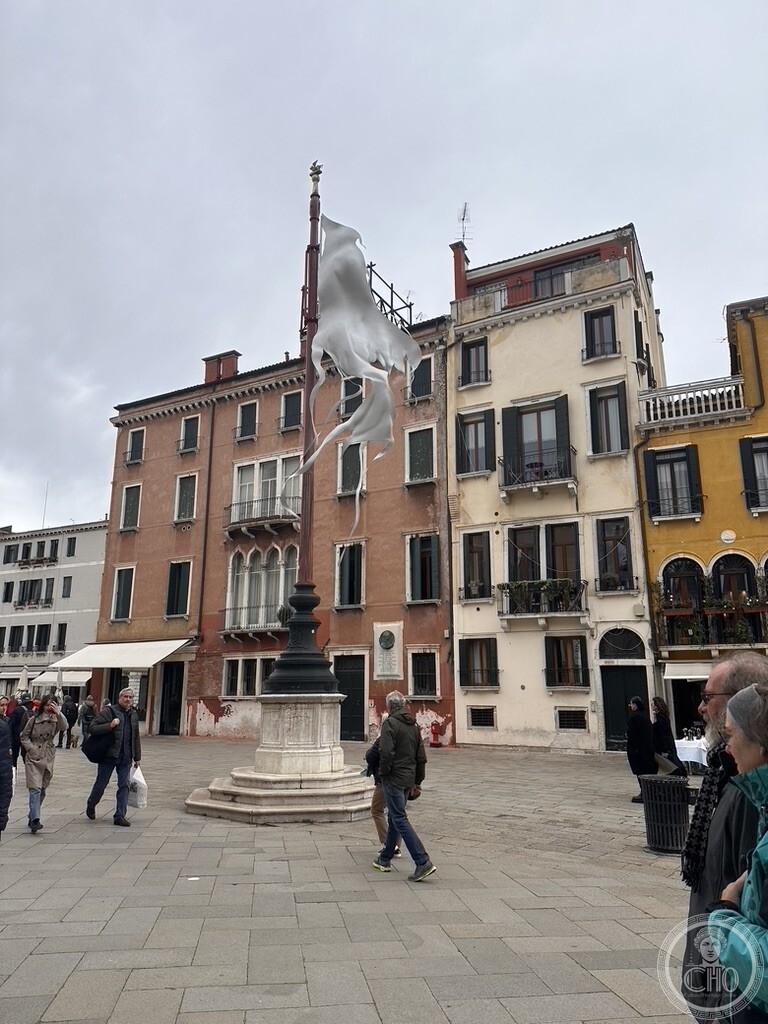
Stretching between the Grand Canal approach to the Accademia Bridge and the Gothic church of Santo Stefano, Campo Santo Stefano (officially Campo Francesco Morosini) is one of the widest, most aristocratic, and sunniest public squares in Venice. Once an arena for medieval spectacles and bull-baiting, the campo is defined today by monumental patrician palazzi, prestigious intellectual institutions, and vibrant open-air café terraces.
At a glance
- Type
- Major public square (campo aristocratico e monumentale)
- Period
- Medieval origins; expanded and monumentalized 15th–18th century
- Style
- Gothic, Renaissance, and High Baroque architectural ensemble
- Location
- San Marco sestiere, 30124 Venice, Italy
- Coordinates
- 45.43273° N, 12.33011° E
- Key Monuments
- Palazzo Loredan (Istituto Veneto), Palazzo Pisani (Conservatorio Marcello), Church of Santo Stefano, Monument to Niccolò Tommaseo
Overview
Unlike the dense, enclosed campi common in northern Venice, Campo Santo Stefano offers a sweeping sense of light and space. Located in the sestiere of San Marco along the main pedestrian artery linking Piazza San Marco to the Gallerie dell’Accademia across the Ponte dell’Accademia, it has long been favored by Venetian nobility for building ambitious residences.
The square is anchored at its northern end by the Gothic facade of the Church of Santo Stefano with its leaning campanile, while its southern limit is closed by the imposing neoclassical mass of Palazzo Loredan. Along the western edge, Campiello Pisani opens towards the colossal facade of Palazzo Pisani, one of the most gargantuan private residences ever erected in the Republic.
History & Civic Life
In the medieval and early modern eras, the wide expanse of Campo Santo Stefano was covered in grass—except for a central stone strip known as the liston, where patricians strolled to see and be seen (originating the Venetian idiom andare al liston). The square was celebrated as Venice’s premier venue for carnival celebrations, tournaments, and dramatic cacce ai tori (bull-baiting spectacles), which continued until a tragic grandstand collapse in 1802 prompted their permanent prohibition.
The square’s official name, Campo Francesco Morosini, honors Doge Francesco Morosini (1619–1694), known as il Peloponnesiaco for his victorious 17th-century naval campaigns against the Ottoman Empire in Greece. Morosini was born and lived in the grand Gothic Palazzo Morosini that still borders the campo.
In the center of the square stands Francesco Barzaghi’s 1882 bronze monument commemorating the Dalmatian-born linguist, philosopher, and 1848 revolutionary patriot Niccolò Tommaseo. Due to the towering stack of heavy folios supporting his feet, Venetians humorously dubbed the statue il cagalibri (“the book pooper”).
The Masterpiece Palazzi
Two monumental institutions face the campo:
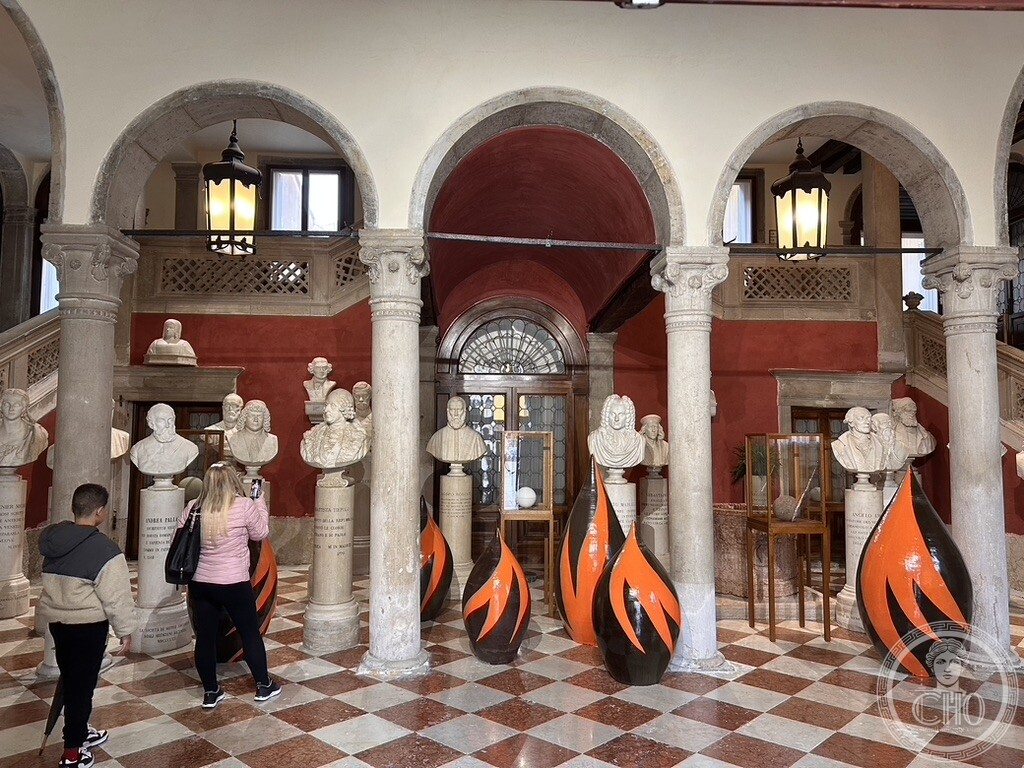
- Palazzo Loredan a Santo Stefano (Istituto Veneto di Scienze, Lettere ed Arti): Rebuilt in 1536 by Antonio Abbondi (Scarpagnino) on earlier 14th-century foundations, it served as the residence of Doge Leonardo Loredan and Doge Francesco Loredan. Since 1891, it has served as the seat of the prestigious Istituto Veneto. In its grand ground-floor columned portico is installed the Panteon Veneto, a solemn gallery of marble and terracotta portrait busts celebrating Venice’s greatest luminaries—including Andrea Palladio, Marco Polo, Titian, and Paolo Sarpi—regularly juxtaposed with cutting-edge international contemporary art installations during the Venice Biennale.
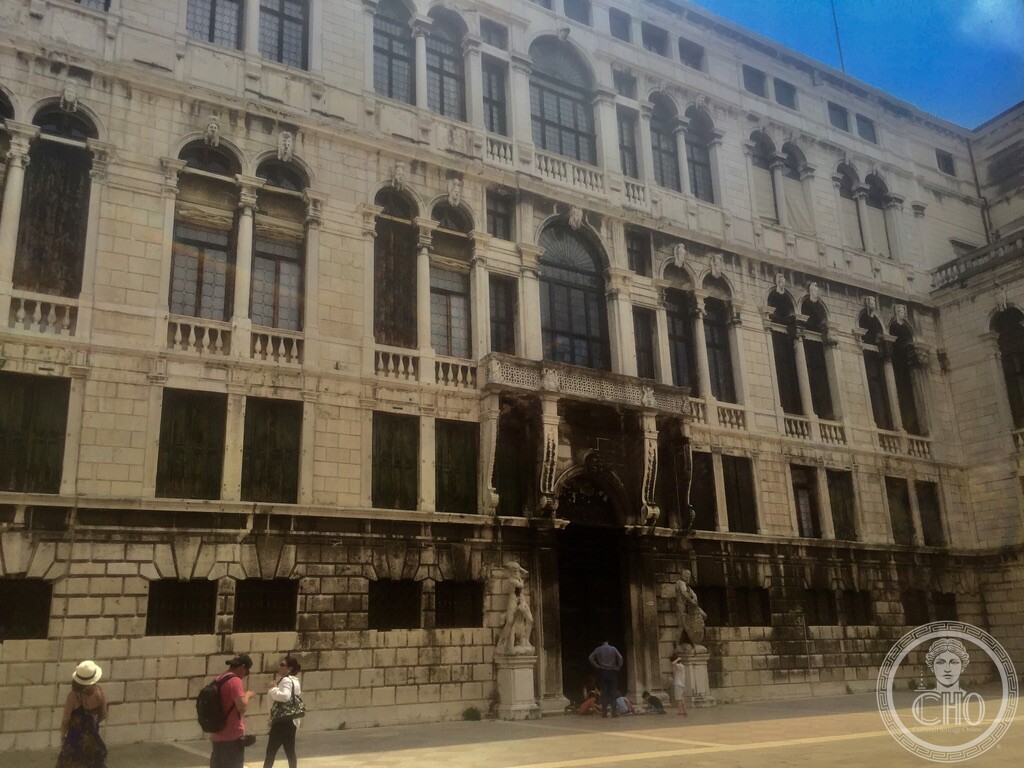
- Palazzo Pisani a Santo Stefano (Conservatorio Benedetto Marcello): Begun in 1614 and dramatically enlarged in the 18th century by Girolamo Frigimelica, this colossal palace boasts massive stone rustication, a baroque balcony supported by sculpted brackets, and colossal statues of Hercules and Atlas flanking its entrance portal. Since 1940, it has been the home of Venice’s conservatory of music, where notes of piano and violin drift out across the surrounding alleyways.
What you see
Paved in traditional grey trachyte flagstones with white stone lines, the campo is alive with everyday energy. Café terraces—notably the historic Gelateria Paolin, serving traditional gelato and espresso under broad umbrellas since the 1930s—line the sunny eastern pavement. Visitors stroll between the antique bookstalls, children play in the open square, and art enthusiasts explore the rotating contemporary Biennale collateral exhibitions housed in the surrounding palazzi.
Practical information
- Access
- Public square, open freely day and night
- Hospitality
- Lively cafés, bakeries, and historic gelaterie operating daily from morning until late evening
Nearby
- The Cloister of Santo Stefano — 50 m north, annexed to the church
- Peggy Guggenheim Collection — 300 m south across the Accademia Bridge
- Bel-Air Fine Art — Dorsoduro — 350 m south across the Grand Canal
Getting there
Take vaporetto line 1 or 2 to the Accademia stop, cross the wooden Ponte dell’Accademia, and walk straight ahead into Campo Santo Stefano (approx. 2 minutes). Alternatively, take vaporetto line 1 to Sant’Angelo and walk south through Calle dei Spechieri (approx. 4 minutes).
Sources & resources
- Campo Santo Stefano — Wikipedia
- Istituto Veneto di Scienze, Lettere ed Arti — Official Site
- Cultural Heritage Online — Venice Architecture Directory
Photo gallery
Photographs contributed by a Cultural Heritage Online member.
Find it on the map
See this place and what’s around it →Record researched and written by Carla Szathvary for Cultural Heritage Online, 2026.
📷 Become a Cultural Heritage Online photographer
Share your photos of places: they stay published under your name as the author. The more they're seen, the more you get noticed — and soon a contest will reward the most appreciated photos.
Log in or sign up free to add a photoIs this page about you?
This page is read by travellers and heritage enthusiasts who find it on Google. Tell us how you are connected to this place and we will take it from there.