
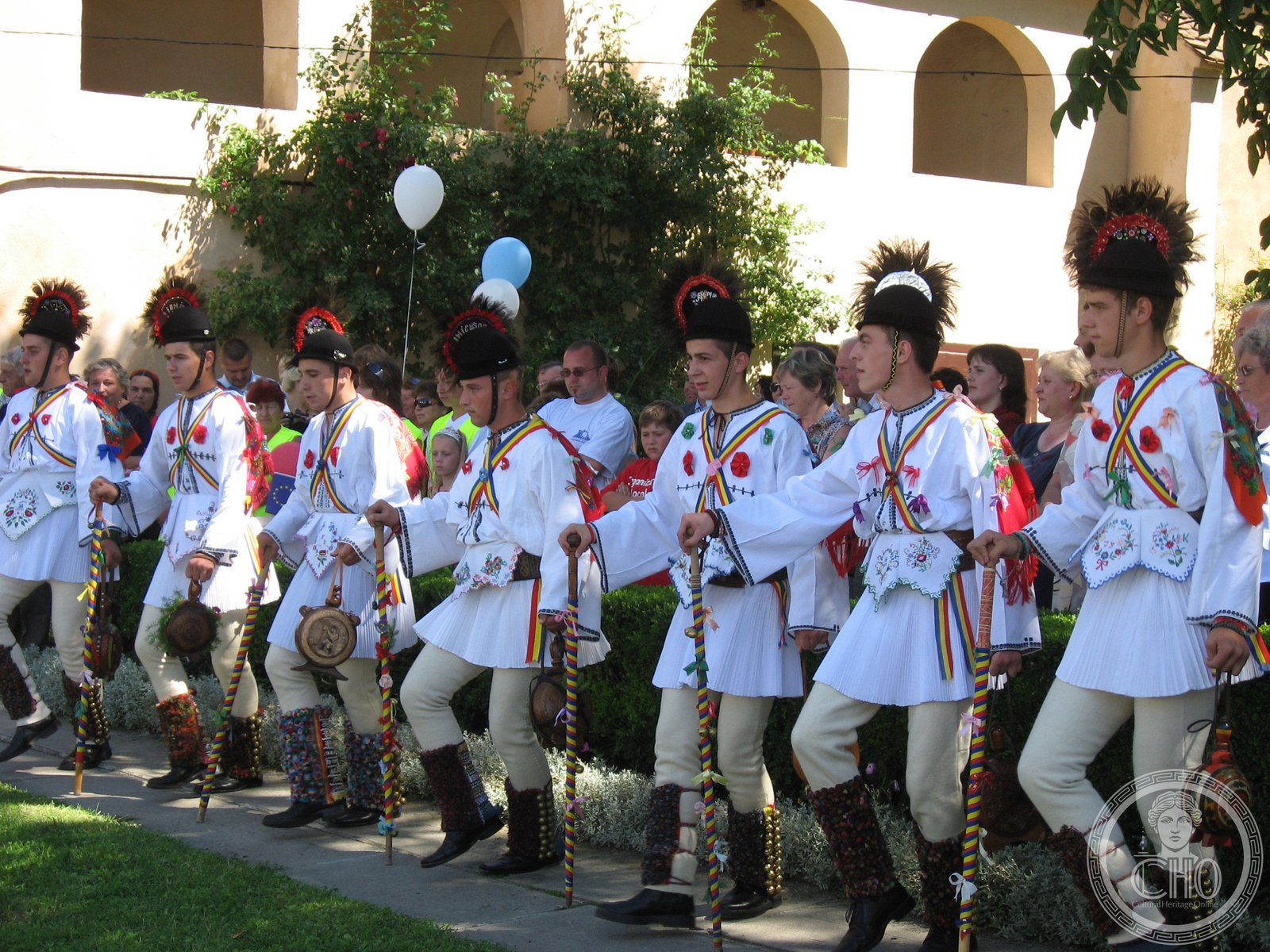
Each spring, masked dancers move through Romanian villages performing the căluș, a ritual of renewal tied to the Christian calendar and shepherded by fiddlers through the weeks between Easter and Pentecost.
At a glance
The Călușari are practitioners of an ancient Romanian dance tradition known as the căluș—the name meaning “horse” in an endearing diminutive form. From the third week after Easter until Pentecost (called Rusalii in Romanian), groups travel through local communities, dancing to the accompaniment of traditional fiddles. The practice represents one of Europe’s oldest seasonal rituals, deeply rooted in pre-Christian agrarian custom yet adapted to the Orthodox liturgical year.
Origins and history
The căluș is originally Romanian, emerging from centuries of shepherding and agricultural life in the Wallachian and Moldavian regions. The tradition later spread northward to Bulgarian communities, where similar practices took hold. Historical sources suggest connections to pre-Christian fertility rites and seasonal renewal ceremonies, though the dance became formally synchronized with the Easter-to-Pentecost calendar in recorded tradition.
The tradition today
Modern Călușari groups maintain the seasonal pilgrimage intact. Dancers, often wearing masks and traditional costume, move methodically from village to village, performing intricate steps and figures. The fiddlers—typically a small ensemble—provide continuous musical accompaniment, their refrains setting the rhythm and pace. The ritual concludes at Pentecost, marking the return to ordinary time.
Cultural significance
The Călușari embody a rare continuity of pre-modern village life in contemporary Romania. The tradition reinforces community bonds across generations, provides young men (historically the primary performers) with a structured rite of passage, and maintains linguistic and musical knowledge specific to each region. Recognition as intangible cultural heritage affirms the practice’s role in preserving Romanian identity.
Key facts
- Country: Romania
- Anchor community: Craiova
- UNESCO Intangible Cultural Heritage (Representative List): Yes, Căluş ritual
- Season: Three weeks after Easter through Pentecost (approximately two weeks)
- Regional spread: Originally Romanian; also practised in parts of Bulgaria
Where to experience it
To witness the Călușari, you should visit villages in the Craiova region or other Wallachian communities during the Easter-to-Pentecost period. Local cultural organizations and tourism boards in Dolj County can provide information on group schedules and planned performances in specific villages.
Sources & resources
Find it on the map
See this place and what’s around it →📷 Become a Cultural Heritage Online photographer
Share your photos of places: they stay published under your name as the author. The more they're seen, the more you get noticed — and soon a contest will reward the most appreciated photos.
Log in or sign up free to add a photo