
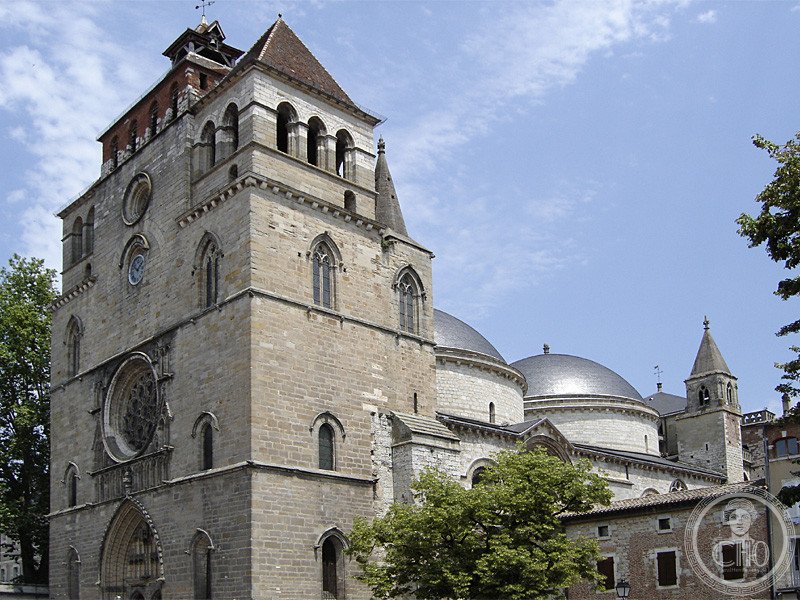
A Roman Catholic cathedral in southwestern France that bridges the late Romanesque and emerging Gothic architectural traditions, now designated a national monument.
At a glance
Cahors Cathedral stands as a pivotal example of architectural evolution in medieval France. Its design synthesizes Romanesque solidity with early Gothic innovation, making it significant for understanding the stylistic transition that reshaped European sacred architecture.
History
The cathedral’s exact construction dates are not documented in available sources. What is clear is that it represents a moment when builders were moving beyond late Romanesque conventions toward the verticality and pointed arches of Gothic design.
What you see
The building embodies both traditions in its stone work and spatial organization. Late Romanesque elements coexist with Gothic features—a rare surviving document of how medieval architects and patrons navigated stylistic change during this formative period in European church design.
Cultural significance
As a national monument, the cathedral holds importance for French cultural heritage. Its architectural language makes it valuable to scholars of medieval building practice and the gradual shift in taste that defined twelfth- and thirteenth-century Christendom.
Key facts
- Location: Cahors, Occitanie, France
- Coordinates: 44.4472° N, 1.4431° E
- Designation: National monument
- Architectural style: Late Romanesque to Gothic transition
Practical information & getting there
The cathedral is located in central Cahors, a market town in the Lot department. As a functioning parish church and heritage site, visiting hours and access may vary. Contact the Cahors tourism office or the cathedral directly for current opening times and any restoration work in progress.
Sources & resources
Find it on the map
See this place and what’s around it →📷 Become a Cultural Heritage Online photographer
Share your photos of places: they stay published under your name as the author. The more they're seen, the more you get noticed — and soon a contest will reward the most appreciated photos.
Log in or sign up free to add a photoIs this page about you?
This page is read by travellers and heritage enthusiasts who find it on Google. Tell us how you are connected to this place and we will take it from there.